Chronic weight management is defined as the ongoing, lifelong process of achieving and maintaining a healthy body weight through integrated lifestyle, behavioral, and medical interventions. The term “chronic” matters here. Obesity is recognized by the World Health Organization and the National Institutes of Health as a chronic, relapsing disease, not a personal failure. That classification changes everything about how treatment should work. Without sustained effort, over 80% of lost weight is regained within five years. That statistic explains why short-term diets consistently fail and why long-term weight management requires a fundamentally different approach.
Chronic weight management is not a diet. It is a continuous care process that addresses the biological, behavioral, and medical factors driving weight gain and regain. The distinction between “losing weight” and “managing weight chronically” is the difference between a sprint and a marathon.
Most people approach weight loss as a temporary project with a clear end date. Chronic weight control reframes the goal entirely. The target is not a number on a scale but a sustainable set of behaviors, medical supports, and lifestyle habits that hold weight stable over years and decades. Clinicians increasingly view this as a care continuum with evolving treatment tailored to metabolic and life changes, not a fixed protocol applied once and forgotten.
The practical implication is significant. A person who loses 30 pounds through calorie restriction alone has not solved their weight problem. They have created a new biological state that actively works against them, which the next section explains in detail.
The body fights back after weight loss. Biological adaptations after significant weight loss include a reduced resting metabolic rate, increased hunger hormones like ghrelin, and decreased satiety signals from leptin. These changes are not temporary. They can persist for years, making the body’s drive to regain weight a genuine physiological force, not a matter of willpower.
Several specific mechanisms work against long-term success:
The psychological dimension is equally real. Emotional eating, stress-driven food choices, and all-or-nothing thinking around food create cycles of restriction and overeating. The biological drive to regain weight undermines willpower, which is why structured behavioral and stress management strategies are not optional extras. They are core treatment components.
Pro Tip: Track your sleep alongside your food and activity. Research consistently links poor sleep to increased hunger and weight regain, making sleep hygiene one of the most underused tools in long-term weight control.
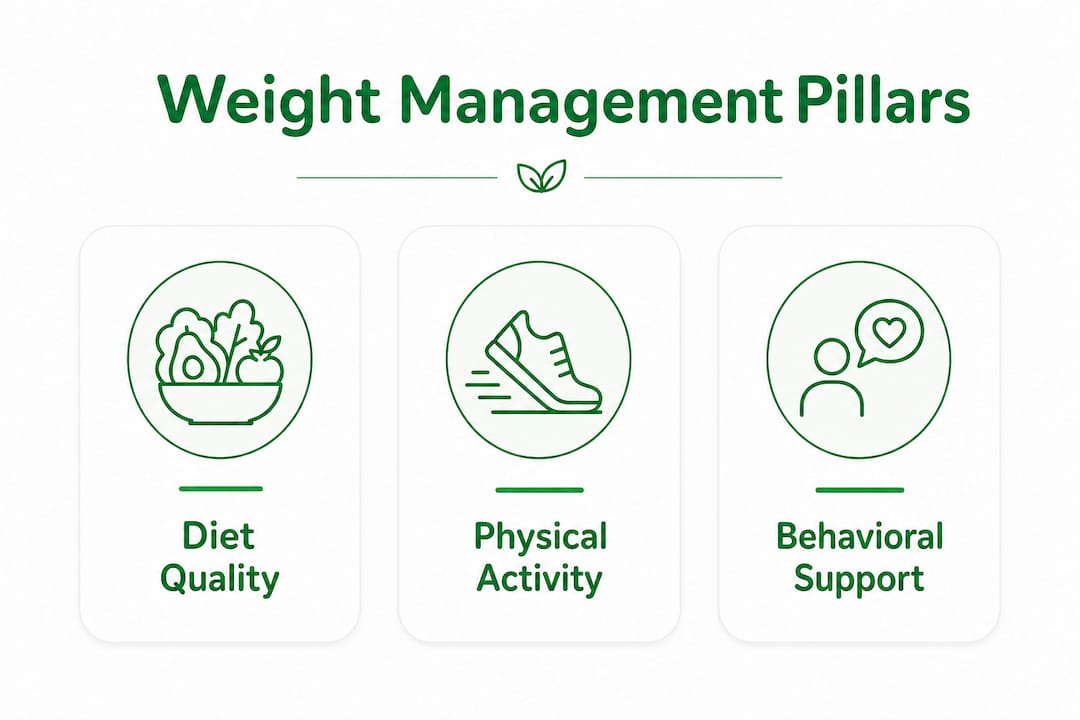
Sustainable weight management rests on three pillars: diet quality, physical activity, and behavioral support. Each one reinforces the others, and removing any one weakens the whole structure.
High-protein, low-energy-density diets improve satiety and support long-term weight control better than simple calorie restriction. Protein keeps hunger lower between meals and preserves lean muscle during weight loss. Eating patterns like the Mediterranean diet, which emphasizes vegetables, legumes, fish, and healthy fats, provide this protein and fiber density while remaining sustainable for years. Rigid, highly restrictive diets tend to fail because they are not livable long-term.
Exercise volume matters more for weight maintenance than for initial weight loss. People who maintain at least 250 minutes of moderate-to-vigorous physical activity weekly show significantly better weight maintenance outcomes than those doing less. That is roughly 35 minutes per day. The type of activity matters less than the consistency. Walking, cycling, swimming, and resistance training all qualify when done regularly.

Cognitive-behavioral therapy (CBT), motivational interviewing, and structured goal setting are the behavioral techniques with the strongest evidence for improving adherence to weight management. CBT helps people identify and change the thought patterns that drive overeating. Motivational interviewing builds internal motivation rather than relying on external pressure. Goal setting creates specific, measurable targets that replace vague intentions.
The table below summarizes the core lifestyle strategies and their primary role in long-term management:
| Strategy | Primary role | Evidence level |
|---|---|---|
| High-protein, Mediterranean-style diet | Satiety and sustainable eating | Strong |
| 250+ minutes weekly exercise | Weight maintenance | Strong |
| Cognitive-behavioral therapy | Behavior change and adherence | Strong |
| Self-monitoring (food, weight, activity) | Early detection of regain | Strong |
| Sleep hygiene and stress management | Hormonal regulation | Moderate |
Pro Tip: Weigh yourself at the same time each morning, not to obsess over daily fluctuations, but to catch a 5-pound creep before it becomes a 20-pound problem. Consistent self-monitoring is one of the strongest predictors of long-term maintenance success.
Lifestyle changes alone are not sufficient for everyone. Medical and pharmacological treatments play a defined, evidence-based role in managing obesity long-term, particularly for people with a BMI above 30 or those with weight-related health conditions.
GLP-1 receptor agonists like semaglutide and dual GIP/GLP-1 agonists like tirzepatide represent the current standard in pharmacological weight management. Both produce meaningful weight reduction when combined with lifestyle intervention. Tirzepatide for weight loss has shown particularly strong results in clinical trials, making it one of the most discussed options in obesity medicine today.
The critical limitation of medication is what happens when it stops. Rebound weight gain commonly occurs after stopping semaglutide and similar agents. That finding confirms what chronic care models already assume: medication is not a cure. It is a tool that works best as part of an ongoing, supervised treatment plan.
Key considerations for medical treatment in long-term weight management include:
Exploring weight loss medication options with a qualified provider is the right starting point for anyone considering pharmacological support. Genetics also play a role in how individuals respond to both diet and medication, and DNA-based approaches to personalized care are gaining traction as a way to match treatment to biology more precisely.
Most weight maintenance failures happen because people stop the behaviors that produced their results. Prematurely stopping maintenance behaviors is the single most common reason for regain, not a lack of willpower or a flawed diet.
Frequent patient-provider contact, ideally monthly or twice monthly, is one of the most evidence-backed strategies for long-term success. Regular check-ins catch problems early, allow treatment adjustments, and maintain accountability. This is exactly the model that telehealth platforms make accessible without requiring time off work or long commutes.
Building what clinicians call “external scaffolding” is equally important. These are systems and habits that support good decisions without relying on motivation alone:
Shifting focus from the scale to health markers, like blood pressure, energy levels, and blood sugar, also reduces frustration and supports more sustainable changes. Better outcomes come from focusing on health improvements beyond scale weight, which keeps motivation grounded in something more meaningful than a number. For people navigating weight management after midlife, specific guidance on weight loss after 50 addresses the unique hormonal and metabolic shifts that require adjusted strategies.
Chronic weight management succeeds when it combines sustained behavioral habits, regular medical supervision, and personalized adjustments across every stage of life.
| Point | Details |
|---|---|
| Weight regain is biological, not moral | The body actively fights to regain lost weight through hormonal and metabolic changes. |
| Lifestyle strategies require all three pillars | Diet quality, 250+ minutes of weekly exercise, and behavioral support each play a non-negotiable role. |
| Medication requires ongoing supervision | GLP-1 agents produce results but cause rebound regain when stopped without a maintenance plan. |
| External systems beat willpower | Daily weigh-ins, food tracking, and regular provider contact outperform motivation alone. |
| Plans must evolve over time | Individualized care that adapts to life stage and metabolic changes drives durable results. |
People come to weight management expecting a finish line. They want to lose the weight, hit the goal, and stop. The biology does not allow that. What I have seen, time and again, is that the people who succeed long-term are the ones who stop treating weight management as a temporary project and start treating it like managing blood pressure or cholesterol. It is a condition that requires ongoing attention, not a problem you solve once.
The willpower narrative does real damage here. When someone regains weight after a successful loss, the instinct is to blame themselves. But the research is clear: the body’s hormonal and metabolic response to weight loss creates hunger and slows metabolism in ways that are genuinely difficult to override through discipline alone. Accepting that reality is not giving up. It is the first step toward building a plan that actually accounts for it.
What works is structure, not motivation. Regular check-ins with a provider, consistent self-monitoring, and a diet pattern you can sustain for years, not weeks, are the real drivers of long-term success. Rigid diets and extreme exercise programs produce fast results and faster rebound. Flexible, evidence-based plans that adapt as your life changes produce the results that last. If you hit a weight loss plateau, that is not failure. It is a signal to adjust the plan, not abandon it.
Seek multidisciplinary support. A good provider, a behavioral health component, and a realistic nutrition plan are not luxuries. They are the standard of care for a chronic condition.
— Bryan
Managing weight over the long term requires consistent access to medical guidance, not just a one-time prescription. RoenRx connects you with experienced providers through same-day virtual appointments, ongoing messaging with your care team, and prescription support for evidence-based treatments including GLP-1 medications.

RoenRx is built for the kind of frequent, flexible provider contact that research shows drives long-term success. Whether you need a medication review, a check-in after a plateau, or behavioral support to stay on track, the platform puts care within reach without the wait. Visit RoenRx online to explore personalized weight management care, or learn more about telehealth-based treatment and how ongoing virtual care works.
Chronic weight management is the lifelong process of maintaining a healthy body weight through sustained lifestyle habits, behavioral strategies, and medical support. It treats weight as an ongoing health condition rather than a short-term goal.
Biological adaptations after weight loss, including reduced metabolism and elevated hunger hormones, actively drive regain. Research shows over 80% of lost weight returns within five years without a structured maintenance plan.
People who sustain at least 250 minutes of moderate-to-vigorous physical activity weekly show the best weight maintenance outcomes. That works out to roughly 35 minutes of movement per day.
Not necessarily, but stopping medications like semaglutide without a maintenance plan typically causes rebound weight gain. Ongoing medical supervision helps determine the right duration and transition strategy for each person.
Monthly or twice-monthly contact with a provider is the evidence-backed standard for long-term weight management success. Regular check-ins allow early course corrections before small gains become significant regain.