Bupropion on its own can produce modest, dose-dependent weight loss, but it carries no FDA approval for that purpose. Combined with naltrexone as Contrave, it does carry that approval and tends to produce larger, longer-lasting weight loss in clinical trials. Neither option is a shortcut. Both come with real contraindications, which is exactly why a clinician needs to review your health history before either lands in your prescription bottle.
TL;DR:
- Bupropion alone typically results in modest weight loss of around 3.67 kg, with effects being dose-dependent and more effective over longer treatment durations.
- Combining bupropion with naltrexone in Contrave leads to larger, more sustained weight loss usually exceeding 8% of body weight in clinical trials.
- Both medications require careful titration and are contraindicated for individuals with seizure history, eating disorders, uncontrolled hypertension, or recent alcohol withdrawal.
- Weight loss effects are significantly enhanced when medication use is paired with structured diet and exercise programs, which are standard in most trials.
- Off-label use of bupropion solely for weight loss is common, but Contrave is the only FDA-approved option specifically studied and indicated for weight management.
Bupropion belongs to a drug class called norepinephrine and dopamine reuptake inhibitors, or NDRIs. It’s sold as Wellbutrin for depression and as Zyban for smoking cessation, and it works by boosting levels of norepinephrine and dopamine in the brain rather than targeting serotonin the way most antidepressants do. That distinct mechanism is exactly why it behaves differently around body weight than drugs like sertraline or paroxetine, which more commonly cause weight gain.
Naltrexone is a different animal entirely. It’s an opioid receptor antagonist, originally developed for alcohol and opioid dependence. On its own, it has essentially nothing to do with appetite. But paired with bupropion, researchers found something worth exploiting: bupropion activates POMC neurons in the hypothalamus, a cluster of cells involved in appetite regulation, but the body partially blunts that activation through an internal feedback loop. Naltrexone interferes with that feedback loop, so the appetite-suppressing signal from bupropion sticks around longer. That combination effect is the entire pharmacological rationale behind Contrave (naltrexone/bupropion), which the FDA has approved specifically for chronic weight management alongside diet and exercise.
This regulatory distinction matters more than most people realize. Wellbutrin and Zyban are approved for depression and smoking cessation, full stop. Any weight loss a patient experiences on either is a secondary effect, not the reason the drug was prescribed or approved. Prescribing bupropion alone specifically to help someone lose weight is an off-label use, meaning it falls outside what the FDA has formally reviewed and cleared bupropion to do. That doesn’t make it dangerous or unusual. Off-label prescribing happens constantly in medicine. It does mean the evidence base and the labeling requirements look different than they do for Contrave.
Cleveland Clinic’s own patient guidance draws this line clearly: bupropion is associated with weight loss, but its core indications remain depression and smoking cessation, while Contrave stands as the FDA-approved product built and tested specifically for weight management. If your doctor is prescribing bupropion for depression and you happen to lose a few pounds, that’s a welcome side effect. If your goal is weight loss first, Contrave is the option actually designed and studied for that job.
The strongest evidence on this topic comes from a 2024 systematic review and meta-regression that pooled data from 25 randomized controlled trials covering 22,165 participants. The headline number: bupropion, whether used alone or combined with naltrexone, produced an average weight change of −3.67 kg compared to placebo, with a 95% confidence interval running from −4.43 to −2.93 kg. Waist circumference dropped by an average of 2.98 cm, with a confidence interval of −3.78 to −2.19 cm.
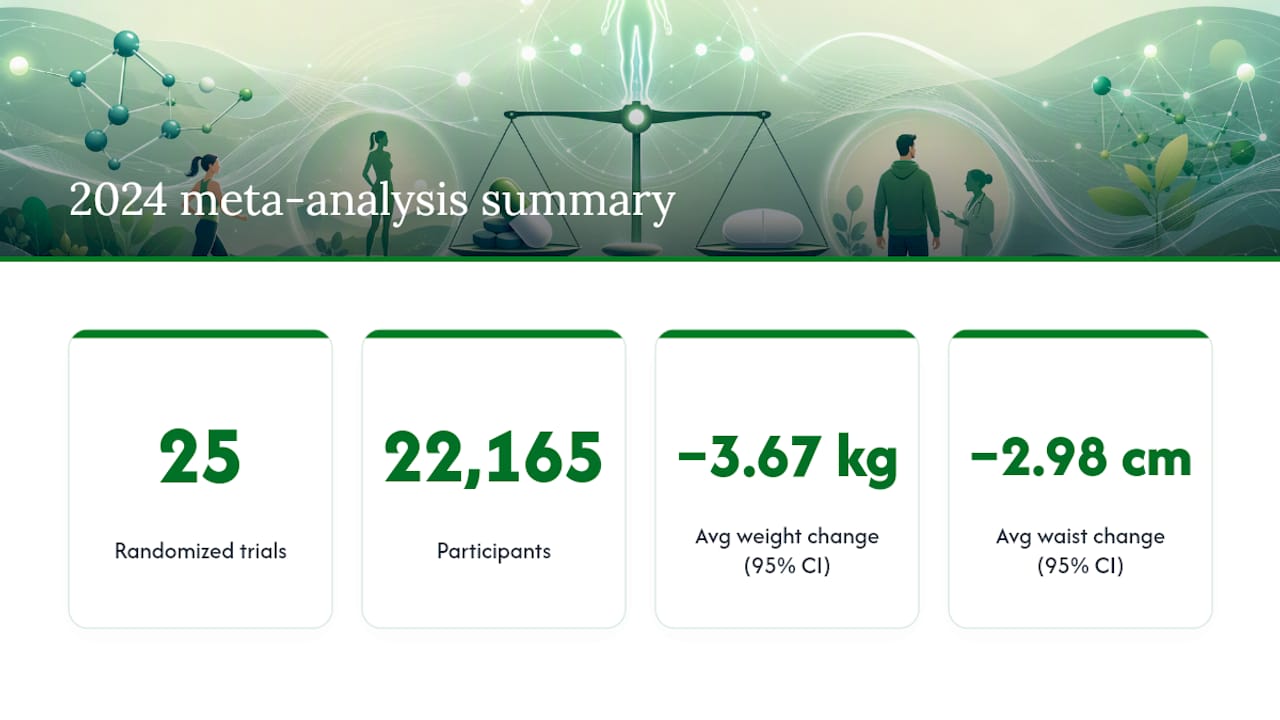
Statistic Callout: Across 25 trials and over 22,000 participants, bupropion-based treatment (alone or with naltrexone) produced an average weight loss of 3.67 kg versus placebo. Combination therapy consistently outperformed bupropion alone, and effects grew stronger in trials lasting longer than 26 weeks.
That confidence interval is worth sitting with for a second. A range of −4.43 to −2.93 kg means the true average effect, across the population these trials represent, almost certainly falls somewhere in that band. It’s a real effect, not statistical noise, but it’s also not dramatic. This is not a drug that melts off double-digit body weight for most people. It’s a modest nudge that, layered onto diet and exercise changes, moves the needle.
Individual trials tell a more granular story. A 48-week, double-blind, placebo-controlled trial of bupropion SR (sustained release) found dose-dependent results at the 24-week mark: patients on 300 mg per day lost an average of 7.2% of their initial body weight among trial completers, while those on 400 mg per day lost 10.1%, compared with 5.0% in the placebo group. Those losses generally held up through week 48, though completers, meaning people who stuck with the trial to the end, tend to show better results than the full intent-to-treat population, since people who lose the least weight are also the most likely to drop out of weight-loss trials.
Contrave’s approval trials showed weight loss around 8% of body weight at about 56 weeks in some studies, a scale of effect that generally exceeds what bupropion alone delivers over similar timeframes. Older research backs this pattern too. Earlier RCTs and clinical reviews found that bupropion monotherapy produces modest short-term weight loss, and adding naltrexone tends to produce a larger, more sustained reduction, consistent with the mechanism of blocking the feedback loop that would otherwise blunt bupropion’s appetite effects.
A few caveats temper all of this. The 2024 meta-regression flagged meaningful heterogeneity across the 25 trials, meaning study populations, dosing protocols, and follow-up periods varied enough that pooling results into one number involves some simplification. Most trial participants were also enrolled in structured weight-loss programs that included calorie restriction and exercise counseling, which means medication effects observed in routine clinical practice, without that structured support, are typically smaller than what shows up in trial data.
Bupropion for weight-related use in clinical trials typically ran in the 300 to 400 mg per day range, using the sustained-release (SR) or extended-release (XL) formulations rather than the older immediate-release version. Clinicians generally start lower and increase the dose over one to two weeks, a titration process designed to reduce the risk of insomnia, jitteriness, and, most importantly, seizures, which become more likely at higher doses taken too quickly.
Contrave follows a fixed titration schedule built into its FDA labeling: patients start at a low dose and increase weekly over four weeks until reaching the target maintenance dose of 16 mg naltrexone/180 mg bupropion, taken twice daily. That gradual ramp exists almost entirely to manage nausea, which is the most common reason patients discontinue the combination early.
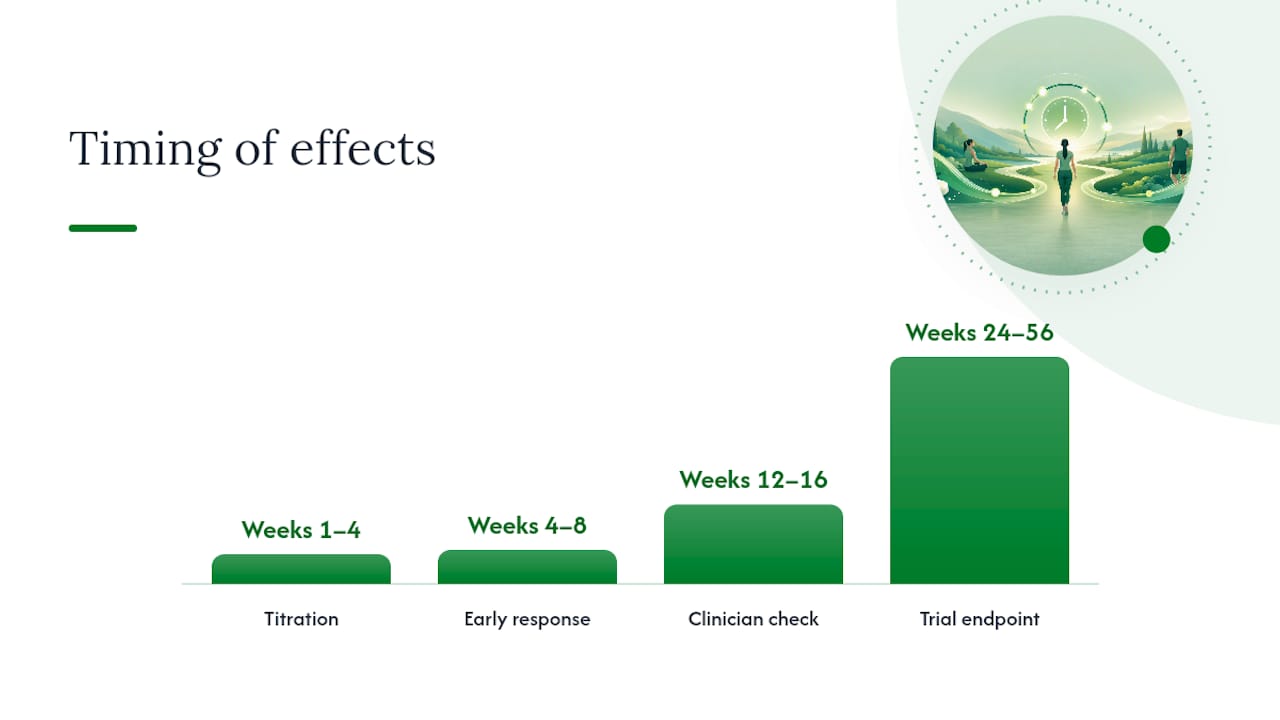
Pro Tip: Don’t judge either medication by week two. Both bupropion and Contrave need time to reach a stable dose, and appetite changes usually lag behind that titration by several weeks. Trials measuring real results ran 24 to 56 weeks, not a few days.
None of the trial data exists in a vacuum separate from diet and exercise. Every major study behind these numbers paired medication with calorie-controlled eating plans and structured activity recommendations. That’s not a footnote. It’s baked into the actual effect sizes being reported, which means taking bupropion or Contrave without also adjusting how you eat and move is likely to produce smaller results than the numbers above suggest.
Seizure risk sits at the top of the safety conversation for bupropion, and it’s dose-dependent, meaning the risk climbs as the dose increases, particularly above 450 mg per day or when doses are increased too quickly. This is precisely why the titration schedules for both bupropion and Contrave exist.
Statistic Callout: FDA labeling for bupropion reports that weight loss exceeding 5 pounds occurred in about 28% of trial subjects, a rate notably higher than seen with many other antidepressant classes, most of which are more associated with weight gain than weight loss.
Certain conditions rule bupropion out entirely, and the same restrictions carry over to Contrave since it contains bupropion as one of its two active ingredients:
Beyond the absolute contraindications, common side effects include insomnia, dry mouth, headache, and nausea, with nausea and constipation showing up more frequently in Contrave users than in those taking bupropion alone. Clinicians managing either medication generally check blood pressure periodically, screen for mood changes or new suicidal thoughts (a class-wide caution for antidepressants), and ask directly about alcohol use, since heavy or binge drinking alongside bupropion meaningfully raises seizure risk beyond what either factor causes independently.
Pregnancy and breastfeeding deserve a direct conversation with a clinician rather than a blanket answer, since the risk-benefit calculation shifts substantially and neither medication is a default choice during that window. The safety data behind bupropion’s contraindication profile is consistent enough across trials and labeling that these aren’t gray areas open to interpretation. They’re hard stops that a proper intake screening is designed to catch before a prescription ever gets written.
Bupropion alone tends to make the most sense for someone who needs treatment for depression or wants help quitting smoking and would prefer a medication that’s weight-neutral or mildly weight-reducing rather than one known to cause weight gain. It’s not typically the first choice when weight loss itself is the primary goal, since Contrave was specifically studied and approved for that purpose.
Contrave, by contrast, fits patients who meet the FDA’s weight-management criteria, generally a BMI of 30 or higher, or 27 or higher with a weight-related condition like hypertension or type 2 diabetes, and who don’t have any of the contraindications above.
Before any visit, it helps to have a clear list ready: current medications, any seizure or eating disorder history, alcohol use patterns, and what you’ve already tried for weight management. That short list is often the difference between a fast, useful consultation and one that stalls out on missing information.
Telehealth doesn’t skip the screening that makes these medications safe. It should tighten it. A responsible virtual evaluation starts with a full intake covering medication history, psychiatric history, seizure risk, eating disorder screening, and current alcohol use, since those factors determine candidacy before dosing ever comes up.
The process is structured around same-day clinician access to avoid long wait times for this conversation. A clinician reviews the intake, screens for the contraindications outlined above, and discusses realistic expectations for either bupropion alone or the naltrexone/bupropion combination based on the individual’s health profile. If blood pressure monitoring, lab work, or an in-person referral becomes necessary, that gets flagged and arranged rather than skipped.
None of this replaces individualized clinical judgment. Every prescribing decision depends on the specific person answering the intake questions, not a generic algorithm. What good telehealth does is remove the friction, long wait times, fragmented records, missed follow-ups, that keeps people from getting that judgment in the first place.
The evidence here is real, but modest, and that’s worth saying plainly because so much online chatter treats bupropion like a hidden weight-loss hack. A −3.67 kg average effect across 22,000-plus trial participants is meaningful for someone stalled on diet and exercise alone. It’s not a transformation drug, and it was never studied as one when used by itself.
Where conventional advice falls short is in treating bupropion and Contrave as interchangeable. They’re related, but the naltrexone combination exists precisely because bupropion alone gets partially undercut by the body’s own feedback loops. If weight loss is genuinely your primary goal, that mechanistic difference should drive which option you discuss first with a clinician.
What I’d prioritize: get the contraindication screening done honestly before getting excited about numbers on a study page. Seizure history and eating disorder history aren’t fine print. They’re the actual gatekeepers here.
— Bryan
Getting evaluated for bupropion or Contrave doesn’t require a weeks-long wait for a specialist appointment. Same-day clinician access is offered so the intake, contraindication screening, and treatment discussion described happen in one visit instead of being spread over weeks of scheduling.

The first visit covers your medication and psychiatric history, screens for seizure risk, eating disorder history, and alcohol use, and walks through which option, if any, fits your specific profile. Nothing gets prescribed without that individualized review; a clinician makes the final call based on your actual health picture, not a generic questionnaire. If you’re ready to start that conversation, you can book a telehealth evaluation to get matched with a clinician who will review your case.
The 2024 systematic review and meta-regression covering 25 randomized trials is the strongest pooled evidence available on bupropion and naltrexone/bupropion for weight loss. Cleveland Clinic’s patient guidance on Contrave offers a clear, clinically grounded explanation of how the combination works and who it’s approved for. The FDA drug labeling on DailyMed lays out contraindications, monitoring requirements, and trial-derived safety data directly from the source. The original 48-week bupropion SR trial remains the key reference for dose-dependent weight-loss timelines.
This article is general information, not a substitute for advice from a qualified doctor. Consult a qualified healthcare professional about your own circumstances before acting on anything here.
Measurable weight loss in trials generally started around 4 to 8 weeks after reaching a stable dose, with fuller effects showing up between 24 and 48 weeks of treatment.
Naltrexone is the medication studied and FDA-approved in combination with bupropion for weight loss, sold as Contrave; combining bupropion with other weight-loss drugs on your own is not something a clinician would recommend without direct supervision.
Trials used sustained-release or extended-release bupropion in the 300 to 400 mg per day range, started at a lower dose and titrated upward over one to two weeks alongside diet and exercise changes, and always under clinical supervision given seizure risk.
No bupropion formulation, whether Wellbutrin or Zyban, is FDA-approved specifically for weight loss; Contrave, the combination of naltrexone and bupropion, is the only version of this treatment with that specific approval and generally produces larger weight loss in trials than bupropion alone.
Bupropion modestly reduces appetite for some people by activating POMC neurons involved in hunger regulation, but the effect is generally smaller and less consistent than what’s seen with the naltrexone/bupropion combination.