Some measurable change often shows up within the first week, but that early shift is not the same as feeling better. Most people notice meaningful relief between several weeks and full effect can take two to three months or more. Side effects tend to arrive before benefits do, so the first stretch can feel discouraging even when the medication is working underneath the surface.
TL;DR:
- Some patients can see measurable improvement within the first week, but significant symptom relief generally takes at least two to four weeks.
- Early side effects such as nausea, headache, and sleep disruption typically occur before noticeable mood improvements begin.
- Full benefits often require several months, with clinicians usually waiting four to six weeks before assessing a medication’s effectiveness.
- Factors like the SSRI’s half-life, dosage, individual metabolism, and whether therapy is combined influence how quickly someone responds.
- Monitoring symptoms weekly and avoiding abrupt discontinuation are crucial, and telehealth services can help manage expectations during the wait.
The first month is where most of the confusion happens, mostly because the changes are real but small. Here is roughly what tends to unfold once you start an SSRI at a therapeutic dose.
Someone who metabolizes the drug more slowly, or who started at a lower dose to reduce side effects, may simply need more time before that 4 to 6 week checkpoint means anything. That is a normal variation, not a treatment failure.
Mood is usually the last thing to shift. Sleep, appetite, and energy often move first, and MedlinePlus and similar patient resources point to this as a genuinely positive early sign, not a coincidence.
Early wins people commonly report before mood catches up:
Clinical response is usually defined as at least a 50% reduction in symptom severity on a standardized scale. Remission means symptoms have dropped close to baseline, not just improved. An insight worth sitting with: framing the timeline around measurable change, rather than full remission, gives a much more realistic picture of what week one or two should actually feel like. Feeling 15% better isn’t anything. It’s the data point your clinician is watching for.
SSRIs block serotonin reuptake almost immediately after the first dose. That part happens fast, within hours. So why does it take weeks to feel different?
The delay comes from what happens after that initial reuptake block. Extra serotonin sitting in the synapse triggers a slower chain of downstream adaptations: certain serotonin receptors gradually downregulate, signaling pathways recalibrate, and the brain begins forming new neural connections through a process tied to neuroplasticity. These adjustments unfold over weeks, not hours, and they track more closely with symptom improvement than the initial pharmacological effect does.

Trial design matters too. Placebo response rates in depression studies are notoriously high, and some of the earliest measurable SSRI benefit gets statistically blurred by that placebo effect in short trials. That is part of why “4 to 6 weeks” became the conventional wisdom, even though smaller real changes are detectable earlier for many patients.
No two people run the same timeline, and several variables explain why.
Pro Tip: If you’re switching SSRIs for anxiety specifically, ask your clinician about a cross-taper plan rather than stopping cold. Abrupt changes are where most avoidable withdrawal symptoms happen.
Side effects almost always show up before benefits do, which is exactly backwards from what most people expect walking in.
A simple weekly checklist beats trying to remember how you felt three weeks ago. Rate sleep, appetite, energy, and mood on a 1 to 10 scale, jot down side effects, and bring that log to your follow-up.
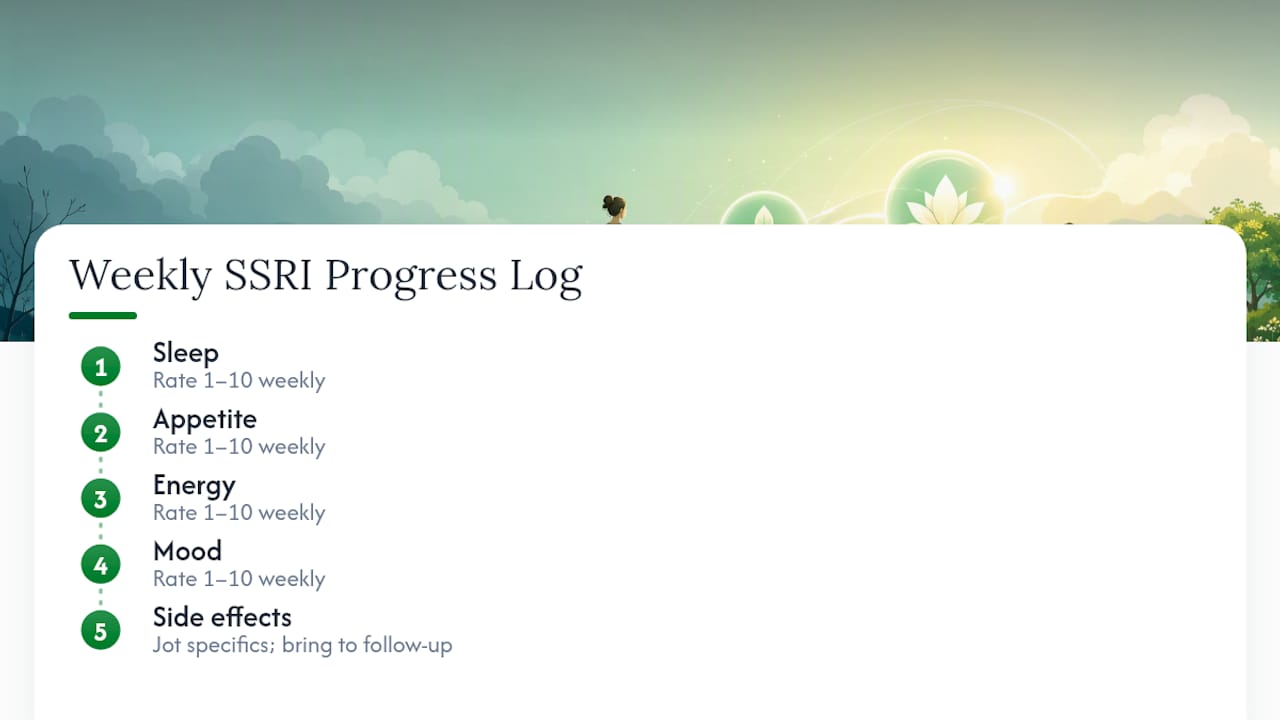
At the 2 to 4 week mark, be specific: What side effects showed up, and are they easing? Has sleep changed? Any new or worsening dark thoughts? Clinicians typically wait until the 4 to 6 week mark before considering a dose increase, an add-on medication, or a switch, largely because reacting too early can mask a medication that just needed more time.
Pro Tip: Never stop an SSRI abruptly on your own, even if you feel it “isn’t working” after a week. Talk to your clinician first; that conversation is what determines whether you need more time, a different dose, or a different medication entirely.
The most common mistake in counseling patients isn’t overpromising, it’s under explaining the first two weeks. I tell patients to expect a small, measurable shift early on, not a transformation, and to plan on a real check-in around the 4 to 6 week point before judging the medication. Side effects that show up in week one usually ease. That is worth saying out loud, because most people quietly assume the opposite.
— Bryan
The hardest part of starting an SSRI is often the gap between “I started medication” and “I feel like myself.” That gap is exactly when access to a clinician matters most, not three months from now. Virtual telehealth services exist that offer anxiety and depression evaluations, follow-up messaging with care teams, and prescription delivery that can save you a trip to the pharmacy.

Telehealth fits well for medication questions, early side-effect concerns, dose check-ins, and routine follow-up visits, the kind of touchpoints that used to mean weeks on a waiting list. It is not a substitute for emergency or in-person care if you’re experiencing a crisis. For everything in between, Telehealth services can let you message your care team when something feels off instead of waiting until your next scheduled appointment. If you’re starting or adjusting an SSRI, you can book a telehealth visit to get a same-day evaluation and a follow-up plan built around your actual timeline.
This article draws on antidepressant onset research from a meta-analysis on early SSRI response, clinical guidance from the Cleveland Clinic and NHS, and switching guidance from a clinical review on stopping antidepressants. For medication class comparisons, see SSRI vs SNRI.
Most people don’t feel therapeutic benefit on day one, but some notice early side effects like nausea or jitteriness within the first week as the drug enters your system.
A meta-analysis found statistically measurable improvement as early as week one for some patients, but “immediately” in the sense of same-day relief does not happen with SSRIs.
Early signs are usually subtle: better sleep, a bit more appetite, slightly more energy, or less background anxiety, often before mood itself noticeably lifts.
No SSRI is reliably “fastest” across the board; response speed depends more on your dose, half-life, and individual biology than on which specific SSRI you’re prescribed, though drugs with shorter half-lives reach steady levels in your system sooner than long half-life options like fluoxetine.