A mental health care plan is a structured clinical document created by a healthcare provider to outline a patient’s diagnosis, treatment goals, and the specific interventions designed to address their condition. Known formally as a mental health treatment plan in clinical settings, this document serves as the foundation for organized, goal-directed care. It coordinates support across providers, tracks progress over time, and meets the documentation standards required by insurers and regulatory bodies. Understanding what goes into one gives you real power over your own treatment.
A mental health care plan is a living clinical document that provides a structured roadmap, ensuring therapy stays focused and effective. It does more than record a diagnosis. It translates that diagnosis into a concrete plan of action with defined goals, selected therapies, and scheduled reviews.
The plan matters because mental health treatment without structure tends to drift. Sessions can lose focus, progress becomes hard to measure, and providers may not coordinate well with each other. A documented plan solves all three problems at once.
In Australia, the Better Access initiative ties mental health care plans directly to Medicare benefits. Eligible patients can access rebates for up to 10 individual and 10 group therapy sessions per calendar year. That financial access makes the plan far more than a clinical formality. It is the document that unlocks affordable care.

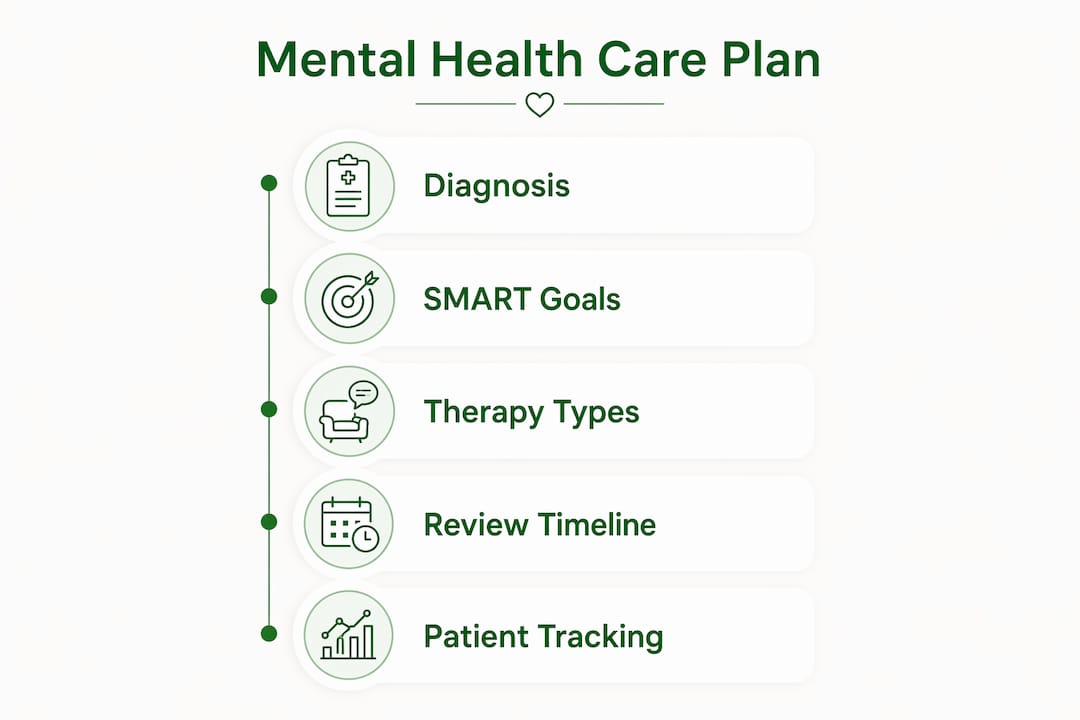
A well-built plan contains several distinct elements, each serving a specific clinical purpose. Skipping any one of them weakens the whole structure.
Pro Tip: Ask your provider to walk you through each section of your plan at your first appointment. Patients who understand their own goals engage more actively in treatment and see better results.
The creation process is collaborative. No provider should build a plan without direct input from the patient. Here is how it typically unfolds.
The entire process usually takes one to two appointments. Telehealth has made this process significantly more accessible, allowing patients to complete assessments and receive plans without traveling to a clinic.
A formal mental health care plan delivers advantages that informal or self-managed approaches simply cannot replicate.
The accountability benefit deserves extra attention. Patients who track their own progress against written goals report higher satisfaction with treatment and are less likely to drop out before completing care.
Your plan is not a static form filed away after your first appointment. It is a working document that should change as you change.
Pro Tip: Keep a printed or digital copy of your plan somewhere easy to access. During a mental health crisis, having your crisis plan and emergency contacts in front of you can reduce the time it takes to get help.
Not all mental health support comes with a documented plan. Understanding the differences helps you choose the right level of care.
| Approach | Structure | Insurance/Medicare access | Provider coordination | Progress tracking |
|---|---|---|---|---|
| Formal mental health care plan | High | Yes, where applicable | Documented and shared | Built into review schedule |
| Psychiatrist assessment only | Moderate | Varies by plan type | Limited without shared doc | Depends on provider |
| Informal self-managed strategies | None | No | None | Self-directed only |
| Ad hoc therapy without a plan | Low | Limited | Minimal | Session by session |
A formal plan sits at the top of this structure for good reason. It is the only approach that combines clinical rigor, insurance access, provider coordination, and built-in accountability. Informal strategies and ad hoc therapy have their place as supplements, but they work best when a formal plan already exists as the foundation.
A mental health care plan is the most effective tool for organizing treatment, accessing covered care, and measuring real progress over time.
| Point | Details |
|---|---|
| Definition and purpose | A mental health care plan is a structured clinical document outlining diagnosis, goals, and interventions. |
| Core components | Every plan needs a diagnosis, SMART goals, named interventions, support referrals, and a review schedule. |
| Collaborative creation | Patients and providers build the plan together, with input from GPs, therapists, and specialists as needed. |
| Access to benefits | A formal plan unlocks Medicare rebates and insurance coverage that informal approaches cannot access. |
| Living document | Plans require regular reviews and updates as symptoms, goals, and life circumstances change. |
Most patients receive their mental health care plan, nod through the explanation, and then file it away. That is the single biggest mistake I see people make with an otherwise powerful clinical tool.
The plan is only as useful as the attention you give it. When patients treat it as a living reference rather than a one-time form, their outcomes improve in measurable ways. They come to sessions with specific questions. They notice when a goal has been met and ask for the next challenge. They catch early warning signs because they have been tracking symptoms against a written baseline.
The other thing I have observed is that patients often accept the first version of their plan without question. That is understandable. Clinical settings can feel intimidating. But your provider expects you to push back, ask for clarification, and request changes. A plan that does not reflect your actual values and preferences will not hold your commitment for long. The best plans I have seen are the ones where the patient clearly had a real conversation with their provider, not just a signature at the bottom of a form.
Realistic goal setting matters more than people realize. Overly ambitious goals set in the first session often collapse by week four. Smaller, concrete milestones build momentum and keep you engaged. If your plan feels overwhelming, that is a signal to revise it, not abandon it.
— Bryan
Managing a mental health condition is easier when you have the right support behind your plan.
Roenrx offers on-demand telehealth services for anxiety and related conditions, connecting you with experienced medical professionals from home. Same-day appointments mean you do not wait weeks to get started. If you are ready to take the next step, you can access anxiety care through Roenrx’s telehealth platform, or review the telehealth consent process before your first visit. For a full overview of available services, the Roenrx home page covers everything in one place. Convenient, covered, and built around your schedule.
A mental health care plan is a structured clinical document developed by a healthcare provider that outlines a patient’s diagnosis, treatment goals, selected interventions, and review schedule. It serves as the formal roadmap for managing a mental health condition.
A GP or licensed mental health professional creates the plan in collaboration with the patient. Specialists such as psychologists or psychiatrists may contribute, particularly when referrals are involved.
A complete plan includes a clinical diagnosis, SMART treatment goals, named therapy modalities such as CBT or mindfulness, allied health referrals, and a scheduled review date.
Most plans include a formal review every three to six months, though patients can request an earlier review if their symptoms or circumstances change significantly.
Yes. Eligible patients can access telehealth mental health services through programs like Australia’s Better Access initiative, and platforms like Roenrx provide on-demand telehealth care for anxiety and related conditions.