Low-dose oral minoxidil (LDOM) is generally well tolerated for hair loss when a clinician prescribes and monitors it. Most side effects are minor and dose-dependent; serious cardiovascular events are rare. Pooled data from a 2025 systematic review puts the overall adverse-event rate around 27%, with hypertrichosis affecting 24% to 35% of patients. Serious complications show up far less often.
Low-dose oral minoxidil requires medical supervision: it can cause fluid retention, a faster heart rate, and lowered blood pressure, so clinicians typically monitor blood pressure and ask about heart conditions before prescribing. It is not recommended during pregnancy or breastfeeding. Discuss these risks with a physician before starting.
By the numbers: A moderate overall adverse-event rate, frequent hypertrichosis, and a low discontinuation rate are reported in the largest safety cohort to date.
That said, “generally safe” isn’t the same as “safe for everyone without a checkup.” Before starting:
TL;DR:
- Low-dose oral minoxidil has an overall adverse-event rate of around 27%, with hypertrichosis affecting up to 35% of patients, mostly being cosmetic.
- Serious cardiovascular events at hair-loss doses are very rare and usually linked to higher doses used for hypertension treatment.
- Proper screening for cardiac conditions and blood pressure is essential before starting, with consensus doses ranging from 1.25 to 5 mg daily.
- Most side effects are manageable, and discontinuation rates are low, but ongoing monitoring of heart rate and fluid retention is important.
- Virtual clinics like RoenRx facilitate safe access through screening, same-day appointments, and follow-up messaging to catch adverse effects early.
The safety case for LDOM rests on four kinds of evidence, and each fills a different gap in the picture.
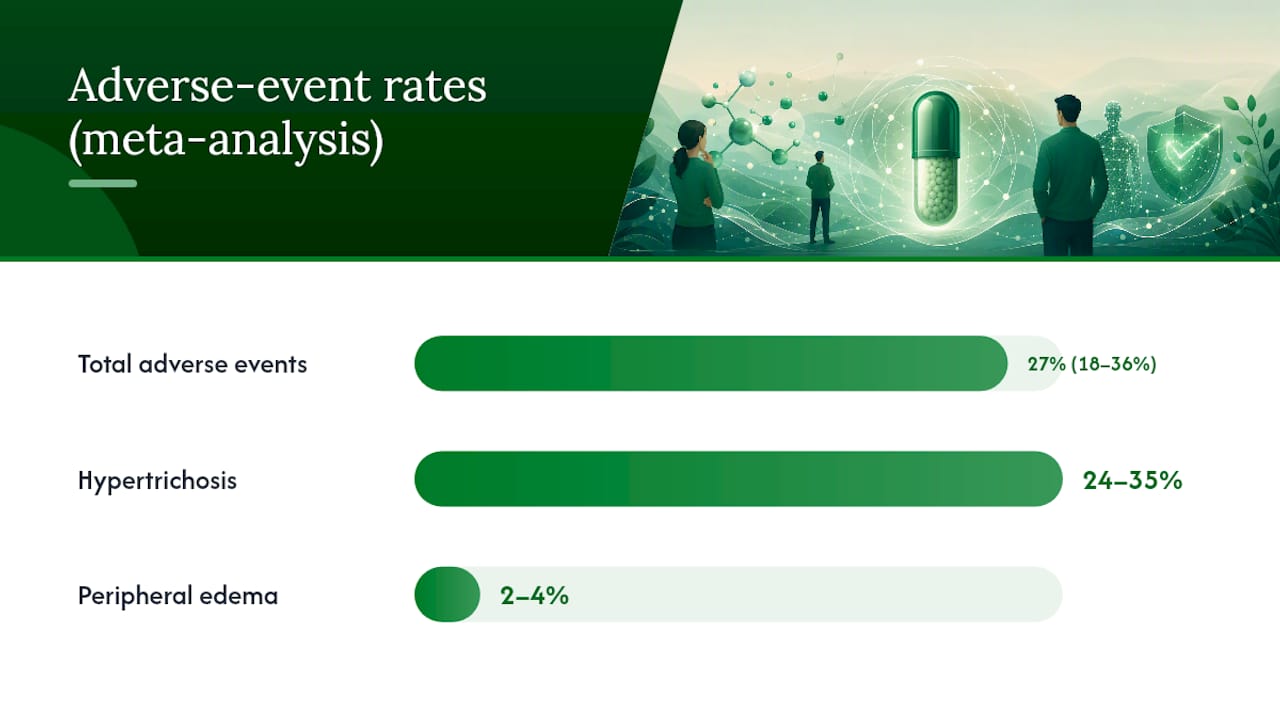
The first is pooled incidence data. A 2025 systematic review and meta-analysis found an adverse-event rate near 27% (95% CI: 18% to 36%), driven mostly by hypertrichosis (24% to 35%) and peripheral edema (2% to 4%). Those numbers sound high until you realize most of what’s counted is unwanted hair growth, not anything dangerous.
The second is real-world cohort data. A multicenter study of 1,404 patients led by Vañó-Galván and colleagues found LDOM well tolerated across a large, diverse patient group. Only a small fraction of patients stopped treatment because of side effects, and systemic complications were infrequent. That’s a meaningfully different data source than a controlled trial. It reflects how the drug behaves once it leaves the lab and enters everyday dermatology clinics.
The third is signal detection through the FDA’s Adverse Event Reporting System. A FAERS analysis identified a statistical signal linking oral minoxidil to pericardial effusion, a fluid buildup around the heart. The life-threatening cases in that dataset trace mostly back to the much higher doses (10 mg and above) once used for treating severe hypertension, not the 1.25 to 5 mg doses prescribed for hair loss today.
The fourth is randomized controlled trial data. A head-to-head trial published in JAMA Dermatology compared 5 mg oral minoxidil against topical minoxidil over 24 weeks and found no significant change in blood pressure or heart rate in healthy participants, even though hypertrichosis was nearly double with oral dosing (49% versus 25%).
The gaps matter too. Most studies follow patients for months, not years, so long-term cardiac effects beyond a year or two remain thin. Cohorts also vary in how they screen patients at baseline, and oral minoxidil for hair loss remains an off-label use in the United States, meaning dosing standards come from clinical consensus rather than an FDA-approved label.
Most people who experience a side effect on LDOM notice something cosmetic, not cardiac. Here’s how the risks break down by frequency:
Pro Tip: Keep a simple log for the first month: note any new hair growth on your face or arms, any ankle swelling, and your resting heart rate if you check it. Bring that log to your follow-up. It turns a vague “I feel off” into something your prescriber can actually act on.
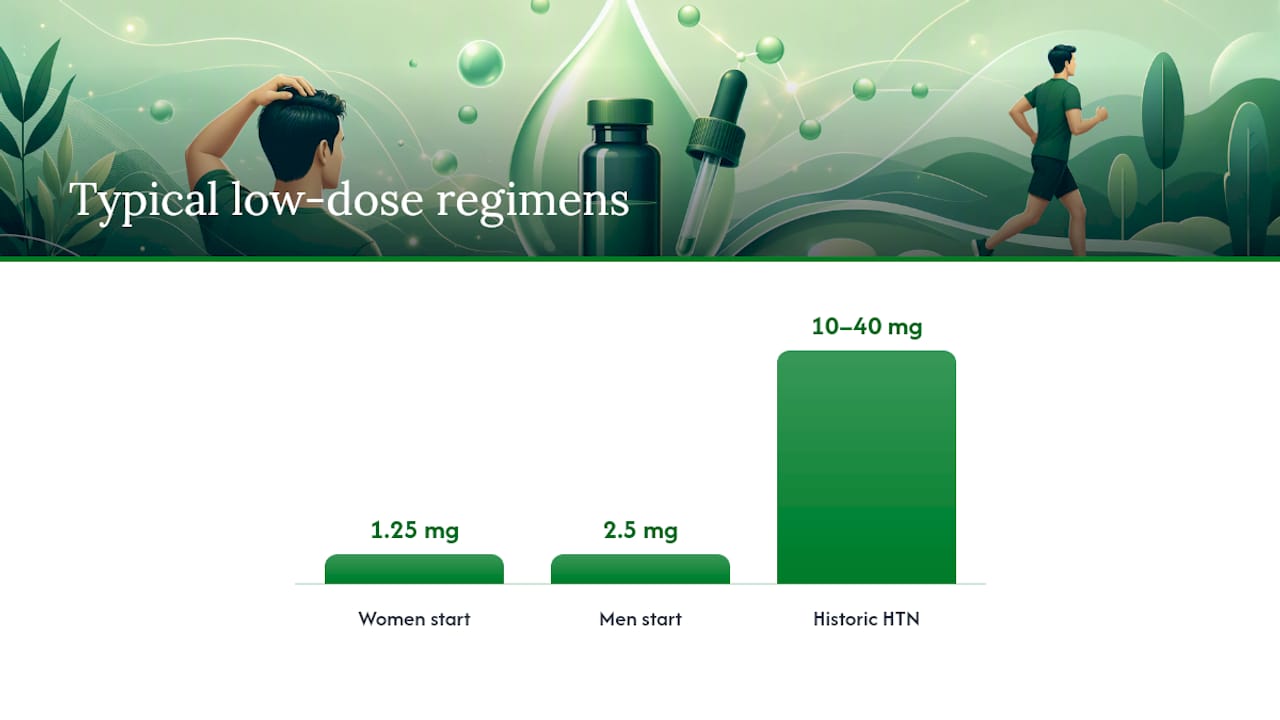
Clinical consensus, reflected in a dosing and safety review, points to starting doses of 1.25 mg/day for women (range 0.625 to 5 mg) and 2.5 mg/day for men (range 1.25 to 5 mg). These numbers sit far below the 10 to 40 mg doses once used for hypertension, and that gap is exactly why LDOM’s cardiovascular risk profile looks so different from minoxidil’s history as a blood pressure drug.
Certain people should not take oral minoxidil without direct specialist oversight:
Older adults and adolescents also warrant extra caution and closer monitoring, since dosing data in those groups is thinner than in healthy adults.
A responsible monitoring plan usually looks like this:
At home, track your resting heart rate occasionally and keep a short symptom diary for swelling, palpitations, or chest discomfort. Report anything new promptly rather than waiting for your next scheduled visit. If you already take blood pressure or heart medication, that follow-up conversation matters even more, since minoxidil’s vasodilating effect can interact with those drugs.
Come to the conversation ready to disclose your full cardiac history, any current antihypertensive medications, pregnancy plans, liver or kidney disease, and any prior issues with fluid retention. This isn’t paperwork for its own sake. A prescriber who knows about a beta-blocker you’re already on can adjust the plan before a problem starts, not after.
Worth asking: What starting dose fits my history? How often will we check in? What side effects should I expect in the first month, and what’s the plan if they show up?
Treat these as urgent, same-day concerns: chest pain, a sudden worsening of shortness of breath, rapid unexplained swelling, or fainting. LDOM is one option among several systemic and topical approaches to hair loss, and a prescriber can walk you through where it fits for your case.
Pro Tip: If you’re comparing oral therapy to a topical option, ask your prescriber directly why they’d recommend one over the other for your specific hair loss pattern and health history, not just which one is more convenient.
Oral minoxidil’s safety profile isn’t in question so much as its access model is catching up to it. This is a systemic prescription drug, not an over-the-counter foam, and it deserves the same screening rigor as any other systemic medication. The convenience of a pill over a twice-daily topical is real, but that convenience only pays off if someone is actually checking your blood pressure and asking about your heart history first.
RoenRx’s model, virtual screening, same-day appointments, and ongoing messaging with a care team, exists precisely for this kind of medication: one that’s low-risk for most people but still needs a real clinician in the loop before and after the prescription. Most LDOM side effects resolve with a dose tweak. Monitoring is what catches the rare cases that don’t.
— Bryan
There’s a real gap between hearing that LDOM “is generally safe” and actually getting screened, prescribed, and followed up on. Some people skip the screening step entirely by ordering minoxidil through unregulated online sources, which skips exactly the cardiac history check that makes this drug low-risk in the first place.

RoenRx closes that gap with a virtual visit that starts with an actual intake: cardiac history, current medications, and blood pressure review, before any prescription gets written. If oral minoxidil fits your case, the typical workflow runs from intake to baseline check to prescription, with a follow-up scheduled through in-app messaging so side effects like edema or palpitations get caught early instead of ignored. Same-day appointments mean you’re not waiting weeks just to ask a question about a new symptom. If you’re ready to find out whether low-dose oral minoxidil fits your hair loss pattern and health history, start with a telehealth consent and consultation or review RoenRx’s hair loss prescription options to see how the process works.
Low-dose oral minoxidil is safe for most patients when a clinician screens for cardiac risk factors and monitors treatment, since serious events are rare and most side effects are manageable.
| Point | Details |
|---|---|
| Overall risk is low | Pooled data shows a ~27% adverse-event rate, but most cases are cosmetic hypertrichosis, not cardiac. |
| Serious events are rare | Discontinuation for adverse effects sat at just 1.7% in a 1,404-patient multicenter cohort. |
| Dose matters | Stick to consensus ranges (1.25–5 mg women, 2.5–5 mg men); higher historical doses carry more cardiovascular risk. |
| Screening is non-optional | Cardiac history, blood pressure, and medication review before starting catch most risk factors upfront. |
| RoenRx enables safe access | Virtual screening, same-day appointments, and follow-up messaging support monitored LDOM prescribing. |
This article is general information, not a substitute for advice from a qualified doctor. Consult a qualified healthcare professional about your own circumstances before acting on anything here.
For most healthy adults on low doses (1.25 to 5 mg/day), the risk is low. Around 27% experience a side effect, mostly hypertrichosis or mild fluid retention, while serious cardiovascular events like pericardial effusion remain rare and are more strongly linked to much higher historical doses.
Long-term data beyond one to two years is limited, so ongoing use should include periodic monitoring of blood pressure, heart rate, and symptoms rather than a one-time screening. Most patients tolerate extended use well when followed by a prescriber.
Yes, at the low doses used for hair loss, with clinician screening for cardiac disease and pregnancy beforehand. A multicenter study of 1,404 patients found it well tolerated, with a discontinuation rate under 2%.
Some avoid it over concerns about unwanted hair growth (hypertrichosis) or fluid retention, both of which are dose-dependent and often resolve with adjustment. Others simply aren’t aware that oral dosing for hair loss uses a fraction of the doses once prescribed for hypertension, which shapes much of the outdated safety concern.