Semaglutide is associated with an increased risk of gallbladder disease, especially in people losing weight quickly and at higher doses. This isn’t a reason to panic or a reason to stop treatment on your own. If you develop severe, persistent abdominal pain, fever, jaundice, or vomiting that won’t stop, contact your clinician immediately or go to urgent care rather than waiting it out.
TL;DR:
- The risk of gallbladder disease with semaglutide is about 1.63 times higher than placebo, with the first three months being the most critical period for symptoms.
- Higher doses, rapid weight loss, and longer treatment durations increase the likelihood of gallbladder issues, especially in patients with previous gallstone history or biliary surgery.
- Most serious gallbladder events occur within 90 days of starting treatment or during dose escalation, warranting close monitoring and prompt testing for any persistent upper abdominal pain.
- Semaglutide affects gallbladder motility and bile chemistry, both contributing to stone formation, but it remains safe for many with proper symptom tracking and early intervention.
- Patients should report severe, persistent abdominal pain, jaundice, or vomiting immediately, and clinicians should conduct ultrasound and blood tests to evaluate for gallbladder complications.
The clearest answer comes from pooled data across dozens of randomized trials, and the numbers are consistent enough to take seriously without being alarming. A large systematic review and meta-analysis of GLP-1 receptor agonists pooling 76 randomized controlled trials found an overall relative risk of 1.37 for gallbladder and biliary disease compared with placebo or standard care. That means people on drugs in this class, semaglutide included, faced roughly a 37% relative increase in gallbladder events over the trial periods, not a 37% chance of developing gallbladder disease outright.
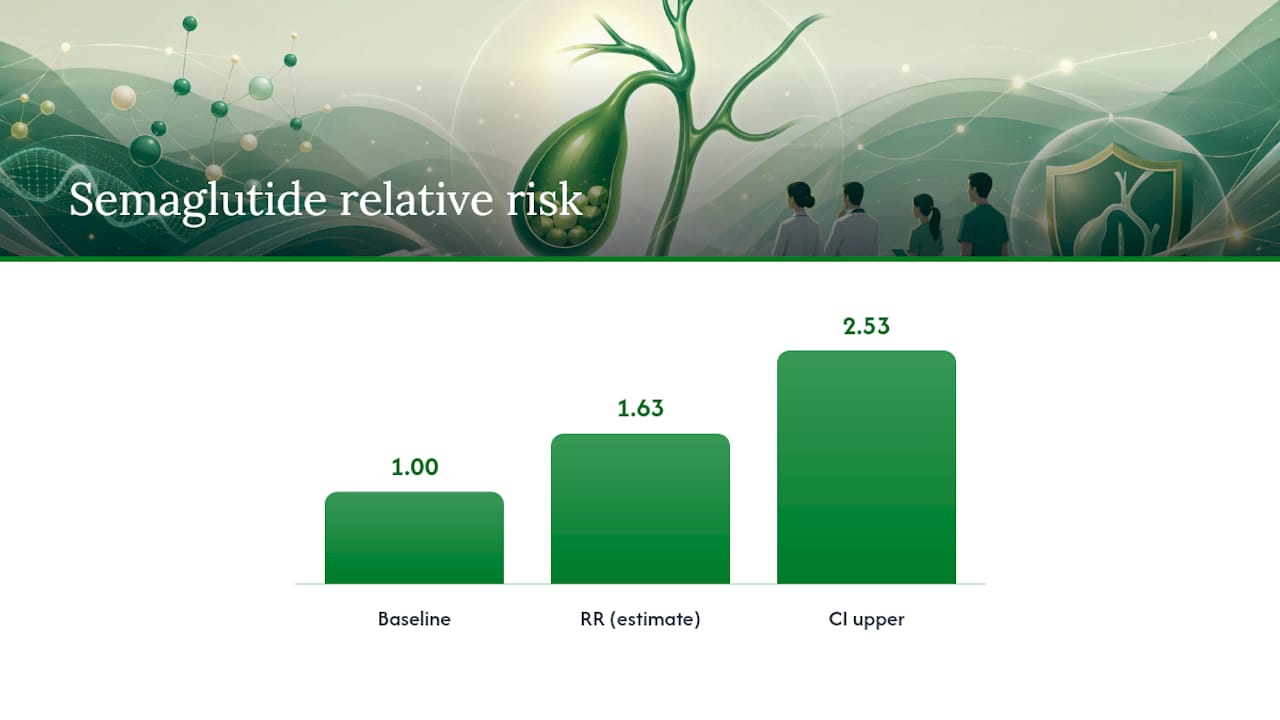
Semaglutide-specific numbers run somewhat higher. A meta-analysis focused on semaglutide and tirzepatide in people without diabetes found a relative risk of 1.63 for gallbladder related disorders, with a 95% confidence interval of 1.04 to 2.53, and a similarly elevated risk specifically for cholelithiasis, meaning gallstones. That wider confidence interval matters. It tells you the true risk could be close to no increase at all in some populations, or it could be more than double, and the studies to date haven’t narrowed that range as tightly as clinicians would like.
Postmarketing surveillance adds a different kind of evidence, and it’s worth understanding why it matters even though it’s less rigorous than a randomized trial. A JAMA Internal Medicine review of FAERS reports, the FDA’s adverse event reporting system, identified 36 postmarketing cases of acute cholecystitis, an infected or inflamed gallbladder, tied to GLP-1 receptor agonists including semaglutide, exenatide, dulaglutide, and lixisenatide. Thirty of those 36 cases required cholecystectomy, surgical removal of the gallbladder. Nearly half occurred within 90 days of starting the medication.
The early months of treatment, particularly during dose escalation, appear to carry the highest relative risk for acute gallbladder events.
FAERS data has real limitations worth naming plainly: it relies on voluntary reporting, so it almost certainly undercounts actual cases, and it can’t establish causation the way a controlled trial can. Still, when postmarketing signals point the same direction as randomized-trial data, that convergence carries weight.
Three factors consistently modify the size of the risk across the literature:
The number that matters most: across pooled semaglutide-specific trials, gallbladder-related disorder risk ran at roughly 1.63 times that of placebo, with cholelithiasis specifically elevated, and close to half of severe postmarketing cholecystitis cases surfaced within the first 90 days of treatment.
None of this makes semaglutide unusual among weight-loss interventions. Rapid weight loss from any cause, bariatric surgery, very low-calorie diets, aggressive dieting, has long been linked to gallstone formation. Semaglutide appears to add its own layer of risk on top of that baseline, which is what the next section gets into.
Researchers haven’t nailed down a single mechanism, and the honest answer is that gallbladder complications with semaglutide likely come from at least two overlapping pathways instead of one clean explanation.
The first, and best-supported, involves how GLP-1 receptor agonists slow digestion generally. Semaglutide suppresses the hormone cholecystokinin’s normal signaling cascade and appears to reduce gallbladder motility, meaning the gallbladder empties less completely and less often. A review of GLP-1 receptor agonists and gallbladder disease mechanisms lays out this pathway in detail: when the gallbladder doesn’t empty efficiently, bile sits longer than it should, and stagnant bile is exactly the condition under which gallstones tend to form.
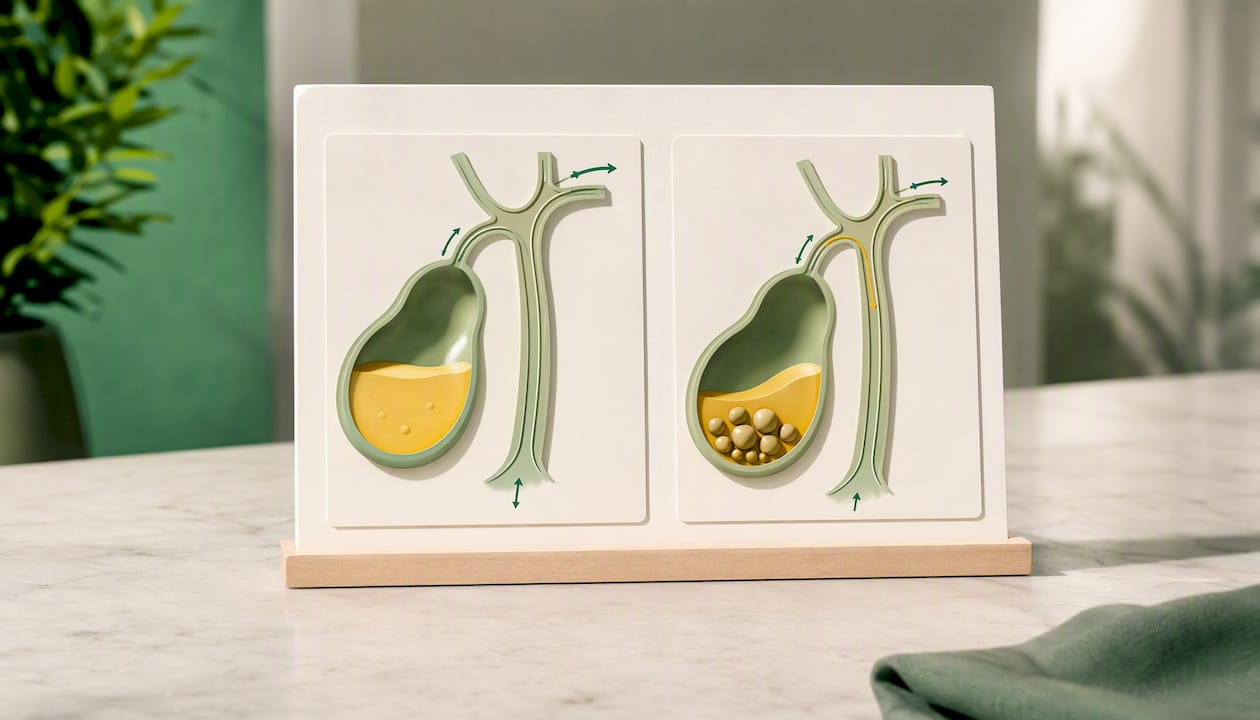
The second pathway involves bile chemistry itself. Rapid weight loss, on its own, shifts the ratio of cholesterol to bile salts and lecithin in bile, a phenomenon called cholesterol supersaturation. When bile carries more cholesterol than it can keep dissolved, that excess cholesterol crystallizes, and crystals aggregate into stones over time. Some mechanistic research on GLP-1 effects on gastrointestinal physiology also points to altered bile acid signaling through receptors called FXR and TGR5, which help regulate how bile acids are synthesized and recycled. Disrupting that signaling could compound the problem of bile stasis with a chemistry problem, supersaturated bile sitting in a gallbladder that isn’t emptying well.
Here’s where the evidence gets genuinely murky, and it’s worth being direct about that rather than pretending the science is settled:
That last point isn’t a minor academic footnote. It shapes how clinicians think about dose pacing, since if weight-loss speed is the dominant driver, slower titration schedules become a more direct lever for reducing risk than they would be if the drug had a purely independent biliary effect.
Risk isn’t distributed evenly, and knowing where you fall changes how closely you and your clinician should be watching for symptoms.
A handful of factors show up consistently across the clinical literature as raising the odds of a gallbladder event during semaglutide treatment:
If you have a personal history of pancreatitis or a severe gastrointestinal condition, that also belongs on the table during your intake. MedlinePlus’s semaglutide drug information specifically instructs patients to disclose prior pancreatitis and gallbladder disease before starting treatment, because both conditions change how a clinician should monitor you going forward.
Pro Tip: If you’re in a higher-risk category, particularly if you’ve had gallstones before or you’re losing weight fast on a higher dose, ask your clinician to schedule a check-in specifically during your dose escalation window rather than waiting for your next routine follow-up. Most serious gallbladder events cluster early, and a proactive touchpoint during that window costs little and catches problems sooner.
None of these factors are automatic disqualifiers for semaglutide. They’re inputs into a monitoring plan, not a stop sign. A patient with a prior gallstone history can often still take semaglutide safely, just with tighter symptom tracking and a lower threshold for imaging if anything feels off.
Most people on semaglutide experience some gastrointestinal discomfort, and the challenge is telling ordinary side effects apart from an actual gallbladder emergency.
Common, usually transient side effects include mild nausea, some bloating, occasional constipation or diarrhea, and general stomach upset, especially in the days following a dose increase. These typically ease within a week or two as your body adjusts. If nausea is a persistent problem, RoenRx’s guidance on semaglutide nausea relief covers practical steps that don’t involve stopping treatment.
Red-flag symptoms are a different category entirely, and Mayo Clinic’s semaglutide drug monograph specifically calls out stomach pain, severe nausea or vomiting, bloating, and yellowing of the skin or eyes as signs that warrant immediate medical contact. Watch for these specifically:
If you’re experiencing any combination of severe pain lasting several hours, fever, or jaundice, that’s an emergency department situation, not a wait-and-see one.
When a clinician suspects a gallbladder problem, the standard workup usually includes liver function blood tests, a white blood cell count to check for signs of infection or inflammation, and an abdominal ultrasound, which remains the most reliable first-line imaging tool for spotting gallstones or gallbladder wall thickening. If the ultrasound is positive and symptoms are severe, the typical next steps are hospital admission for observation and pain management, or cholecystectomy. Recall that nearly half of the serious postmarketing cholecystitis cases in the JAMA Internal Medicine FAERS analysis needed surgical removal of the gallbladder, and most of those occurred within the first three months of treatment.
Good monitoring starts before the first dose, not after symptoms appear. A baseline conversation about prior gallbladder disease, gallstones, biliary surgery, or pancreatitis gives your clinician a reference point and shapes how closely they’ll want to follow you.
The highest-yield monitoring window is the first three months of treatment, particularly during dose titration, since that’s when the FAERS case data shows serious events clustering most heavily. Practically, that means:
One area where the evidence genuinely runs thin: there’s no well-established prophylactic drug regimen, like a bile acid supplement, proven to prevent semaglutide-associated gallstones in the general patient population. Some clinicians consider it case by case for patients at especially high baseline risk, but this isn’t a standardized recommendation, and it’s a conversation to have directly with your prescribing clinician rather than something to self-initiate.
Pro Tip: Keep a simple symptom log during your first three months on semaglutide, just a note on your phone tracking any abdominal discomfort, its location, and how long it lasts. If a pattern of recurring right-upper-quadrant discomfort emerges, that log gives your clinician something concrete to act on instead of a vague “I’ve felt off.”
Yes, having no gallbladder doesn’t automatically rule out semaglutide, but it does change what you and your prescriber should be watching for. After cholecystectomy, bile flows more or less continuously from the liver into the small intestine instead of being stored and released in concentrated bursts, which is the gallbladder’s normal job.
That altered bile flow means symptom presentation can look different if something goes wrong elsewhere in the biliary system, most often in the bile ducts themselves rather than a gallbladder that no longer exists. Post-cholecystectomy patients can still develop bile duct stones or duct-related complications, and clinicians should keep a lower threshold for lab work or imaging if a patient without a gallbladder reports upper abdominal pain, unusual bloating, or jaundice while on semaglutide.
The key practical point is disclosure. Tell your prescriber about your cholecystectomy history at intake, not because it’s a barrier to treatment, but because it changes what “normal” versus “concerning” looks like for your specific anatomy going forward.
Telehealth care for semaglutide works best when it’s built around the same clinical logic outlined above: front-load your screening, watch closely during the first months, and make it easy to reach a clinician the moment something feels wrong.
A thorough intake should always cover the basics that shape your individual risk profile:
From there, clear escalation rules matter more than good intentions. Mild, transient nausea or bloating can usually be managed through messaging and adjusted dosing pace. Persistent right-upper-quadrant pain, fever, jaundice, or vomiting that won’t stop should trigger an immediate escalation to an in-person evaluation or emergency care rather than a “let’s monitor it” response.
Pro Tip: The single biggest lever for catching a gallbladder problem early isn’t a fancier test, it’s speed of access to a clinician when something feels wrong. A PLOS Medicine analysis of GLP-1 safety questions points out that rapid clinician access during early dose escalation can meaningfully shorten the delay between symptom onset and evaluation, which is exactly the window where cholecystitis cases tend to surface.
RoenRx’s telehealth model is built around that access gap specifically: same-day appointments when something needs a same-day answer, direct messaging with your care team for day-to-day symptom questions, and streamlined prescription delivery so treatment adjustments don’t stall on logistics. None of that replaces an emergency department for a true red-flag symptom, but it does close the distance between “something feels off” and “a clinician actually looked at it,” which is where a lot of preventable complications hide.
Prescribing information and clinical drug monographs treat gallbladder disease as a documented precaution rather than a rare footnote. Mayo Clinic’s semaglutide monograph specifically instructs patients to contact a doctor if they experience stomach pain, severe nausea or vomiting, bloating, or yellow eyes or skin, framing these directly as possible gallbladder warning signs rather than generic GI complaints.
MedlinePlus’s drug information reinforces the same counseling point from the other direction: patients are told to disclose any history of gallbladder disease or pancreatitis before starting treatment, so the prescriber can factor that history into monitoring from day one. Both sources frame gallbladder risk as a precaution requiring active patient counseling and disclosure, not a black-box warning that overrides the decision to prescribe.
A relative risk of 1.37 to 1.63 sounds alarming until you set it against absolute terms. Most people taking semaglutide will never develop a gallbladder problem serious enough to need intervention. That doesn’t erase the risk, but it puts it in proportion against real, well-documented benefits: meaningful weight loss, better glycemic control, and downstream cardiovascular gains that most patients are chasing when they start this medication in the first place. You can read more about those trade-offs in RoenRx’s overview of semaglutide’s weight-loss benefits.
What I’d push back on is the instinct, understandable as it is, to treat this risk signal as a reason to avoid semaglutide altogether. The far better response is individualized counseling: know your personal risk factors, understand the 90-day window where events cluster, and commit to reporting symptoms early rather than waiting them out. The FAERS data is sobering, thirty of thirty-six cholecystitis cases needed surgery, but it’s also a strong argument for vigilance, not avoidance. Prompt evaluation is what prevents a manageable gallstone episode from becoming an emergency surgery.
— Bryan
Catching a gallbladder problem early depends less on luck and more on how fast you can reach a clinician when something feels wrong, especially during those first three months of dose escalation when risk runs highest. RoenRx builds its semaglutide care around exactly that gap: same-day appointments when a symptom needs a same-day answer, direct messaging with your care team for day-to-day questions about side effects, and prescription delivery that keeps your treatment plan moving without added friction.

That structure maps directly onto the monitoring steps covered above. Baseline screening happens at intake, dose escalation check-ins happen through messaging rather than requiring a full office visit every time, and if a red-flag symptom shows up, you’re not stuck waiting weeks for an appointment slot to ask about it. If you’re currently on semaglutide or considering starting, you can schedule a consultation for semaglutide treatment and get a monitoring plan built around your specific gallbladder risk factors from day one.
This article is general information, not a substitute for advice from a qualified doctor. Consult a qualified healthcare professional about your own circumstances before acting on anything here.
Semaglutide primarily affects the gastrointestinal system, including the stomach, pancreas, and gallbladder, by slowing digestion and altering hormone signaling, with gallbladder and biliary effects being among the more clinically significant risks documented in meta-analysis data.
Disclose any prior gallbladder or pancreatitis history before starting treatment, avoid overly aggressive caloric restriction that speeds weight loss beyond what your clinician recommends, and report any persistent upper abdominal pain promptly rather than waiting for a routine follow-up.
Pancreatitis is considered a rare but recognized risk with semaglutide, distinct from the more commonly reported gallbladder risk, and MedlinePlus specifically advises disclosing any prior pancreatitis history before starting treatment so your clinician can monitor accordingly.
Yes, semaglutide is generally still an option after cholecystectomy, though bile flows differently without a gallbladder, so clinicians should watch for atypical biliary symptoms like upper abdominal pain or jaundice and maintain a lower threshold for testing if they occur.
Contact your clinician immediately for persistent abdominal pain, or seek emergency care if you have severe pain lasting several hours, fever with abdominal pain, or jaundice, since these combinations point toward conditions like cholecystitis that typically need prompt evaluation.