Yes, if you use hormonal birth control, you can safely skip or delay your period. The simplest method is to skip the placebo pills, remove the hormone-free week, or leave your ring in and start your next active pack or pill pack right away instead of taking a break. Talk to your clinician first if you have a history of migraines, blood clots, or smoke and are over 35, since those factors can change what’s safe for you.
TL;DR:
- Continuous use of combined pills or vaginal rings offers the most predictable control for skipping periods, especially around specific dates like travel or events.
- Breakthrough bleeding during the first few months is common and usually resolves within three months with proper adherence to the method.
- Long-term suppression is safe for most people, with a lower risk of ovarian and uterine cancer, but those with certain health conditions should consult a clinician beforehand.
- Pharmacies require specific prescription instructions and potentially a 90-day supply to accommodate continuous or extended use without interruption.
- Returning to regular cycles after stopping suppression typically happens quickly, within one or two cycles, but protection ends immediately upon discontinuation.
The bleeding you get on the pill isn’t a real period. It’s called withdrawal bleeding, and it happens because you stop taking hormones for a few days, which causes your uterine lining to shed. No hormones, no medical reason to keep that break. Mayo Clinic explains that continuous hormone use prevents ovulation and keeps the uterine lining thin, so there’s nothing to shed in the first place.
Two terms get used loosely, so here’s the actual difference:
If your pack has placebo pills, you skip straight to a new pack’s active pills. If you’re on the ring, you insert a new one immediately instead of taking the usual ring-free week. Most people notice some unpredictable spotting for the first one to three months as the body adjusts, then it settles down.
Not every method gives you the same level of control, and that matters depending on whether you’re trying to skip one period for a vacation or suppress bleeding for months at a time.
Pro Tip: If you’re trying to skip periods around a specific date, start early. Combined pills and the ring give you the most predictable control, but any method still needs to be taken correctly and consistently to keep working as birth control. Skipping bleeding doesn’t mean skipping doses.
For most people already eligible for hormonal birth control, yes. ACOG confirms that continuous use is medically safe and is even linked to a lower long-term risk of uterine and ovarian cancer, since it reduces cyclic hormone exposure over time.
Breakthrough bleeding, not pregnancy risk or hormone buildup, is the side effect that actually derails most people who try continuous use, and it usually resolves within a few months.
Common side effects to expect:
Certain conditions change the calculation. Smoking combined with age over 35, a personal or family history of blood clots, migraines with aura, and uncontrolled high blood pressure are all reasons to loop in a clinician before switching to continuous use. And if you’re not currently on hormonal birth control and your period disappears on its own, that’s a different situation entirely. It warrants evaluation, not a shrug.
On fertility: stopping hormones doesn’t leave any lasting mark. UT Southwestern notes that fertility returns quickly for most people once they stop, often within a normal cycle or two. Just remember that “quickly” cuts both ways. Contraceptive protection ends the moment you stop, whether or not your period has returned yet.
Pharmacies fill prescriptions based on exactly what’s written, so a standard refill order can leave you short on active pills if you’re skipping placebos every cycle.
A telehealth birth control consultation can walk you through this exact conversation without waiting weeks for an in-office slot. If cost is a concern, comparing healthcare cost strategies alongside your prescription plan can help you find where the extra pack fits your budget.
Spotting in the first one to three months is normal and doesn’t mean anything’s wrong. Keep a simple log (a notes app works fine) so you can tell your clinician exactly when and how often it happens.
Pro Tip: Set a recurring phone reminder for your pill or ring swap. Most “unexplained” breakthrough bleeding traces back to a missed dose the person genuinely forgot about.
Before starting continuous use, bring your full picture: smoking status, migraine history (especially with aura), any personal or family clotting history, and a list of current medications. These details change which method is actually appropriate for you.
Worth asking directly: which method fits your goals best, what bleeding pattern to expect in the first few months, and how refills will be handled so you’re not scrambling at the pharmacy.
RoenRx connects you with a clinician through virtual visits, often with same-day appointment availability, so you’re not stuck waiting weeks to start. Follow-up happens through secure messaging with your care team, and prescriptions get routed for delivery once your plan is set. Visits are private, and you can flag new symptoms anytime through messaging rather than booking a whole new appointment.
For many people, yes, and it’s often the actual reason they wanted to skip periods in the first place, not just convenience. Fewer withdrawal bleeds generally means fewer episodes of the cramping, bloating, and mood swings that show up right before or during a period.

Continuous hormone levels avoid the hormonal dip that triggers menstrual migraines for some people, since that drop is what tends to set off cramping and premenstrual symptoms in the first place. If your PMS has historically been rough enough to affect work or plans, that’s a legitimate reason to discuss suppression with a clinician, not a minor perk.
That said, results vary. Some people notice a dramatic improvement within the first cycle or two. Others need a few months of adjustment before symptoms calm down, particularly if breakthrough spotting is still working itself out. If cramps or PMS symptoms don’t improve after three or four months of consistent use, it’s worth revisiting your method with your clinician. Not every formulation suits every body the same way, and switching to a different combined pill or progestin type sometimes solves what the first attempt didn’t.
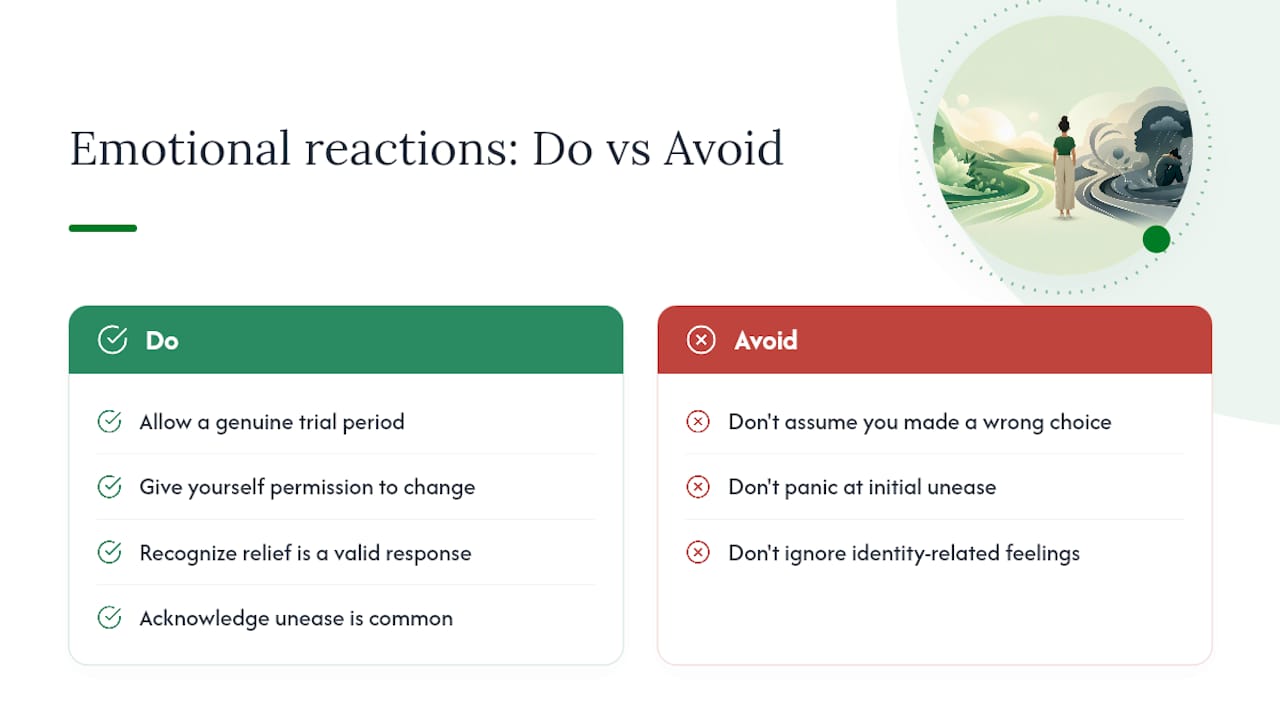
The emotional response to skipping periods is more mixed than most articles admit. Some people feel immediate relief, especially those with heavy, painful, or unpredictable cycles that have shaped their planning around bathrooms and backup clothes for years. Not having to think about it is a real quality-of-life shift.
Others feel oddly uneasy, at least at first. A monthly period can function as a familiar body signal, a monthly “everything’s working normally” checkpoint, and losing that rhythm takes some psychological adjustment even when nothing is medically wrong. That reaction is common and doesn’t mean you made the wrong choice.
There’s also a subtler layer: cultural and personal associations with menstruation run deep for a lot of people, tied to identity, femininity, or simply years of habit. Feeling ambivalent about suppressing something that’s been part of your monthly life is a normal reaction, not a red flag. Give yourself permission to change your mind. If continuous use doesn’t sit right after a genuine trial period, going back to a standard cycle is always an option, and it doesn’t undo any of the safety or effectiveness benefits you got in the meantime.
Stopping suppression is straightforward. If you’re on pills, simply resume taking the placebo week (or stop entirely, if you’re switching methods) and your body will typically restart its withdrawal bleeding pattern within that next cycle or shortly after.
For the ring or patch, resuming the standard on-week, off-week schedule works the same way. If you’ve been on the implant, IUD, or DMPA injection, timing is less predictable. The hormone clears your system at different rates depending on the method, and DMPA in particular can take several months to fully wear off before regular cycles resume.
Expect the first cycle or two back to feel a little different. Flow, timing, and cramping intensity can vary as your body recalibrates after a stretch without withdrawal bleeding. This is normal and not a sign that anything went wrong during the suppression period.
One point that trips people up: if you’re going off hormones entirely rather than switching to a different method, contraceptive protection ends the moment you stop, not when your period returns. If you’re not trying to get pregnant, line up a new method before you stop the old one.
Wanting fewer periods is a valid medical goal, not a shortcut or a vanity request. Plan the method with a clinician, track any bleeding changes honestly, and don’t hesitate to adjust course if something feels off after a genuine trial.
— Bryan
Getting the right pack, the right refill plan, and a clinician who actually answers questions about breakthrough bleeding usually takes more back-and-forth than it should at a typical in-person practice. RoenRx cuts that down to a same-day virtual visit, a care team you message directly instead of playing phone tag, and prescriptions routed for delivery so you’re not making a separate pharmacy trip to sort out refill confusion.

During your visit, a clinician reviews your history, talks through which method fits your goals (short-term skipping versus long-term suppression), and writes the prescription with the correct continuous-use wording so your pharmacy doesn’t flag it as an early refill. Follow-up questions, like managing unexpected spotting, go through the same messaging thread, no rebooking required. If you’re ready to set up a continuous-use birth control prescription, you can start your visit today through RoenRx.
This article is general information, not a substitute for advice from a qualified doctor. Consult a qualified healthcare professional about your own circumstances before acting on anything here.
There’s no fixed limit for eligible users; many people skip continuously for months or years under a clinician’s guidance, with occasional planned breaks if breakthrough bleeding becomes persistent.
It refers to giving your body about three months to adjust to continuous or extended use before judging whether the bleeding pattern has stabilized, since breakthrough spotting is most common in that early window.
Yes. Skip the placebo pills or hormone-free ring week and start your next active pack or ring right away instead, which is one of the most common short-term uses of this approach.
Combined pills, including extended-cycle packs designed for fewer withdrawal bleeds per year, tend to give the most predictable control for planned skipping compared with other methods.
No. Fertility returns after you stop hormonal birth control, typically within a normal cycle or two, and continuous use has no lasting effect on your ability to conceive later.