
Mounjaro: doses, side effects, coupon, and online care
Everything people ask about Mounjaro in one place: the doses, the side effects, and who the $25 coupon really works for. When you’re ready, a licensed Roen provider can evaluate you online and check whether your plan covers it.
- Once-weekly tirzepatide, which works on both the GIP and GLP-1 hormone pathways
- As low as $25/mo for brand Mounjaro when your insurance covers it*
- No live visit needed. A provider can evaluate you entirely by message
- Available in all 50 states, brand-name or compounded

See important safety information for Mounjaro, including a boxed warning.
What is Mounjaro?
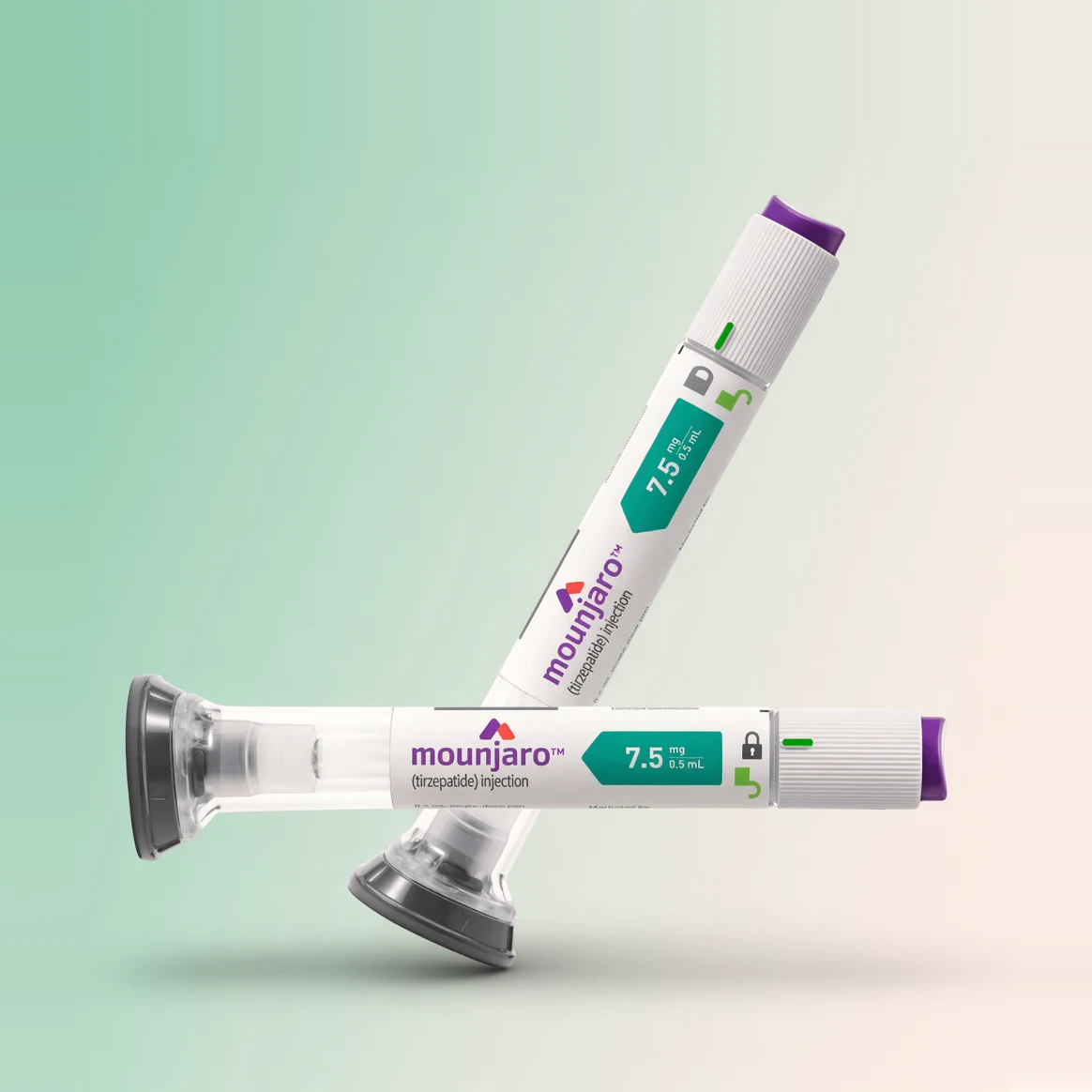
Mounjaro is Eli Lilly’s brand of tirzepatide, a once-weekly injection. The FDA first approved it in May 2022 to improve blood sugar in adults with type 2 diabetes, alongside diet and exercise. Lilly now also lists it for people 10 and older with type 2 diabetes, and for lowering the risk of major cardiovascular events in adults with type 2 diabetes who are at high risk.4
Mounjaro is not FDA-approved for weight loss. Many people do lose weight on it, and providers sometimes prescribe it off-label for that reason, but the tirzepatide product approved for weight management is Zepbound.
Is Mounjaro the same as Zepbound?
Chemically, yes. Both are tirzepatide, made by Eli Lilly, in the same six strengths from 2.5 mg to 15 mg. The difference is the label. Mounjaro is approved for type 2 diabetes. Zepbound is approved for chronic weight management and for obstructive sleep apnea in adults with obesity.
That distinction matters most at the pharmacy counter. Insurers decide coverage by diagnosis, so a plan may pay for one and refuse the other. Your Roen provider can tell you which one fits your situation.
What doses does Mounjaro come in?
Mounjaro comes in six doses: 2.5 mg, 5 mg, 7.5 mg, 10 mg, 12.5 mg, and 15 mg. Each is injected once a week.2
- Starting dose: 2.5 mg once a week.
- Increases: 2.5 mg at a time, after at least four weeks on your current dose, if you need more blood sugar control.
- Maximum dose: 15 mg once a week for adults.
See the full Mounjaro dose schedule, including what to do about a missed dose.
*Requires commercial insurance that covers Mounjaro, a prescription for an FDA-approved use, and enrollment in Eli Lilly’s Mounjaro Savings Card. Savings limits apply and government-insured patients are not eligible. See coupon and cost details. †$216/mo applies to a quarterly plan; $329/mo billed monthly. Roen membership ($39 first month, then $135/mo) is separate from medication.
Safety summary: Mounjaro is used with diet and exercise to improve blood sugar in people with type 2 diabetes. It can cause serious side effects, including possible thyroid tumors. Do not use it if you or a family member has had medullary thyroid carcinoma (MTC) or if you have Multiple Endocrine Neoplasia syndrome type 2 (MEN 2). Read more safety information.
In adults with type 2 diabetes, tirzepatide took off up to 15% of body weight
Over 72 weeks, adults with type 2 diabetes and obesity or overweight lost an average of 12.8% of their starting weight on the 10 mg dose and 14.7% on 15 mg. The placebo group lost 3.2%.1 Mounjaro itself is approved for blood sugar, and in a separate 40-week diabetes trial it lowered A1C by 2.0 to 2.3 points.5
at the 15 mg average (14.7%) 37lbs
Range from 10 mg to 15 mg: 32 to 37 lbs
An illustration based on averages from one trial, not a prediction. Participants also followed a reduced-calorie diet and increased their activity. Mounjaro is approved for type 2 diabetes, not for weight loss.
Two routes to tirzepatide
Mounjaro and compounded tirzepatide share an active ingredient. Your diagnosis and your insurance usually decide which one makes sense.
| Brand Mounjaro®Type 2 diabetes, insurance covers it | Compounded tirzepatideWhen Mounjaro isn’t covered | |
|---|---|---|
| Active ingredient | Tirzepatide | Tirzepatide |
| FDA status | FDA-approved for type 2 diabetes. Not approved for weight loss | Not FDA-approved. Made by a compounding pharmacy for an individual prescription |
| Medication cost | As low as $25/mo with covered commercial insurance and Lilly’s savings card | $329/mo, or $216/mo on a quarterly plan |
| How often | Once a week | Once a week |
| How you get it | Filled through a partner pharmacy once coverage is confirmed | Delivered to your door from a partner pharmacy |
| Roen membership | $39 for the first month, then $135/mo. Covers your evaluation, visits, and ongoing support. Medication is billed separately. | |
How it works
Everything happens in your Roen account, from the first health questions to your refills. Booking time with a clinician is optional.
1. Sign up and share your history
Open your membership for $39 and answer questions about your health, your medications, and what you’re hoping to change. If you have type 2 diabetes, say so. It affects which medication your insurance is likely to cover.
2. A licensed provider reviews it
A Roen clinician reads through your answers and decides whether tirzepatide is appropriate for you, and in which form. It’s handled by message, so there’s nothing to schedule. If something needs clarifying, they’ll ask.

3. We check your coverage
Upload your insurance card and we’ll look at whether your plan covers Mounjaro. Plans generally cover it for type 2 diabetes. When yours does, Lilly’s savings card can bring a fill down to as little as $25.

4. Your prescription is filled
Covered: your Mounjaro prescription goes to a partner pharmacy. Not covered: your provider can prescribe compounded tirzepatide instead, delivered to your door for $329 a month, or $216 a month on a quarterly plan.

5. Check in as your dose changes
Mounjaro doses start at 2.5 mg and step up every four weeks or more. If nausea or other side effects show up along the way, message your care team. They can hold your dose, lower it, or help you manage the symptoms.

What a Roen membership covers
- An evaluation by a licensed provider, and a prescription when treatment is appropriate
- A coverage check to see whether your plan pays for Mounjaro
- Care by message, with visits included if you’d like one
- Dose changes handled by your provider
- Support for side effects when they come up
- Access to brand Mounjaro and compounded tirzepatide
Medication is not included in the membership price and is billed separately.
Get StartedMounjaro side effects: what’s common and what’s serious
The most common Mounjaro side effects are nausea, diarrhea, decreased appetite, vomiting, constipation, indigestion, and stomach pain. They’re most likely in the weeks after you start or raise your dose, and for most people they fade with time.
| Common side effect | On Mounjaro | On placebo |
|---|---|---|
| Nausea | 12–18% | 4% |
| Diarrhea | 12–17% | 9% |
| Decreased appetite | 5–11% | 1% |
| Vomiting | 5–9% | 2% |
| Constipation | 6–7% | 1% |
| Indigestion | 5–8% | 3% |
| Stomach (abdominal) pain | 5–6% | 4% |
Approximate share of adults reporting each effect in Mounjaro’s placebo-controlled diabetes trials. Ranges cover the 5 mg, 10 mg, and 15 mg doses.2
How long do Mounjaro side effects last?
In Mounjaro’s trials, most reports of nausea, vomiting, and diarrhea came while the dose was still being increased, and they became less frequent over time. Stomach and gut side effects led 3% to 7% of people to stop treatment, depending on dose, compared with 0.4% on placebo.2
Other Mounjaro side effects
Burping, gas, acid reflux, and bloating were each reported by up to about 3% of people. About 3% had a reaction where they injected, such as redness or itching. Low blood sugar is uncommon when Mounjaro is used alone, and more likely when it’s combined with insulin or a sulfonylurea.2
Making side effects more manageable
- Keep meals small and eat slowly. Fullness arrives sooner than you’re used to.
- Skip heavy, high-fat meals around injection day.
- Drink fluids steadily, especially after vomiting or diarrhea.
- If you take insulin or a sulfonylurea, ask your provider how to watch for low blood sugar.
- Report symptoms that don’t ease. Holding at the same dose for another month is a common fix.
Serious side effects: get help right away
- Pancreatitis: severe pain in your stomach area that doesn’t let up and may spread to your back, with or without vomiting.
- Low blood sugar, especially alongside insulin or a sulfonylurea: shakiness, sweating, dizziness, confusion, fast heartbeat.
- Serious allergic reaction: swelling of the face, lips, tongue, or throat; trouble breathing or swallowing; severe rash.
- Kidney problems brought on by dehydration from vomiting or diarrhea.
- Gallbladder problems: pain in the upper stomach, fever, yellowing of the skin or eyes, pale stools.
- Vision changes, particularly if you have type 2 diabetes.
- A lump or swelling in your neck, hoarseness, or trouble swallowing. See the boxed warning.
Side effects are closely tied to dose changes. See the full Mounjaro dose schedule below, and our guide to tirzepatide side effects.
Mounjaro doses: 2.5 mg to 15 mg, one step at a time
Mounjaro comes in six doses: 2.5 mg, 5 mg, 7.5 mg, 10 mg, 12.5 mg, and 15 mg. Everyone starts at the lowest one, and the dose only goes up if you need more blood sugar control.
| Mounjaro dose | Earliest you’d reach it | What to know |
|---|---|---|
| 2.5 mg | Weeks 1–4 | The starting dose for everyone. It gives your body time to adjust. |
| 5 mg | Week 5 | The first step up, after at least four weeks on 2.5 mg. |
| 7.5 mg | Week 9 | The next step, if you need more blood sugar control. |
| 10 mg | Week 13 | The highest Mounjaro dose for patients aged 10 to 17. |
| 12.5 mg | Week 17 | Adults only. |
| 15 mg | Week 21 | The maximum Mounjaro dose for adults. |
Based on Mounjaro’s prescribing information: increases are 2.5 mg at a time, with at least four weeks on each dose.2 The weeks shown are the fastest schedule the label allows. Many people stay longer at a dose, or never need the highest ones. Your provider decides when and whether to move up.
Mounjaro doses aren’t based on your weight, and the dose doesn’t change with kidney or liver problems.2 Zepbound, the tirzepatide brand approved for weight management, comes in the same six strengths. For more, see our tirzepatide dosing schedule.
How to take your Mounjaro dose
- Once a week, on the same day each week, at any time of day.
- With or without food.
- Injected under the skin of your abdomen or thigh. Someone else can inject it in the back of your upper arm.
- Use a different spot each week.
- If you also take insulin, inject them separately and never mix the two.
Missed a dose of Mounjaro?
- Take it as soon as you can, as long as it’s within 4 days (96 hours) of when it was due.
- If more than 4 days have passed, skip it and take your next dose on your usual day.
- You can move your injection day, provided your last dose was at least 3 days (72 hours) earlier.
- Don’t double up to make up for a missed dose.
Pens and storage
- Each single-dose pen holds one weekly dose. You use it once and throw it away.
- A carton holds four pens, which is one month at that dose.
- Keep pens in the refrigerator at 36°F to 46°F, in the original carton.
- If needed, a pen can stay unrefrigerated, at up to 86°F, for a total of 21 days.
- Don’t freeze Mounjaro, and don’t use it if it has been frozen.
Mounjaro Savings Card, coupon, and cost: who actually gets the $25 price
The only genuine Mounjaro coupon is the Mounjaro Savings Card from Eli Lilly. It’s built for people with commercial insurance who are prescribed Mounjaro for type 2 diabetes. Codes from coupon sites can’t be combined with it.
| Your situation | What you may pay | The fine print |
|---|---|---|
| Commercial insurance that covers Mounjaro | As little as $25 for a 1-, 2-, or 3-month fill of the single-dose pen | Savings are capped at $150 per month of medication and $1,950 per calendar year, for up to 13 fills a year. The prescription has to be for an FDA-approved use. |
| Commercial insurance that doesn’t cover Mounjaro | As low as $499 for a one-month fill of the single-dose pen | The card takes off up to $647 a month. The on-label prescription requirement still applies. |
| No insurance, or paying cash | From $499 a month through LillyDirect | LillyDirect lists Mounjaro as self-pay only. Delivery is free. Taxes and fees may apply. |
| Medicare, Medicaid, TRICARE, VA, or other government coverage | Savings card not available | Government-insured patients are excluded from manufacturer coupons. Lilly reports that about 8 in 10 Medicare Part D patients pay $0 to $50 for a 28-day supply when Mounjaro is covered for type 2 diabetes. |
Prices and savings-card terms are set by Eli Lilly and can change without notice. The current card expires December 31, 2026. Confirm on Lilly’s site before you fill.3
Who can use the Mounjaro coupon
- You’ve been prescribed the Mounjaro single-dose pen for an FDA-approved use.
- You have commercial (employer or private) drug insurance.
- You aren’t enrolled in Medicare, Medicaid, TRICARE, VA, or any other government-funded program.
- You’re 18 or older and live in the U.S. or Puerto Rico.
What you pay with Roen
- Membership: $39 for the first month, then $135/mo.
- Brand Mounjaro, insurance covers it: as low as $25/mo for the medication.
- Insurance doesn’t cover it: compounded tirzepatide at $329/mo, or $216/mo on a quarterly plan.
Medication is billed separately from membership. Compounded medications are not FDA-approved.
Looking at Mounjaro for weight loss? Without a type 2 diabetes diagnosis, insurers rarely cover Mounjaro, and Lilly’s card requires an on-label prescription. Zepbound or compounded tirzepatide is usually the more realistic route, and your Roen provider can walk you through both.
How the Mounjaro Savings Card works
The Mounjaro Savings Card is a copay card from Eli Lilly. Your pharmacy bills your commercial insurance first, then runs the card, and the card pays part of what’s left. It has two tiers, depending on whether your plan covers Mounjaro.3
| Mounjaro Savings Card terms | Your plan covers Mounjaro | Your plan doesn’t cover Mounjaro |
|---|---|---|
| What you pay | As little as $25 per fill | As low as $499 per fill |
| Fill sizes | 1, 2, or 3 months | 1 month |
| Most the card pays per fill | $150 for 1 month, $300 for 2 months, $450 for 3 months | $647 |
| Most the card pays per year | $1,950 | $8,411 |
| Fills per calendar year | Up to 13 | Up to 13 |
| Form of Mounjaro | Single-dose pen | Single-dose pen |
| Expires | December 31, 2026 | December 31, 2026 |
A month is 28 days and up to four pens. Terms are from Eli Lilly, checked November 2026. Lilly can change or end the program at any time.3
What the Mounjaro Savings Card limits mean for your copay
“As little as $25” isn’t a guarantee. The card pays up to its limit, and you pay the rest.
- Copay of $175 or less for a one-month fill: the card covers up to $150, so you pay $25.
- Copay above $175: you pay everything over the $150 limit. A $250 copay becomes $100.
- Three-month fills stretch the card further. You can pay as little as $25 for all three months, and it counts as one of your 13 fills.
- The yearly limit can run out. At the full $150 a month, $1,950 covers 13 one-month fills. Once you reach it, you pay your plan’s full copay until the next calendar year.
Who qualifies for the Mounjaro Savings Card
You have to meet all of these every time you use the card.3
- You’ve been prescribed the Mounjaro single-dose pen for an FDA-approved use. Every approved use of Mounjaro is for people with type 2 diabetes.2
- You have commercial drug insurance, through an employer or a plan you bought yourself.
- You aren’t enrolled in Medicare (including Part D, Medicare Advantage, and Medigap), Medicaid, TRICARE, VA or DoD coverage, or a state drug assistance program.
- You’re 18 or older and live in the United States or Puerto Rico.
The card won’t work if:
- You’re prescribed Mounjaro for weight loss alone. Weight loss isn’t an approved use of Mounjaro, so the card doesn’t apply.
- You have no insurance. The card requires commercial coverage. Without it, Mounjaro is self-pay through LillyDirect, from $499 a month.4
- You were prescribed the KwikPen or vials. The card covers the single-dose pen only.
- Your plan runs an alternate funding program that makes you apply for manufacturer assistance as a condition of coverage.
- You’re using another discount. The card can’t be combined with a discount card, coupon, or any other offer for Mounjaro.
How to get and use the Mounjaro Savings Card
- Get a prescription. A licensed provider has to prescribe Mounjaro for an approved use first.
- Download the card. On Lilly’s Mounjaro savings page, choose “Get Savings Card” and answer the eligibility questions.3
- Activate it. The card has to be activated before your first fill.
- Give it to your pharmacy along with your insurance card. The pharmacy bills your insurance first and the savings card second.
- Ask about a three-month prescription. If your plan and pharmacy allow it, you can pay as little as $25 for the full three months.
- Check the price before you pay. If it isn’t what you expected, ask the pharmacist to confirm the card was applied, or call Lilly at 1-800-545-5979.
Why your Mounjaro Savings Card might not be working
- Your prior authorization wasn’t approved. If your plan won’t cover Mounjaro, the card moves you to the $499 tier.
- You’ve reached the yearly limit of $1,950 in savings or 13 fills.
- Your coverage changed. Moving to Medicare, Medicaid, or another government plan ends your eligibility.
- Your deductible hasn’t been met. A high pharmacy price early in the year can leave you well above $25 after the card’s $150.
- The card expired. The current card ends December 31, 2026, and you may need a new one for 2027.
Mounjaro Savings Card without insurance, or with Medicare
You can’t use the Mounjaro Savings Card without commercial insurance, and you can’t use it with Medicare. Here’s what applies in each case.
- No insurance: Mounjaro is available as a self-pay purchase through LillyDirect, from $499 a month.4
- Medicare Part D: many plans cover Mounjaro for type 2 diabetes. Lilly reports that about 8 in 10 Part D patients pay $0 to $50 for a 28-day supply.3
- Weight loss without diabetes: Zepbound is the tirzepatide brand approved for weight management. It has its own savings card and self-pay prices from $299 a month.
- Insurance won’t cover either brand: a Roen provider can prescribe compounded tirzepatide when appropriate, at $329 a month or $216 a month on a quarterly plan. Compounded medications are not FDA-approved.
Still comparing? See the cheapest ways to get tirzepatide, how Mounjaro compares with Ozempic, and where to get tirzepatide near you.
LillyDirect ships Mounjaro. You still need someone to prescribe it.
LillyDirect is Eli Lilly’s direct-to-patient pharmacy channel. For Mounjaro it’s a self-pay option: the single-dose pen starts at $499 a month, with free delivery.
Nothing ships until a licensed clinician sends LillyDirect a prescription. Roen’s providers can do that evaluation online, by message, and tell you whether Mounjaro, Zepbound, or compounded tirzepatide suits your situation.

| Roen | LillyDirect | |
|---|---|---|
| What it is | Telehealth membership with licensed providers | Eli Lilly’s pharmacy and delivery service |
| Evaluates you and prescribes | Yes, when a provider finds treatment appropriate | No. It fills prescriptions and can refer you to independent providers |
| Appointment needed | No. Reviews happen by message | Depends on the prescriber you use |
| Insurance | Upload your card and we check Mounjaro coverage | Mounjaro is listed as self-pay only |
| If Mounjaro isn’t covered | Compounded tirzepatide, $329/mo or $216/mo quarterly | Brand Mounjaro from $499/mo |
| Help with doses and side effects | Included with membership | Comes from your own prescriber |
LillyDirect details reflect Lilly’s published information as of November 2026.4 Roen is not affiliated with Eli Lilly and Company or LillyDirect.
Wondering if another medication fits better?
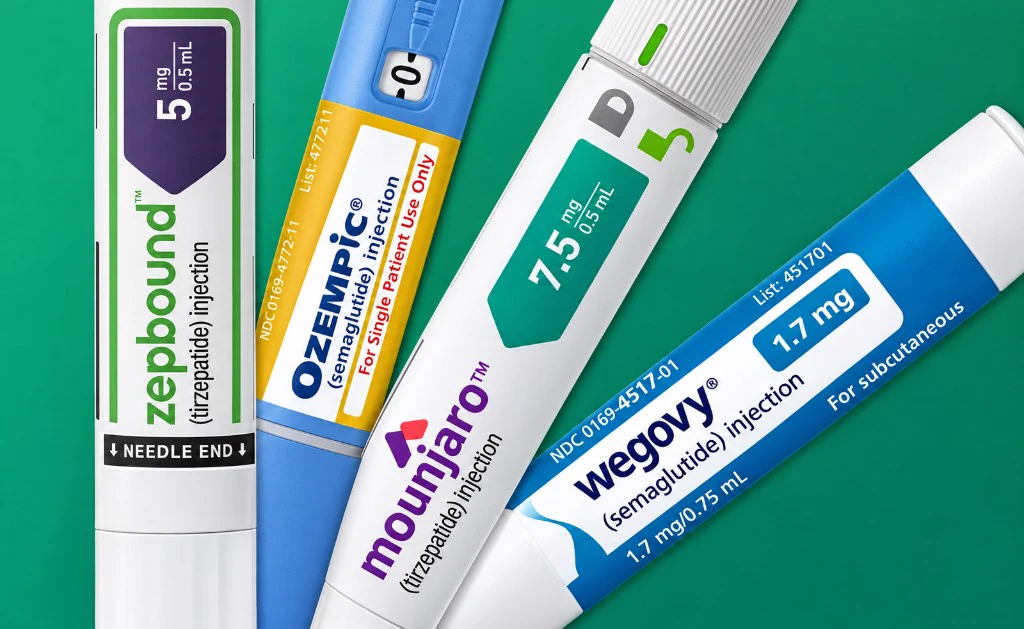
- Your provider can compare Mounjaro with other GLP-1 medications for you
- Routes for people with insurance coverage and without it
- The same membership, whichever medication you’re prescribed
Compare your options:
What Roen members say
Individual experiences vary.
I was nervous about asking my provider about Mounjaro because I didn’t know where to start. They listened to my concerns and explained the next steps in plain language. I appreciated having time to ask questions without feeling rushed into a decision.

What stood out to me was how thorough the conversation was. My provider reviewed my health history and talked through Mounjaro, including potential side effects and follow-up care. I came away feeling more informed and clear about the plan.

I had questions about Mounjaro that I kept forgetting to ask, so I wrote them all down and sent them to my provider. They went through the list with me and helped me understand what to expect. That personal attention meant a lot to me.

A licensed provider makes the call, every time
No Mounjaro prescription goes out through Roen until a licensed clinician has reviewed your health history. If Mounjaro isn’t a safe or sensible choice for you, they’ll say so and explain what is.
Mounjaro FAQs
What are the most common Mounjaro side effects?
The most common Mounjaro side effects are nausea, diarrhea, decreased appetite, vomiting, constipation, indigestion, and stomach pain. In Mounjaro’s trials, nausea affected 12% to 18% of people depending on dose, compared with 4% on placebo.
Serious side effects are much rarer. They include pancreatitis, gallbladder problems, kidney problems from dehydration, and serious allergic reactions, and Mounjaro carries a boxed warning about thyroid C-cell tumors. See the full side effect table.
What doses does Mounjaro come in?
Mounjaro comes in six doses: 2.5 mg, 5 mg, 7.5 mg, 10 mg, 12.5 mg, and 15 mg, each taken once a week. Everyone starts at 2.5 mg. If you need more blood sugar control, your provider can raise the dose 2.5 mg at a time, with at least four weeks on each dose.
See the Mounjaro dose schedule.
Is there a Mounjaro coupon?
One: the Mounjaro Savings Card from Eli Lilly. If you have commercial insurance that covers Mounjaro and a prescription for an FDA-approved use, it can lower a fill to as little as $25, with savings capped at $150 per month of medication and $1,950 per calendar year. If your commercial plan doesn’t cover Mounjaro, the card sets a one-month fill of the pen at as low as $499.
It can’t be used with Medicare, Medicaid, TRICARE, VA, or other government coverage, and it can’t be combined with third-party discount codes.
How much does Mounjaro cost?
It depends on your insurance and your diagnosis. With commercial insurance that covers Mounjaro, Lilly’s savings card can bring a 1-, 2-, or 3-month fill down to as little as $25. Without coverage, the single-dose pen starts at $499 a month, either with the savings card or as a self-pay purchase through LillyDirect, as of November 2026.
Through Roen, membership is $39 for the first month and $135 a month after that, and medication is billed separately. See the full cost breakdown.
How long do Mounjaro side effects last?
They’re usually at their worst in the first few days after you start or increase your dose, and they ease over the following weeks as your body adapts. If they’re severe or they linger, your provider can keep you on your current dose longer or step you back down.
What is the highest dose of Mounjaro?
The maximum Mounjaro dose is 15 mg once a week for adults. For patients aged 10 to 17, the maximum is 10 mg once a week. Not everyone needs the top dose. Your provider only moves you up when a lower dose isn’t giving enough blood sugar control and you’re tolerating it.
What should I do if I miss a dose of Mounjaro?
Take the missed dose as soon as you can, as long as it’s within 4 days (96 hours) of when it was due. If more than 4 days have gone by, skip that dose and take the next one on your regular day. Don’t take two doses within 3 days of each other.
Can Mounjaro be prescribed for weight loss?
Mounjaro is FDA-approved for type 2 diabetes, not for weight loss, so prescribing it purely for weight management is off-label. Insurers rarely pay for that, and Lilly’s savings card requires an on-label prescription. If weight loss is your goal and you don’t have diabetes, Zepbound is the tirzepatide product approved for it, and compounded tirzepatide is another route a Roen provider may consider.
How much weight do people lose on Mounjaro?
It varies. In a 72-week trial of adults with type 2 diabetes and obesity or overweight, average weight loss was 12.8% on tirzepatide 10 mg and 14.7% on 15 mg, compared with 3.2% on placebo. Everyone in the study also followed a reduced-calorie diet and increased their activity.
How do you take Mounjaro?
It’s injected under the skin once a week, on the same day each week, at any time of day, with or without food. Use your abdomen, thigh, or the back of your upper arm, and rotate the spot. Everyone starts on the 2.5 mg dose, and your provider raises it only as needed. See Mounjaro doses.
Can I get Mounjaro through LillyDirect?
Yes, as a self-pay purchase. LillyDirect lists the Mounjaro single-dose pen starting at $499 a month with free delivery. It doesn’t write prescriptions, so a licensed clinician has to send one in first. A Roen provider can evaluate you online and prescribe when it’s appropriate. See how the two compare.
Do I need a video visit to get Mounjaro through Roen?
No. With a Roen membership, a licensed provider can review your health history and prescribe asynchronously, so there’s no live appointment to schedule. Visits are included in your membership if you want to talk something through.
What if my insurance doesn’t cover Mounjaro?
A Roen provider can prescribe compounded tirzepatide when it’s appropriate, shipped to your door for $329 a month or $216 a month on a quarterly plan. Compounded medications are not FDA-approved. If you’re looking at tirzepatide for weight management, your provider may also discuss Zepbound.
What does the Roen membership include?
It’s $39 for the first month, then $135 a month. That covers your provider evaluation, visits, a check of your insurance coverage for Mounjaro, and ongoing help with dosing and side effects. Medication is billed separately.
Which states does Roen serve for Mounjaro?
Roen serves all 50 states. That covers both brand-name Mounjaro and compounded tirzepatide.
How do I get a Mounjaro Savings Card?
Download it from Eli Lilly’s Mounjaro savings page. You answer a few eligibility questions, activate the card, and give it to your pharmacy along with your insurance card. The pharmacy bills your insurance first and the savings card second.
You need a Mounjaro prescription for an FDA-approved use and commercial drug insurance. See how to get and use the card.
Who is eligible for the Mounjaro Savings Card?
You’re eligible if you have a prescription for the Mounjaro single-dose pen for an FDA-approved use, you have commercial drug insurance, you’re 18 or older, and you live in the United States or Puerto Rico.
You aren’t eligible if you’re enrolled in Medicare, Medicaid, TRICARE, VA, or another government-funded program, or if you have no insurance at all.
Can I use the Mounjaro Savings Card without insurance?
No. The card requires commercial drug insurance. If your commercial plan doesn’t cover Mounjaro, the card can still lower a one-month fill to as low as $499, with savings limited to $647 a month and $8,411 a year.
If you have no insurance, Mounjaro is a self-pay purchase through LillyDirect, from $499 a month as of November 2026.
Can I use the Mounjaro Savings Card for weight loss?
Not if weight loss is the only reason for the prescription. The card requires a prescription for an FDA-approved use, and Mounjaro is approved for adults and children 10 and older with type 2 diabetes, not for weight management.
Zepbound contains the same active ingredient, is approved for weight management, and has its own savings card. A Roen provider can go over which one fits.
When does the Mounjaro Savings Card expire?
The current Mounjaro Savings Card expires on December 31, 2026. It can be used for up to 13 fills per calendar year. Lilly can change or end the program at any time, and you may need a new card when terms change.
Read more about Mounjaro
Important safety information
What you should know before taking Mounjaro.
Boxed warning: risk of thyroid C-cell tumors
Tirzepatide caused thyroid tumors, including thyroid cancer, in studies with rats. It isn’t known whether Mounjaro causes thyroid tumors or a type of thyroid cancer called medullary thyroid carcinoma (MTC) in people. Don’t use Mounjaro if you or a family member has ever had MTC, or if you have Multiple Endocrine Neoplasia syndrome type 2 (MEN 2). Tell your provider about any lump or swelling in your neck, hoarseness, trouble swallowing, or shortness of breath.
Who should not take Mounjaro
- Anyone with a personal or family history of MTC, or with MEN 2.
- Anyone who has had a serious allergic reaction to tirzepatide or any ingredient in Mounjaro.
Before you start, tell your provider if you
- Have or have had problems with your pancreas or kidneys.
- Have severe stomach problems, such as slowed stomach emptying (gastroparesis).
- Have a history of diabetic retinopathy.
- Take insulin or a sulfonylurea. The combination raises the risk of low blood sugar.
- Are scheduled for surgery or a procedure that uses anesthesia or deep sedation.
- Are pregnant, planning to become pregnant, or breastfeeding. It isn’t known whether Mounjaro can harm an unborn baby.
- Use birth control pills. Mounjaro can make them less effective. Use a non-oral or backup method for 4 weeks after starting and for 4 weeks after each dose increase.
Possible serious side effects
- Inflammation of the pancreas (pancreatitis).
- Low blood sugar, especially when used with insulin or a sulfonylurea.
- Serious allergic reactions.
- Kidney problems, including kidney failure, usually tied to dehydration from vomiting or diarrhea.
- Severe stomach problems.
- Changes in vision.
- Gallbladder problems.
- Food or liquid getting into the lungs during surgery or procedures that use anesthesia.
Most common side effects
Nausea, diarrhea, decreased appetite, vomiting, constipation, indigestion, and stomach pain.
This summary doesn’t cover everything about Mounjaro and isn’t a substitute for talking with your provider. Read the full Prescribing Information and Medication Guide. To report side effects, contact the FDA at 1-800-FDA-1088 or fda.gov/medwatch.
- Garvey WT, et al. Tirzepatide once weekly for the treatment of obesity in people with type 2 diabetes (SURMOUNT-2). Lancet. 2023;402:613–626.
- Mounjaro (tirzepatide) Prescribing Information. Eli Lilly and Company. pi.lilly.com
- Mounjaro savings and support, including Savings Card terms. Eli Lilly and Company. mounjaro.lilly.com/savings-resources
- Mounjaro through LillyDirect. Eli Lilly and Company. lilly.com/lillydirect/medicines/mounjaro
- Frías JP, et al. Tirzepatide versus semaglutide once weekly in patients with type 2 diabetes (SURPASS-2). N Engl J Med. 2021;385:503–515.
Page last updated November 17, 2026.
See whether Mounjaro makes sense for you
Answer a few health questions and a licensed provider will review them. Membership is $39 for your first month.
Get StartedZepbound®, Mounjaro®, KwikPen®, and LillyDirect® are registered trademarks of Eli Lilly and Company. Ozempic®, Wegovy®, and NovoCare® are registered trademarks of Novo Nordisk A/S. Roen is not affiliated with or endorsed by these companies. Prescriptions are issued only after a licensed provider determines that treatment is appropriate. Compounded medications are not FDA-approved and have not been evaluated by the FDA for safety, effectiveness, or quality. This page is for general information and is not medical advice.