Brand nameInsurance checked for you
Zepbound®
tirzepatide · weekly injection
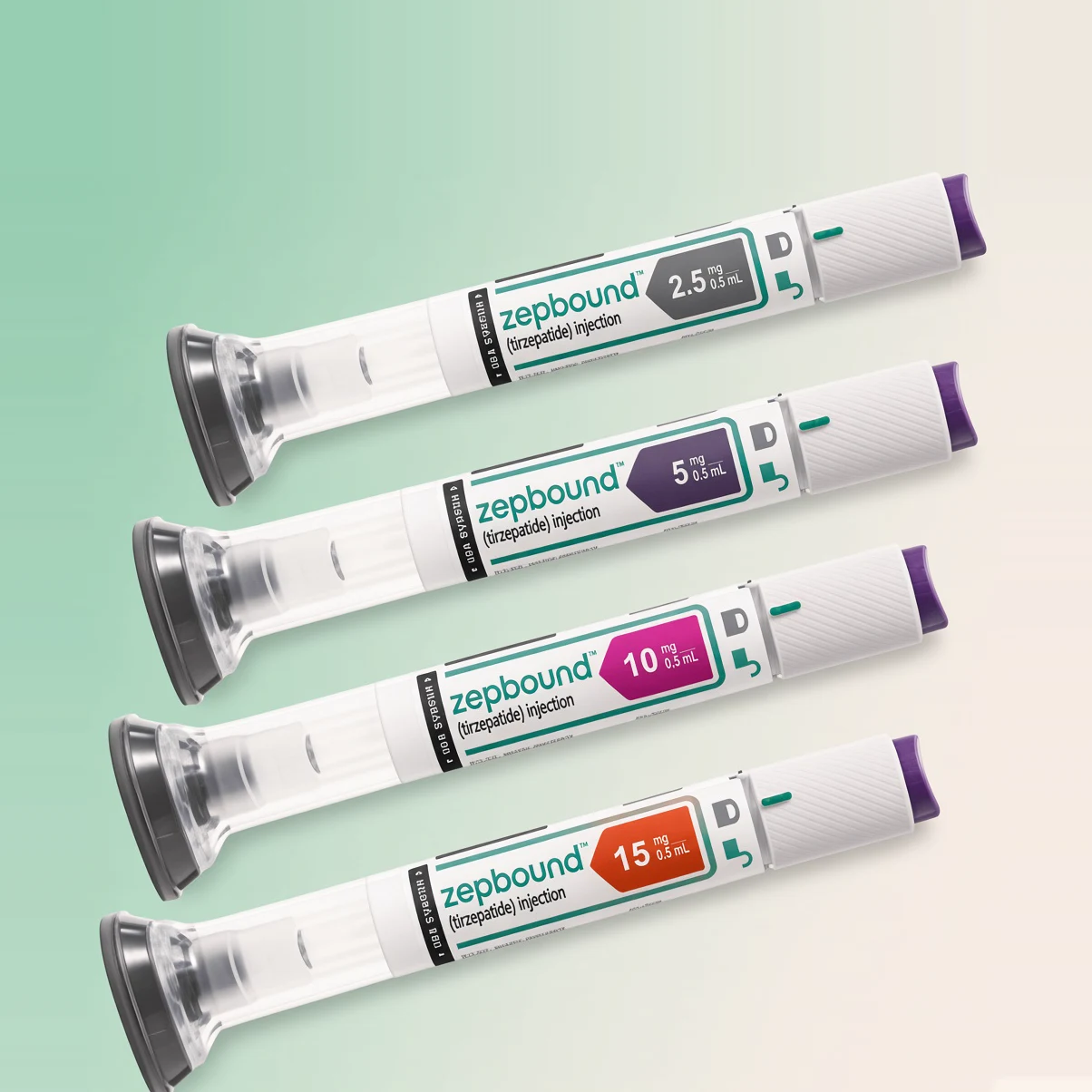
As low as $25/mo if your insurance covers it*

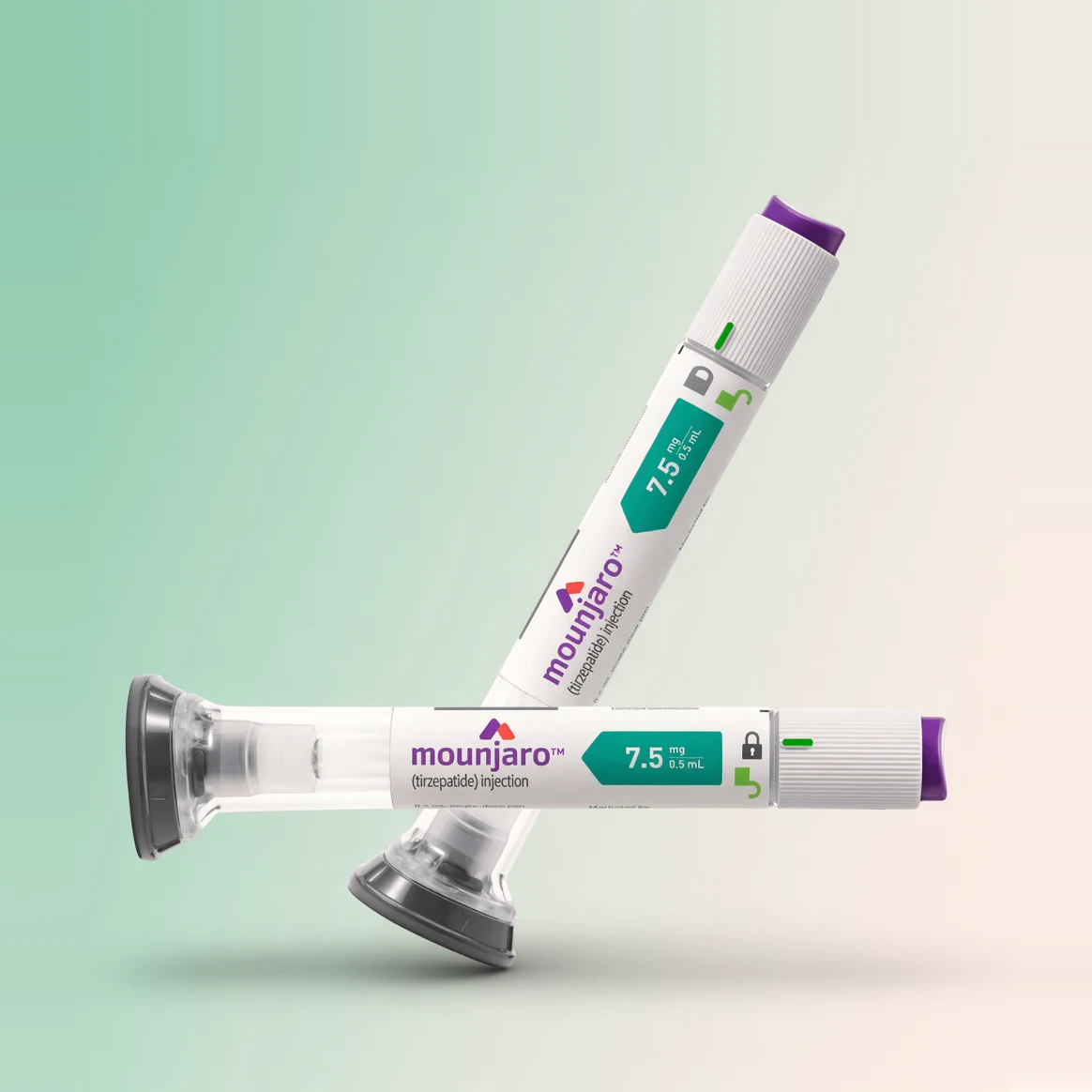
Mounjaro and Ozempic are both once-weekly injections approved for type 2 diabetes, and both lead to weight loss. In the one large trial that compared them directly, people on Mounjaro lost more weight and lowered their A1C more than people on Ozempic 1 mg. Here is how the two differ, and what that means for choosing between them.
Weight lost in the head-to-head trial
24.7 lbMounjaro 15 mg, 40 weeks
SURPASS-2 trial in 1,879 adults with type 2 diabetes. Ozempic’s 2 mg dose was not tested. A1C change is in percentage points.
Not sure which one fits? A licensed provider can review your health history and check what your insurance covers.
This page is for general information and is not medical advice. Prescription medications are only available after a licensed provider decides that treatment is appropriate for you. Prices and program terms are set by the manufacturers and pharmacies named and can change without notice.
The main difference is the active ingredient. Mounjaro contains tirzepatide, which activates two hormone receptors, GIP and GLP-1. Ozempic contains semaglutide, which activates GLP-1 only.1,2 That second target is the likely reason Mounjaro produced larger drops in weight and blood sugar in a direct comparison.3
| Mounjaro | Ozempic | |
|---|---|---|
| Active ingredient | Tirzepatide | Semaglutide |
| Made by | Eli Lilly | Novo Nordisk |
| How it works | Activates GIP and GLP-1 receptors | Activates the GLP-1 receptor |
| First FDA approval | 2022 | 2017 |
| Approved for | Blood sugar control in type 2 diabetes, ages 10 and up. Lowering the risk of heart attack, stroke, and cardiovascular death in adults with type 2 diabetes at high risk | Blood sugar control in adults with type 2 diabetes. Lowering cardiovascular risk in adults with type 2 diabetes and heart disease. Slowing kidney disease in adults with type 2 diabetes and chronic kidney disease |
| Approved for weight loss? | No. Zepbound is the tirzepatide brand for weight management | No. Wegovy is the semaglutide brand for weight management |
| How often | Once a week | Once a week (a daily Ozempic pill is also available) |
| Doses | 2.5, 5, 7.5, 10, 12.5, and 15 mg | 0.25, 0.5, 1, and 2 mg |
| Devices | Single-dose pen, four-dose KwikPen, or vial | Multi-dose pen with a dose dial |
| Self-pay price | From $499 a month | $199 to $499 a month |
| With covered commercial insurance | As little as $25 with Lilly’s savings card | As little as $25 with Novo’s savings offer |
Approved uses and doses are from each product’s prescribing information.1,2 Prices are from the manufacturers as of November 2026 and can change.4,5
Mounjaro led to more weight loss than Ozempic in the only large trial that compared the two directly. Keep in mind that neither medication is FDA-approved for weight loss. Both are approved for type 2 diabetes, and weight loss is an effect of treatment.1,2
SURPASS-2 enrolled 1,879 adults with type 2 diabetes who were already taking metformin. They were assigned to Mounjaro 5 mg, 10 mg, or 15 mg, or to Ozempic 1 mg, for 40 weeks.3
| Group | Average weight loss | A1C change |
|---|---|---|
| Mounjaro 5 mg | 16.8 lb (7.6 kg) | −2.01 points |
| Mounjaro 10 mg | 20.5 lb (9.3 kg) | −2.24 points |
| Mounjaro 15 mg | 24.7 lb (11.2 kg) | −2.30 points |
| Ozempic 1 mg | 12.6 lb (5.7 kg) | −1.86 points |
Every Mounjaro dose beat Ozempic 1 mg on both measures. On average, people on Mounjaro lost between 4 and 12 pounds more than people on Ozempic, depending on dose.3
One limit of this trial. SURPASS-2 used Ozempic 1 mg. Ozempic’s highest dose, 2 mg, was approved later and wasn’t part of the comparison, so the gap at top doses may be smaller than these numbers suggest.
A later trial, SURMOUNT-5, compared the same two ingredients at the doses used for weight management, in 751 adults with obesity who did not have diabetes. After 72 weeks, average weight loss was 20.2% with tirzepatide and 13.7% with semaglutide.6
Those are the doses sold as Zepbound and Wegovy, not Mounjaro and Ozempic. If your goal is weight management and you don’t have type 2 diabetes, those are the medications approved for it. See our Zepbound and Wegovy pages.
Trial averages hide a wide range. Some people respond strongly to semaglutide and less to tirzepatide, and the other way around. Dose, how long you stay on treatment, eating habits, activity, and whether you have diabetes all affect the result. People with type 2 diabetes tend to lose less weight on these medications than people without it.
Both medications lower A1C substantially. In SURPASS-2, A1C fell by 2.01 to 2.30 percentage points with Mounjaro and by 1.86 points with Ozempic 1 mg, from a starting average of 8.28%.3 The difference was statistically significant at every Mounjaro dose, though both groups ended up with much better control.
Both now carry an FDA-approved use for lowering the risk of major cardiovascular events (heart attack, stroke, or cardiovascular death) in adults with type 2 diabetes. Ozempic’s applies to adults who have established heart disease. Mounjaro’s applies to adults at high risk for these events, and it was added to the label in 2026.1,2
Mounjaro’s approval is based on a trial of more than 13,000 adults in which it was compared with another GLP-1 medication, dulaglutide. Mounjaro was shown to be non-inferior for preventing major cardiovascular events. It was not shown to be superior.1
Ozempic is also approved to reduce the risk of worsening kidney disease, kidney failure, and cardiovascular death in adults with type 2 diabetes and chronic kidney disease.2 Mounjaro doesn’t have a kidney indication.
The side effects are very similar. Both mainly cause stomach symptoms, such as nausea, diarrhea, and vomiting, that are most common while the dose is being increased.
In the head-to-head trial, rates were close:3
| Side effect | Mounjaro (5–15 mg) | Ozempic 1 mg |
|---|---|---|
| Nausea | 17–22% | 18% |
| Diarrhea | 13–16% | 12% |
| Vomiting | 6–10% | 8% |
| Serious adverse events (any) | 5–7% | 3% |
Most stomach side effects in both groups were mild to moderate.3 Higher doses of either medication cause more of them.
Both carry a boxed warning about thyroid C-cell tumors, and neither should be used by people with a personal or family history of medullary thyroid carcinoma or with MEN 2. Both labels also warn about pancreatitis, gallbladder problems, kidney injury from dehydration, low blood sugar when combined with insulin or a sulfonylurea, diabetic retinopathy complications, and severe stomach problems.1,2
Mounjaro can make birth control pills less effective. Its label recommends switching to a non-oral method, or adding a barrier method, for four weeks after starting and for four weeks after each dose increase.1 Ozempic’s label doesn’t carry that recommendation.
For more detail, see Mounjaro side effects, Ozempic side effects, or our overview of GLP-1 side effects.
Both are injected under the skin once a week, on the same day each week, with or without food. Both start low and increase gradually, with at least four weeks at each step.1,2
| Mounjaro | Ozempic | |
|---|---|---|
| Starting dose | 2.5 mg for 4 weeks | 0.25 mg for 4 weeks |
| Next step | 5 mg | 0.5 mg |
| Further increases | In 2.5 mg steps, at least 4 weeks apart: 7.5, 10, 12.5, 15 mg | To 1 mg, then 2 mg, at least 4 weeks apart |
| Maximum dose | 15 mg a week (10 mg for ages 10 to 17) | 2 mg a week |
| Missed dose | Take it within 4 days. After that, skip it | Take it within 5 days. After that, skip it |
| Changing your injection day | Allowed if doses are at least 3 days apart | Allowed if doses are at least 2 days apart |
| Device | Single-dose pen with a hidden needle, or a four-dose KwikPen | One pen holds several doses. You dial your dose and attach a new needle each time |
The milligram numbers aren’t comparable between the two. A 5 mg dose of Mounjaro is not “stronger” than a 1 mg dose of Ozempic in any simple way, because they are different molecules.
Ozempic also comes as a once-daily pill in 1.5 mg, 4 mg, and 9 mg strengths, taken on an empty stomach with a small amount of water.7 Mounjaro is injection-only.
For step-by-step schedules, see our Ozempic dosage guide and the Mounjaro doses section.
With commercial insurance that covers them, the two cost about the same: as little as $25 with the manufacturer’s savings program. Without coverage, Ozempic is usually cheaper, because Novo Nordisk lists lower self-pay prices.
| Your situation | Mounjaro | Ozempic |
|---|---|---|
| Commercial insurance covers it | As little as $25 for a 1- to 3-month fill with the Mounjaro Savings Card | As little as $25 for up to a 3-month prescription with the Ozempic savings offer |
| Commercial insurance doesn’t cover it | As low as $499 for a one-month fill with the savings card | Self-pay prices below |
| Paying cash | From $499 a month through LillyDirect | $199 a month for the first two fills on starter doses, then $349 a month. The 2 mg dose is $499 |
| Medicare or Medicaid | Savings card not available. Coverage depends on your plan | Savings offer not available. Coverage depends on your plan |
Savings programs are run by Eli Lilly and Novo Nordisk, require a prescription for an FDA-approved use, and exclude government insurance. Terms as of November 2026.4,5
Insurance is the piece that decides most people’s cost. Plans generally cover Mounjaro and Ozempic for type 2 diabetes, often after prior authorization. They rarely cover either one when it is prescribed only for weight loss, because that use is off-label.
For full details, see the Mounjaro Savings Card and cost section and the Ozempic coupon and cost section.
Roen providers can prescribe compounded tirzepatide ($329 a month, or $216 a month billed quarterly) or compounded semaglutide ($199 a month, or $106 a month on a 3-month supply) when appropriate. Compounded medications are not FDA-approved, and they are not the same as Mounjaro or Ozempic. See our tirzepatide and semaglutide pages.
People switch for a few common reasons: a plateau, side effects, a change in insurance coverage, or supply. It should always be done with your provider, because there is no official dose-conversion chart between the two.
Don’t use leftover pens from one medication to “bridge” to the other, and don’t change doses on your own.
On average, Mounjaro lowers weight and A1C more. That doesn’t make it the better choice for everyone. The right one depends on your diagnosis, your other health conditions, what your insurance covers, and how you respond.
| If this describes you | What to discuss with a provider |
|---|---|
| Type 2 diabetes, and you want the largest drop in A1C and weight | Mounjaro had the edge in the head-to-head trial |
| Type 2 diabetes with chronic kidney disease | Ozempic has a specific kidney indication |
| You’d prefer not to inject | Ozempic is available as a daily pill |
| You take birth control pills | Ozempic avoids the backup-contraception step that Mounjaro requires |
| Paying cash | Ozempic’s self-pay prices are lower |
| Weight management without diabetes | Zepbound or Wegovy, which are approved for it |
| Your plan covers only one | Usually the covered one, since the cost difference can be hundreds of dollars a month |
You complete a health intake online, and a licensed provider reviews it. There is no appointment to schedule. If treatment is appropriate, your provider prescribes the medication that fits your health history, and we check your insurance coverage. Membership is $39 for the first month, then $135 a month, with medication billed separately.
On average, yes. In the SURPASS-2 trial, adults with type 2 diabetes lost 16.8 to 24.7 pounds on Mounjaro over 40 weeks, compared with 12.6 pounds on Ozempic 1 mg. Individual results vary, and neither medication is FDA-approved for weight loss.
They contain different active ingredients. Mounjaro is tirzepatide, made by Eli Lilly, and acts on both GIP and GLP-1 receptors. Ozempic is semaglutide, made by Novo Nordisk, and acts on the GLP-1 receptor only. They also differ in doses, pen design, approved uses, and price.
You can’t compare them milligram for milligram, because they are different molecules. In the head-to-head trial, every dose of Mounjaro lowered A1C and weight more than Ozempic 1 mg did. Ozempic’s 2 mg dose wasn’t tested in that trial.
Yes, with a provider’s guidance. There is no official dose conversion, so many providers start Mounjaro at a low dose and increase it step by step. You shouldn’t take both at the same time.
No. Both act on the GLP-1 receptor, and they aren’t prescribed together.
They are similar. In the head-to-head trial, nausea affected 17% to 22% of people on Mounjaro and 18% on Ozempic, and diarrhea affected 13% to 16% and 12%. Side effects with either one are most common during dose increases.
With commercial insurance that covers them, both can cost as little as $25 with the manufacturer’s savings program. Paying cash, Ozempic is usually cheaper: $199 to $499 a month depending on dose, compared with $499 a month and up for Mounjaro. Prices are as of November 2026.
No. Both are approved for type 2 diabetes. Zepbound contains the same ingredient as Mounjaro, and Wegovy contains the same ingredient as Ozempic. Those two are approved for weight management.
Page last updated November 17, 2026.




 Roen members
A licensed Roen provider reviews your diagnosis, your other conditions, and the medications you already take before recommending Mounjaro, Ozempic, or another option. We check your insurance, and your care team adjusts your dose as you go.
Individual experiences vary.

“Starting a new weight management program felt like a big decision. What I appreciated most was being able to talk openly about Zepbound and my concerns without feeling rushed.”

“I was nervous about asking my provider about Mounjaro because I didn’t know where to start. They listened to my concerns and explained the next steps in plain language.”

“Talking about my weight hasn’t always been easy. When I asked about Wegovy, I felt comfortable being honest about my goals and concerns.”

“I’d read so much about Ozempic that I wasn’t sure which questions to ask first. My provider helped me sort through everything and understand how my health history factored into the decision.”

“What I appreciated most was getting a clear explanation of what treatment with tirzepatide could involve. Having everything explained step by step helped me feel more prepared.”

“I sent my provider a whole list of questions about semaglutide. I left feeling heard and better informed about my choices.”
Roen providers prescribe both brand-name and compounded GLP-1s. Your provider helps you choose based on your health history, coverage, and budget.
tirzepatide · weekly injection
As low as $25/mo if your insurance covers it*
semaglutide · weekly injection
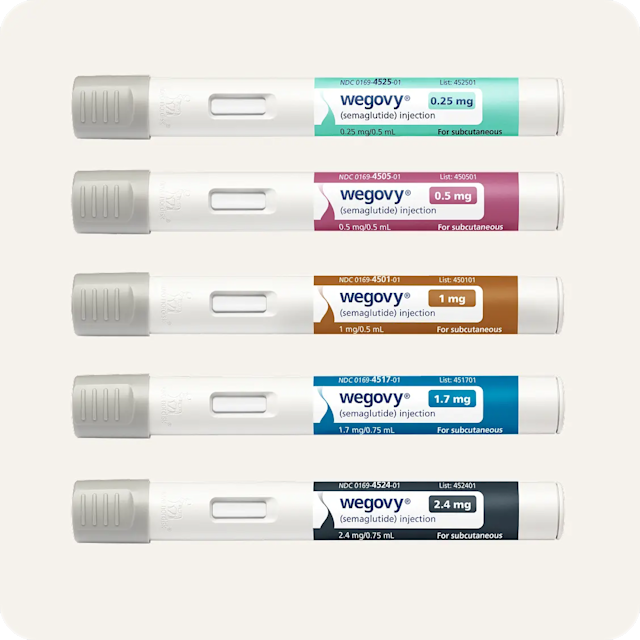
As low as $25/mo if your insurance covers it*
tirzepatide · weekly injection
As low as $25/mo if your insurance covers it*†
semaglutide · weekly injection
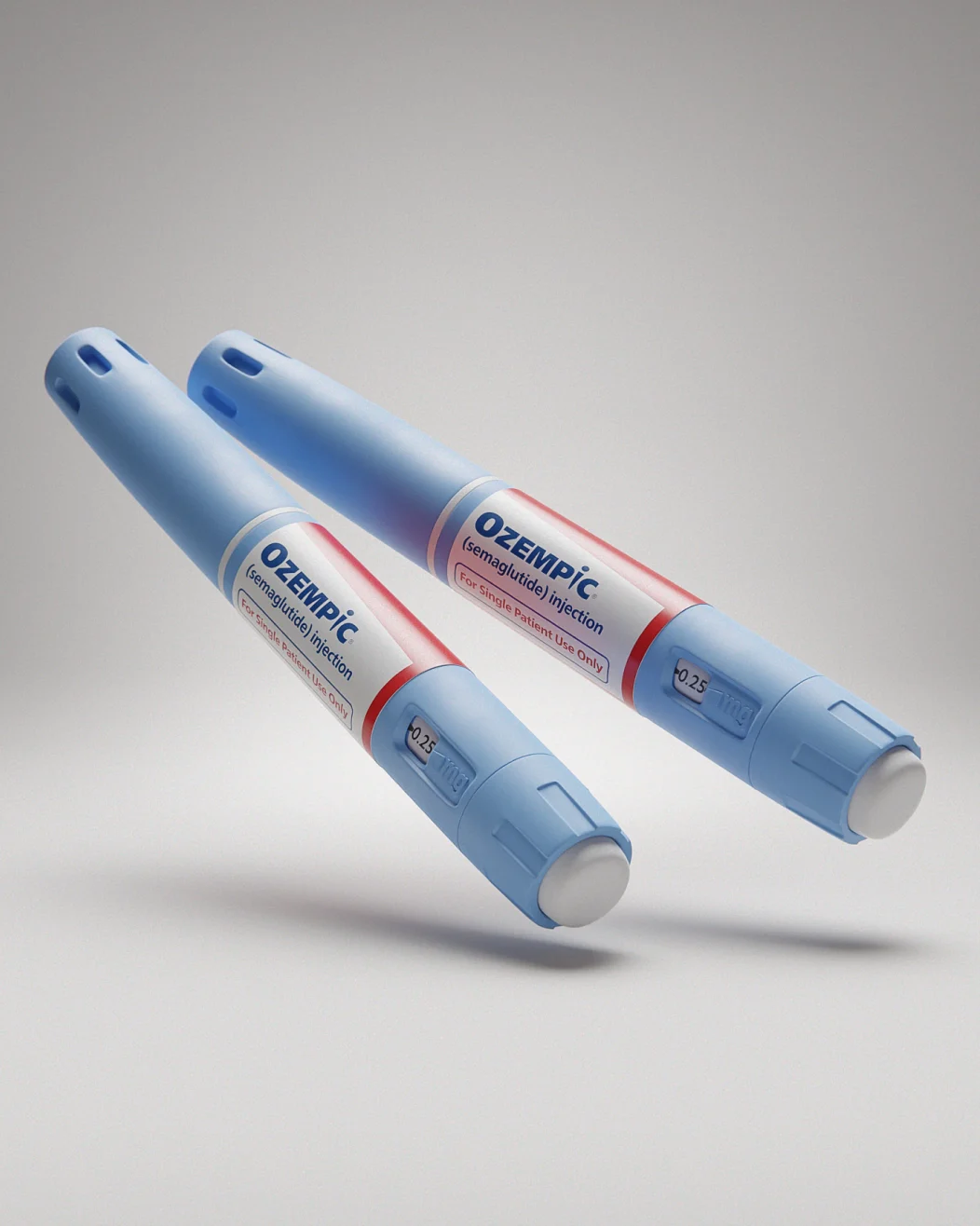
As low as $25/mo if your insurance covers it*†
weekly injection · partner pharmacy
$199/mo, or $106/mo on a 3-month supply‡
weekly injection · partner pharmacy
$329/mo, or $216/mo on a quarterly plan‡
*Brand-name pricing as low as $25 a month applies when your commercial insurance covers the medication; actual cost depends on your plan and on manufacturer savings terms, which can change. †Mounjaro and Ozempic are FDA-approved for type 2 diabetes, not for weight loss; a provider may prescribe them off-label when appropriate. ‡Compounded medications are not FDA-approved and have not been evaluated by the FDA for safety, effectiveness, or quality. Compounded pricing shown is for medication only. §Roen membership is $39 for the first month, then $135 a month. Medication is billed separately.
GLP-1 medications carry a boxed warning about the risk of thyroid C-cell tumors and can cause serious side effects. See the important safety information for Zepbound, Wegovy, Mounjaro, Ozempic, semaglutide, and tirzepatide.
Zepbound® and Mounjaro® are registered trademarks of Eli Lilly and Company. Ozempic® and Wegovy® are registered trademarks of Novo Nordisk A/S. Roen is not affiliated with or endorsed by these companies. Prescriptions are issued only after a licensed provider determines that treatment is appropriate. This page is for general information and is not medical advice.