Brand nameInsurance checked for you
Zepbound®
tirzepatide · weekly injection
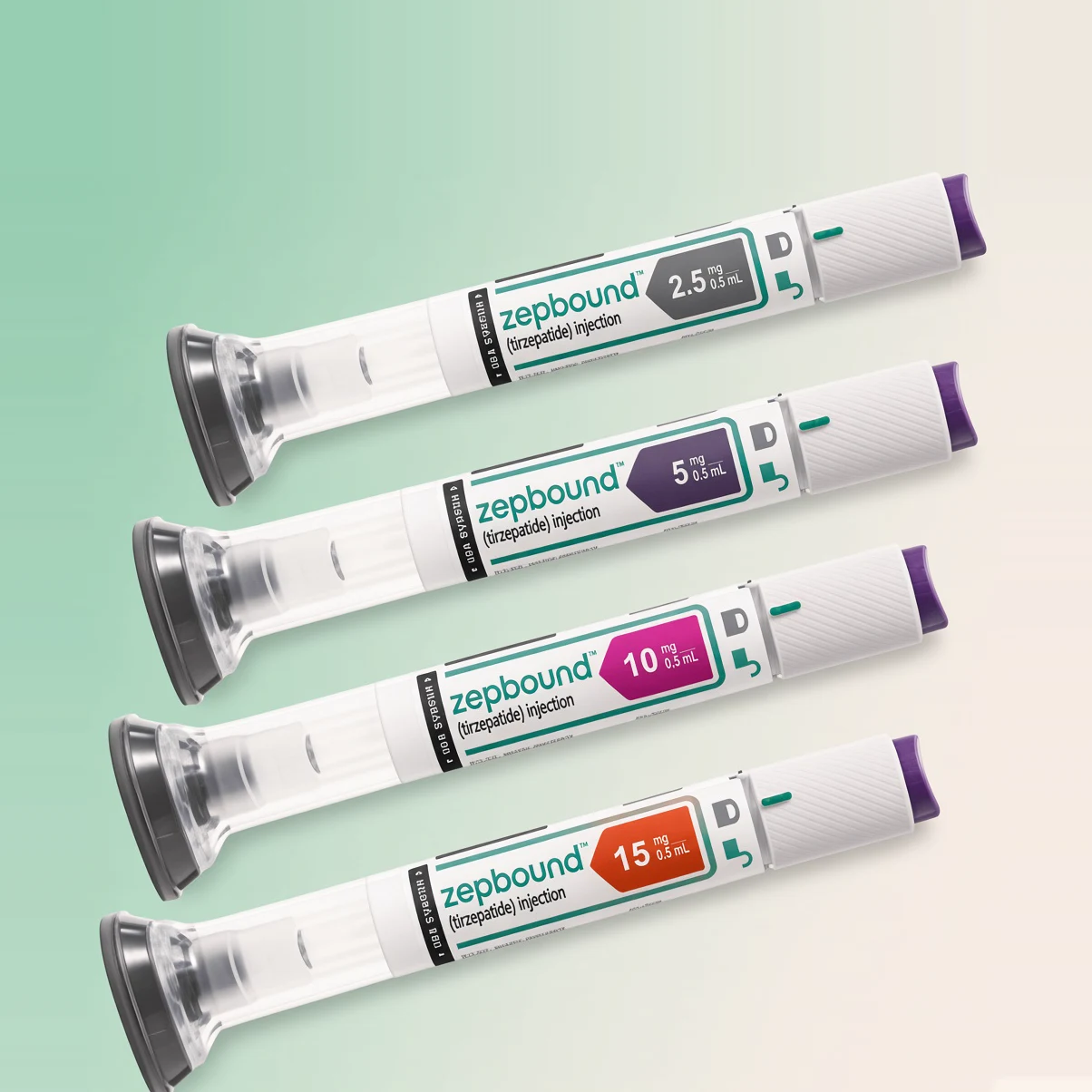
As low as $25/mo if your insurance covers it*

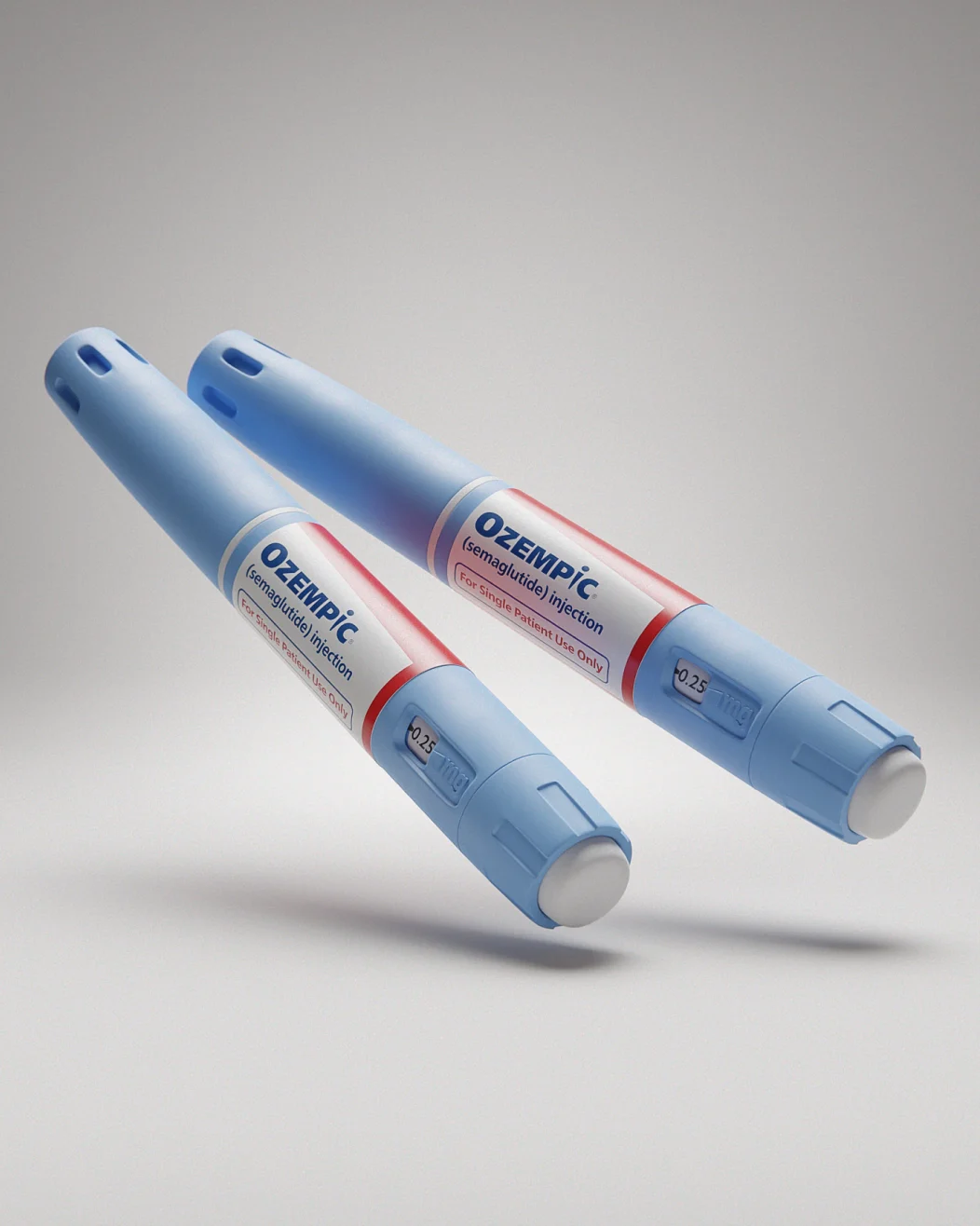
Ozempic is injected once a week. You start at 0.25 mg for four weeks, move to 0.5 mg, and increase to 1 mg or 2 mg only if you need more blood sugar control. Here is the full dosing chart, which pen delivers which dose, and what to do about a missed dose.
Ozempic starting dose
0.25 mgonce a week for 4 weeks
From the Ozempic prescribing information. Your provider sets your schedule.
A licensed provider can review your health history, decide whether Ozempic or another GLP-1 is appropriate, and manage your dose.
This page is for general information and is not medical advice. Prescription medications are only available after a licensed provider decides that treatment is appropriate for you. Prices and program terms are set by the manufacturers and pharmacies named and can change without notice.
The standard Ozempic dosage is 0.25 mg once a week for the first four weeks, then 0.5 mg once a week. If you need more blood sugar control after at least four weeks at 0.5 mg, the dose can go to 1 mg, and later to a maximum of 2 mg.1
| When | Weekly dose | What this step is for |
|---|---|---|
| Weeks 1–4 | 0.25 mg | Starting dose. It helps your body adjust and is not meant to control blood sugar |
| Weeks 5–8 | 0.5 mg | First maintenance dose. Many people stay here |
| Week 9 or later | 1 mg | Only if more blood sugar control is needed after at least 4 weeks on 0.5 mg |
| Week 13 or later | 2 mg | Maximum dose. Only if more control is needed after at least 4 weeks on 1 mg |
This is the fastest schedule the label allows. Your provider may keep you at a dose for longer than four weeks.1
The schedule is a ceiling, not a target. If 0.5 mg or 1 mg gets your blood sugar where it needs to be, there is no reason to go higher, and lower doses cause fewer stomach side effects.
Ozempic doses are fixed. They aren’t calculated from your body weight, and the label doesn’t call for a different dose in people with kidney or liver problems.1
For adults with type 2 diabetes and chronic kidney disease, the recommended maintenance dose is 1 mg once a week, reached through the same 0.25 mg and 0.5 mg steps.1
Ozempic comes in three pens. Each one is prefilled, holds several doses, and has a dial that you turn to select your dose. The pens aren’t interchangeable, because each has a different concentration.1
| Pen | Doses it delivers | What’s inside | How long it lasts |
|---|---|---|---|
| Red label | 0.25 mg or 0.5 mg | 2 mg in 3 mL | About 6 weeks when starting (four 0.25 mg doses, then two 0.5 mg doses), or 4 weeks at 0.5 mg |
| Blue label | 1 mg | 4 mg in 3 mL | 4 weeks |
| Yellow label | 2 mg | 8 mg in 3 mL | 4 weeks |
You’ll see advice online about “counting clicks” to take a dose the pen isn’t designed for. Don’t do it. The dose counter window shows exactly what the pen will deliver, and the pen is designed to be used that way. Click counts differ between pens because the concentrations differ, so a number that works on one pen gives a different dose on another.
The Ozempic pen is marked in milligrams. “Units” apply to insulin syringes, which are sometimes used to draw up compounded semaglutide from a vial. The number of units for a given dose depends on the vial’s concentration, and the FDA has received reports of overdoses caused by mixing up milligrams, milliliters, and units.2 If your semaglutide comes in a vial, follow the instructions from your provider and pharmacy exactly.
Inject Ozempic once a week, on the same day each week, at any time of day. You can take it with or without food.1
Inject under the skin of your stomach area, thigh, or upper arm. Use a different spot each week. You can stay in the same body area, as long as it’s not the exact same place.1
The first time you use each new pen, do the flow check described in the instructions: turn the dial to the flow check symbol, press the button, and look for a drop at the needle tip. You only do this once per pen.
Attach a new needle, turn the dial until the counter shows your dose, insert the needle, and press and hold the dose button. After the counter returns to 0, keep the needle in place and count slowly to six so the full dose goes in.
Remove the needle after each injection and put it in a sharps container. Don’t store the pen with a needle attached, and never share your pen, even with a new needle.1
Keep new pens in the refrigerator. After first use, a pen can be kept in the refrigerator or at room temperature for up to 56 days. Don’t freeze it, and keep the cap on to protect it from light.1
If you also take insulin, inject them separately and don’t mix them. Your provider may lower your dose of insulin or a sulfonylurea when you start Ozempic, to reduce the risk of low blood sugar.1 For more on technique, see Ozempic injection sites.
If you miss a dose, take it as soon as you can, as long as it is within 5 days of when it was due. If more than 5 days have passed, skip that dose and take your next one on your regular day.1
You can move your weekly injection to a different day, as long as there are at least 2 days (48 hours) between the two doses.1
Contact your provider before restarting. After a long gap, going straight back to a higher dose can bring back nausea and vomiting, and your provider may restart you at a lower dose.
There is no official Ozempic dosage for weight loss, because Ozempic isn’t FDA-approved for it. It is approved for type 2 diabetes. When a provider prescribes Ozempic off-label for weight management, the same schedule applies: 0.25 mg, then 0.5 mg, then 1 mg or 2 mg as needed.1
Somewhat. In a trial comparing the two highest Ozempic doses in adults with type 2 diabetes, people lost an average of 15.2 pounds (6.9 kg) on 2 mg and 13.2 pounds (6.0 kg) on 1 mg over 40 weeks.3 The extra weight loss from the higher dose was real but small.
Wegovy is the same ingredient, semaglutide, approved for weight management at a higher dose. Its schedule runs 0.25 mg, 0.5 mg, 1 mg, 1.7 mg, and then 2.4 mg once a week.4
| Ozempic | Wegovy | |
|---|---|---|
| Approved for | Type 2 diabetes | Weight management |
| Dose steps | 0.25, 0.5, 1, 2 mg | 0.25, 0.5, 1, 1.7, 2.4 mg. A higher-dose pen, Wegovy HD, is also available |
| Usual maintenance dose | 0.5 mg to 2 mg | 2.4 mg (1.7 mg if 2.4 mg isn’t tolerated) |
| Pen | Multi-dose pen with a dial | Single-dose pen, one per week |
The dose difference matters. In a trial of adults with type 2 diabetes and overweight or obesity, average weight loss over 68 weeks was 9.6% on semaglutide 2.4 mg and 7.0% on 1 mg, compared with 3.4% on placebo.5
If weight management is your goal, a provider may discuss Wegovy with you. See our Wegovy page, or read more about Ozempic for weight loss.
Ozempic is also available as a once-daily tablet for adults with type 2 diabetes. The pill has its own schedule, and its doses can’t be converted to pen doses milligram for milligram.6
| When | Daily dose | Notes |
|---|---|---|
| Days 1–30 | 1.5 mg | Starting dose |
| Days 31–60 | 4 mg | Maintenance dose |
| Day 61 or later | 9 mg | If more blood sugar control is needed |
Those rules matter. Food and drink reduce how much of the medication your body absorbs.
Side effects are tied to dose increases. The gradual schedule exists to give your stomach time to adjust at each step.1
In Ozempic’s trials, nausea was reported by 15.8% of people on 0.5 mg and 20.3% on 1 mg, compared with 6.1% on placebo. Vomiting affected 5% and 9.2%, compared with 2.3%.1 In the trial comparing 2 mg with 1 mg, stomach side effects were reported by 34% and 31% of participants.3
Call your provider right away about severe stomach pain that doesn’t go away, with or without vomiting. For the full list, see Ozempic side effects or our overview of GLP-1 side effects.
Dose affects price if you pay cash. As of November 2026, Novo Nordisk’s self-pay price is $349 a month for the 0.25 mg, 0.5 mg, and 1 mg doses, with a $199 intro price for the first two fills on starter doses, and $499 a month for 2 mg.7 With commercial insurance that covers Ozempic, the savings offer can bring any dose down to as little as $25. See Ozempic cost.
0.25 mg injected once a week for four weeks. This dose is meant to help your body get used to the medication. It isn’t effective for controlling blood sugar, which is why the dose increases to 0.5 mg in week five.
2 mg once a week. You reach it only after at least four weeks on 1 mg, and only if you need more blood sugar control.
Ozempic isn’t approved for weight loss, so there is no official weight loss dose. When it is prescribed off-label, providers follow the standard schedule of 0.25 mg, 0.5 mg, 1 mg, and 2 mg. Wegovy, which contains the same ingredient, is approved for weight management at 2.4 mg once a week.
Four weeks. After that the label calls for increasing to 0.5 mg. Your provider may adjust the timing based on how you are tolerating it.
Yes. 0.5 mg is a maintenance dose. If your blood sugar is well controlled on it, there is no need to increase.
Take it as soon as possible if it has been 5 days or less since it was due. If more than 5 days have passed, skip it and take your next dose on your regular day. Don’t take two doses close together to catch up.
It depends on the pen. The red-label pen delivers 0.25 mg or 0.5 mg and covers the starting weeks. The blue-label 1 mg pen and the yellow-label 2 mg pen each hold four weekly doses.
It isn’t recommended. The pen is designed to deliver the doses shown in the dose counter. Click counts aren’t a validated way to measure a dose and vary between pens. If you want a lower dose, talk to your provider.
Any time. What matters is taking it on the same day each week. You can take it with or without food.
Page last updated November 17, 2026.




 Roen members

A licensed Roen provider reviews your health history and current medications before prescribing, then adjusts your dose based on how you respond. Questions about side effects, missed doses, or moving up a step go to your care team by message.
Individual experiences vary.

“Starting a new weight management program felt like a big decision. What I appreciated most was being able to talk openly about Zepbound and my concerns without feeling rushed.”

“I was nervous about asking my provider about Mounjaro because I didn’t know where to start. They listened to my concerns and explained the next steps in plain language.”

“Talking about my weight hasn’t always been easy. When I asked about Wegovy, I felt comfortable being honest about my goals and concerns.”

“I’d read so much about Ozempic that I wasn’t sure which questions to ask first. My provider helped me sort through everything and understand how my health history factored into the decision.”

“What I appreciated most was getting a clear explanation of what treatment with tirzepatide could involve. Having everything explained step by step helped me feel more prepared.”

“I sent my provider a whole list of questions about semaglutide. I left feeling heard and better informed about my choices.”
Roen providers prescribe both brand-name and compounded GLP-1s. Your provider helps you choose based on your health history, coverage, and budget.
tirzepatide · weekly injection
As low as $25/mo if your insurance covers it*
semaglutide · weekly injection
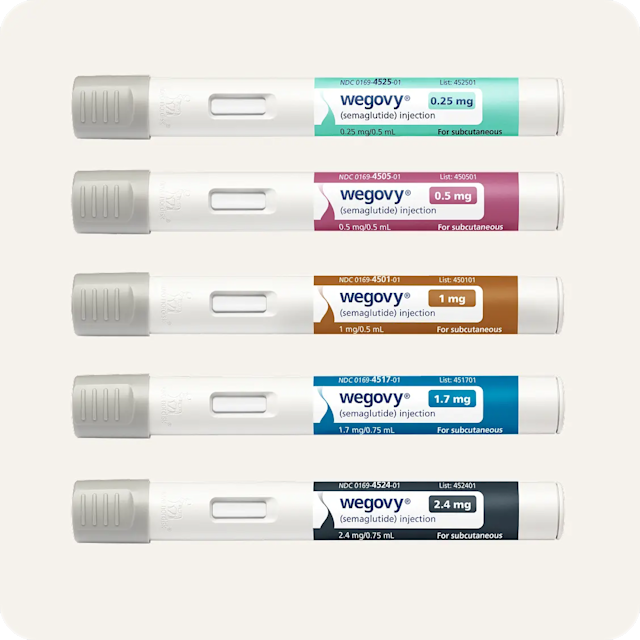
As low as $25/mo if your insurance covers it*
tirzepatide · weekly injection
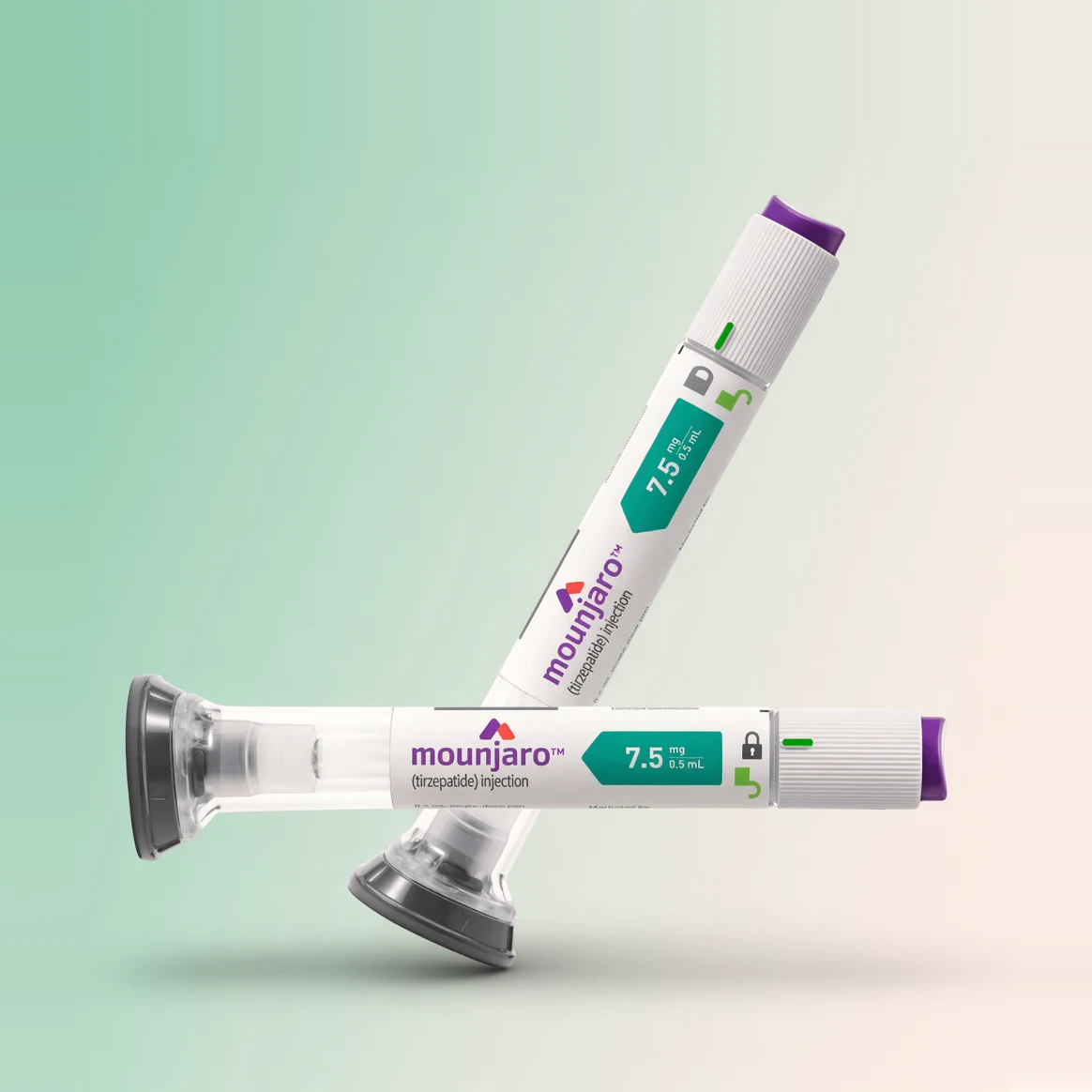
As low as $25/mo if your insurance covers it*†
semaglutide · weekly injection
As low as $25/mo if your insurance covers it*†
weekly injection · partner pharmacy
$199/mo, or $106/mo on a 3-month supply‡
weekly injection · partner pharmacy
$329/mo, or $216/mo on a quarterly plan‡
*Brand-name pricing as low as $25 a month applies when your commercial insurance covers the medication; actual cost depends on your plan and on manufacturer savings terms, which can change. †Mounjaro and Ozempic are FDA-approved for type 2 diabetes, not for weight loss; a provider may prescribe them off-label when appropriate. ‡Compounded medications are not FDA-approved and have not been evaluated by the FDA for safety, effectiveness, or quality. Compounded pricing shown is for medication only. §Roen membership is $39 for the first month, then $135 a month. Medication is billed separately.
GLP-1 medications carry a boxed warning about the risk of thyroid C-cell tumors and can cause serious side effects. See the important safety information for Zepbound, Wegovy, Mounjaro, Ozempic, semaglutide, and tirzepatide.
Zepbound® and Mounjaro® are registered trademarks of Eli Lilly and Company. Ozempic® and Wegovy® are registered trademarks of Novo Nordisk A/S. Roen is not affiliated with or endorsed by these companies. Prescriptions are issued only after a licensed provider determines that treatment is appropriate. This page is for general information and is not medical advice.