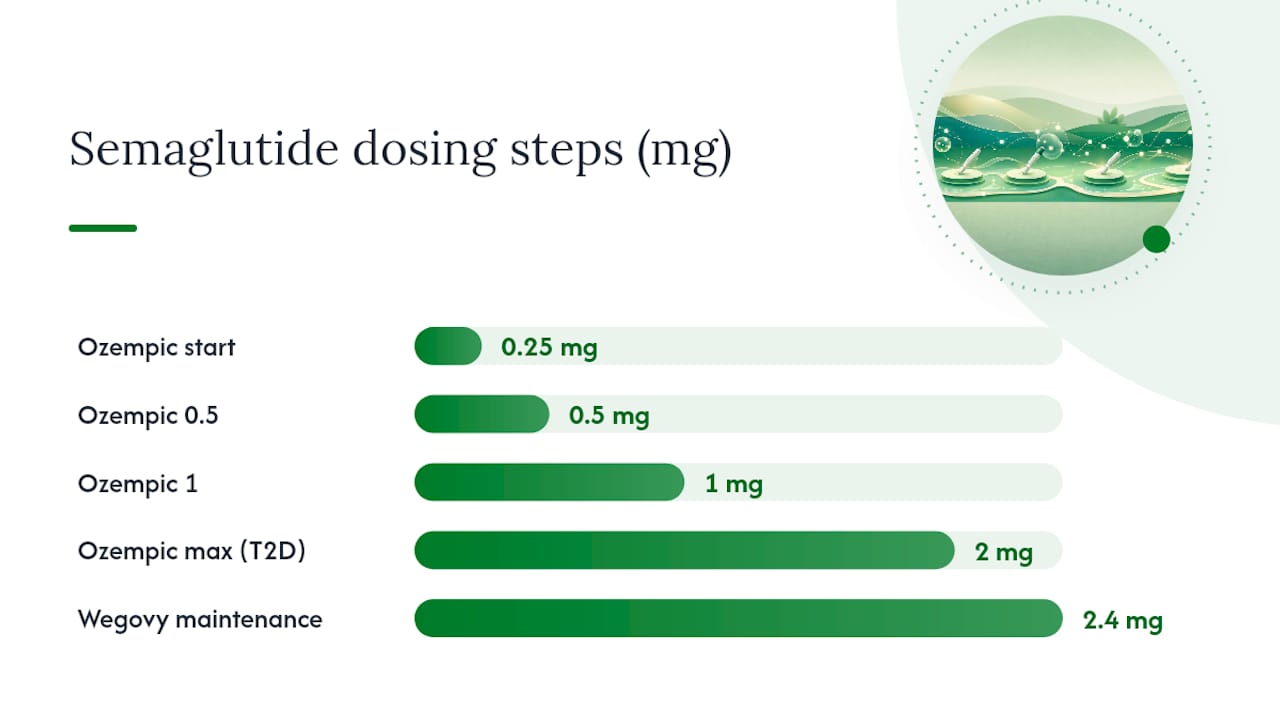
The standard once-weekly semaglutide titration starts at 0.25 mg for four weeks, then increases at four-week intervals to a maintenance dose set by your indication. For chronic weight management, the maintenance dose is generally around the labeled maximum; for type 2 diabetes, the maximum recommended dose is lower. The titration involves stepwise dose increases held for defined periods before progressing to the next dose. Your prescriber sets the final pace, and you should never adjust doses on your own.
TL;DR:
- The gradual four-week dose increases are designed to improve tolerability by giving the digestive system time to adapt to each level.
- Patients can delay dose escalation by an additional four weeks if gastrointestinal side effects persist, with the final decision resting on the prescriber’s assessment.
- For weight management, the typical maintenance dose is 2.4 mg weekly, but some may stay at 1.7 mg if side effects outweigh benefits.
- Dosing protocols for type 2 diabetes end lower at 2 mg weekly, and oral semaglutide requires different titration and administration rules compared to injectable forms.
- Missed doses should be handled cautiously: inject within the recommended time window, avoid doubling doses, and consult a clinician for long gaps to prevent tolerance setbacks.
The titration built into Wegovy is a slow climb by design, not a formality. Each dose gets four full weeks before the next increase, which gives your gut time to adjust to slower gastric emptying before the dose goes up again.
Here’s how the schedule breaks down for chronic weight management, based on the NCBI Bookshelf’s semaglutide dosing guidance:
| Weeks | Dose | Typical Pen Strength |
|---|---|---|
| 1 to 4 | 0.25 mg once weekly | 0.25 mg pen |
| 5 | 0.5 mg once weekly | 0.5 mg pen |
| 6 | 1 mg once weekly | 1 mg pen |
| 4 | 1.7 mg once weekly | 1.7 mg pen |
| — | 2.4 mg once weekly (maintenance) | 2.4 mg pen |
Some patients stay at 1.7 mg as a long-term maintenance dose rather than pushing to 2.4 mg, particularly if the higher dose brings side effects that outweigh the added benefit. A clinical review of once-weekly semaglutide for weight management backs this titration structure directly, showing it as the framework used across the major weight-loss trials.
Why stepwise increases matter comes down to basic pharmacology. Semaglutide slows gastric emptying and blunts appetite signals, and your digestive system needs time to adapt to each dose level. Jump too fast and nausea, vomiting, or constipation tend to spike. Escalate gradually and most people tolerate the medication far better.
Not every four-week block has to end in an increase. If a dose isn’t sitting well, guidelines allow delaying the next step by an additional four weeks at the current dose rather than pushing forward on schedule, according to Drugs. Your prescriber decides when you’re ready to move up, and that decision usually weighs three things:
Our guide on semaglutide’s benefits for weight loss walks through what results typically look like at each maintenance level, if you want a clearer sense of what to expect once you reach 2.4 mg.
The diabetes titration path looks similar on paper but ends at a different number. Ozempic’s labeled schedule starts at 0.25 mg weekly for four weeks (this dose is for titration only, not glycemic control), moves to 0.5 mg for at least four weeks, and can escalate to 1 mg and then a maximum of 2 mg weekly if additional glycemic control is needed. At least four weeks must separate each increase, according to Ozempic’s prescribing information on DailyMed. The 2 mg ceiling for diabetes is lower than the 2.4 mg weight-management maintenance dose, which is one reason Ozempic and Wegovy aren’t simply interchangeable despite sharing the same active ingredient. Our breakdown of Wegovy versus Ozempic covers those distinctions in more depth.
Oral semaglutide, sold as Rybelsus, follows an entirely different administration logic. It’s a tablet taken once daily, on an empty stomach, with no more than 4 ounces of plain water, at least 30 minutes before the day’s first food, drink, or other oral medication. The typical titration runs 3 mg daily for 30 days, then 7 mg daily, with a further increase to 14 mg daily possible if additional glycemic control is needed. Switching between oral and injectable formulations isn’t something to do on your own initiative. It requires a clinician-approved plan, since the two products aren’t dosed on a 1:1 basis and timing around your last dose matters for avoiding a gap in coverage or an inadvertent double dose.
Missed-dose rules also diverge by product, and mixing them up is a common source of confusion:
If you take insulin or a sulfonylurea alongside semaglutide, your clinician will likely want to adjust those doses as glycemic control improves, since the combination raises your risk of hypoglycemia. Routine glucose monitoring during titration catches that shift before it becomes a problem.
Life gets in the way of a perfectly consistent Tuesday-afternoon injection, and the rules for handling that are more forgiving than most people assume, as long as you follow them precisely.
That last point catches a lot of patients off guard. A gap of a few weeks doesn’t just pause progress. It can reset how your gut tolerates the medication, so jumping back in at 2.4 mg after a month off is a genuinely different experience than starting there while already titrated.
Semaglutide pens are built for self-injection, and the mechanics are simple once you’ve done it a couple of times. The needle is short and thin, and the injection goes into subcutaneous fat, not muscle.
Rotate among three general regions: the abdomen (avoiding a 2-inch radius around the navel), the front of the thigh, and the back of the upper arm. Rotate within that region each week too. Injecting the exact same spot repeatedly can cause lipohypertrophy, a lumpy buildup of fat tissue under the skin that changes how the drug absorbs.
To use a prefilled pen correctly:
Storage matters more than most patients realize. Unused pens belong in the refrigerator between 36°F and 46°F. Once a pen is in use, it can typically stay at room temperature (up to 86°F) for up to 28 days, according to Wegovy’s official dosing and administration guide. Never freeze a pen, and throw it away if it has been frozen even once, since freezing can degrade the medication.
Pro Tip: If you inject and see a small amount of liquid on your skin afterward, don’t assume you lost the full dose. Pens are designed with a small margin, and a drop on the surface usually means the injection still delivered a complete dose. If you’re ever uncertain, message your care team instead of guessing.
For a closer look at exact injection sites and technique, our guide to Ozempic injection sites walks through hand positioning and site rotation in more detail.
Gastrointestinal side effects are the most common reason people struggle through titration, and they’re a direct consequence of how semaglutide works. The drug slows gastric emptying and dampens appetite signals in the brain, which is exactly why it’s effective for weight loss and glucose control. It’s also exactly why nausea, bloating, constipation, and occasional diarrhea show up, especially in the first weeks at a new dose.
Gastrointestinal side effects are the leading cause of titration struggles, and clinical guidance explicitly allows delaying the next dose increase by an additional four weeks when symptoms haven’t settled, according to Drugs.com’s Wegovy dosing guidance.
A few practical adjustments blunt most of the discomfort:
Some symptoms cross the line from “expected and manageable” into “call your clinician now.” Severe, persistent abdominal pain that radiates to your back can signal pancreatitis. Repeated vomiting that prevents you from keeping fluids down risks dehydration and acute kidney injury. If either happens, your dose may need to be reduced, escalation paused indefinitely, or the medication stopped altogether while you’re evaluated.
Reading a pen box correctly matters more than it sounds like it should, because branded pens are labeled by delivered dose, not raw concentration, and mixing that up is an easy way to make a dosing error. According to Medscape’s drug reference for Ozempic, Rybelsus, and Wegovy, common pen strengths map directly to the titration steps: 0.25 mg, 0.5 mg, 1 mg, 1.7 mg, and 2.4 mg pens, each delivering that fixed dose per click regardless of how much liquid remains in the reservoir.
Compounded semaglutide, made by compounding pharmacies rather than the original manufacturer, introduces a different kind of risk entirely. These preparations often come as multi-dose vials requiring the patient or a pharmacist to draw up a specific volume based on concentration, and that math is where errors creep in.
The FDA has issued alerts about dosing errors tied specifically to compounded semaglutide, flagging cases where patients received far more or far less than intended because of confusion over units, concentrations, or reconstitution.
Reconstitution itself, mixing a powder with a diluent like bacteriostatic water or saline before use, adds another step where a measurement mistake can change the effective dose delivered. A few safeguards reduce that risk if you’re working with any non-branded formulation:
Ongoing monitoring while on semaglutide is straightforward but shouldn’t be skipped, and what you’re watching for depends partly on why you’re taking it.
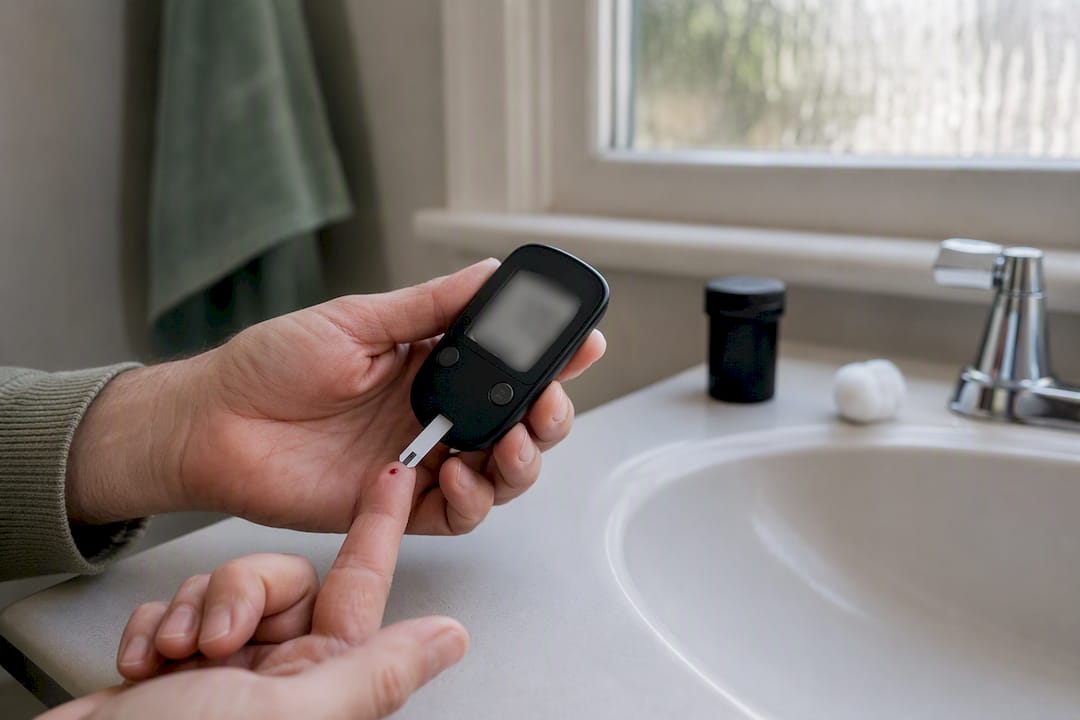
If you’re managing type 2 diabetes, routine glucose checks stay important throughout titration, especially if you’re also on insulin or a sulfonylurea. Your clinician will likely want to reduce those other medications as your glucose control improves, since the combination raises hypoglycemia risk. Learn the signs, shakiness, sweating, confusion, and know how to treat a low blood sugar episode before it escalates.
For anyone on semaglutide, a few monitoring habits apply broadly. Kidney function bears watching, particularly if you’ve had significant vomiting or diarrhea, since dehydration can strain the kidneys. Diabetic retinopathy has been associated with rapid glucose improvement in some patients, so report any new visual changes promptly rather than waiting for a scheduled visit. If you’re scheduled for surgery, tell your surgical team you’re on semaglutide well in advance. Some guidance recommends pausing the medication before procedures requiring sedation, due to the drug’s effect on gastric emptying and aspiration risk.
Call your clinician if you notice any of the following:
RoenRx starts every semaglutide patient with a screening review covering personal and family medical history, current medications, and specific contraindications, including a personal or family history of medullary thyroid carcinoma or multiple endocrine neoplasia syndrome type 2. That screening determines whether semaglutide is appropriate before a single dose is prescribed.
From there, titration pace isn’t treated as fixed. If a patient reports nausea severe enough to affect daily function during a step-up week, RoenRx’s care team can adjust the plan through messaging, often without waiting for the next scheduled visit, and same-day appointments are available when a faster clinical check-in is warranted. That flexibility matters because the standard four-week intervals are a default, not a mandate, and real tolerability varies from person to person.
Support extends past the prescription itself. New patients get injection training so the mechanics of pen use aren’t intimidating, refill coordination keeps a titration schedule from stalling due to a supply gap, and follow-up check-ins track both side effects and progress toward maintenance dose and beyond. You can find more detail on how the program is structured on our semaglutide for weight loss program page.
Patients almost always ask the same underlying question in different words: “Can we go faster?” The honest answer is that speed isn’t the goal. Tolerability is, and rushing titration tends to backfire by triggering GI side effects severe enough to make someone quit the medication altogether. A slower, steadier climb that a patient actually sticks with beats an aggressive schedule abandoned at week six.
Realistic expectations matter just as much as the schedule itself. Weight loss and glycemic improvement build gradually over months, not weeks, and the biggest changes usually show up well after reaching a maintenance dose rather than during the climb. Our timeline of when semaglutide starts working breaks down what to expect at each stage.
The choice between 1.7 mg and 2.4 mg maintenance for weight management isn’t automatic. Clinicians weigh how much benefit a patient is already seeing at 1.7 mg against how well they’re tolerating side effects. If someone is losing weight steadily and feeling fine, there’s no clinical mandate to push higher. If progress has stalled and side effects are manageable, escalating to 2.4 mg often makes sense.
— Bryan
Getting a semaglutide prescription started often means weeks of waiting for an in-person appointment, then more waiting for a follow-up if the first dose doesn’t sit well. RoenRx cuts that timeline down with virtual consults and same-day availability, so a tolerability problem gets addressed in days, not your next scheduled slot a month out.

An initial visit covers your medical history, current medications, and weight or glycemic goals, and you’ll want your recent lab work and a list of current prescriptions on hand to make that visit efficient. From there, RoenRx builds a personalized titration plan, coordinates prescription delivery so pens arrive before you run out, and provides injection training if you’ve never self-administered a subcutaneous medication before. Ongoing messaging with your care team means a rough week during a dose increase gets a same-day response instead of a wait.
If you’re ready to find out whether semaglutide fits your health goals, you can start your telehealth consultation with RoenRx and get a personalized dosing plan built around how your body actually responds, not a one-size schedule. For a broader look at eligibility and program details first, our weight-loss injections overview is a good next stop.
This article draws on official prescribing information and clinical sources rather than general advice, so you can verify any figure directly.
This article is general information, not a substitute for advice from a qualified doctor. Consult a qualified healthcare professional about your own circumstances before acting on anything here.
Semaglutide starts at 0.25 mg once weekly for four weeks, then increases every four weeks through 0.5 mg, 1 mg, and 1.7 mg to a maintenance dose, usually 2.4 mg for weight management or up to 2 mg for type 2 diabetes.
“Units” isn’t how branded semaglutide pens are dosed. Ozempic and Wegovy pens deliver a fixed milligram dose per click, so if you’re seeing dosing expressed in units, you’re likely working with a compounded vial, and you should confirm the exact mg equivalent with your prescriber or pharmacist before injecting.
For most patients, 2.4 mg weekly is the labeled maintenance dose for chronic weight management and the level used in major clinical trials, though some patients see sufficient results and tolerate treatment better at the lower 1.7 mg maintenance step.
You don’t calculate your own dose. Your prescriber sets it based on the standard titration schedule, your response so far, and how well you’re tolerating side effects, and RoenRx’s care team adjusts that plan through ongoing check-ins rather than leaving patients to self-manage the math.
Delaying a scheduled increase by an extra four weeks at your current dose is a normal, clinician-supported adjustment when side effects haven’t settled. It’s not a failure of treatment, and it often improves your ability to tolerate the eventual increase.