Brand nameInsurance checked for you
Zepbound®
tirzepatide · weekly injection
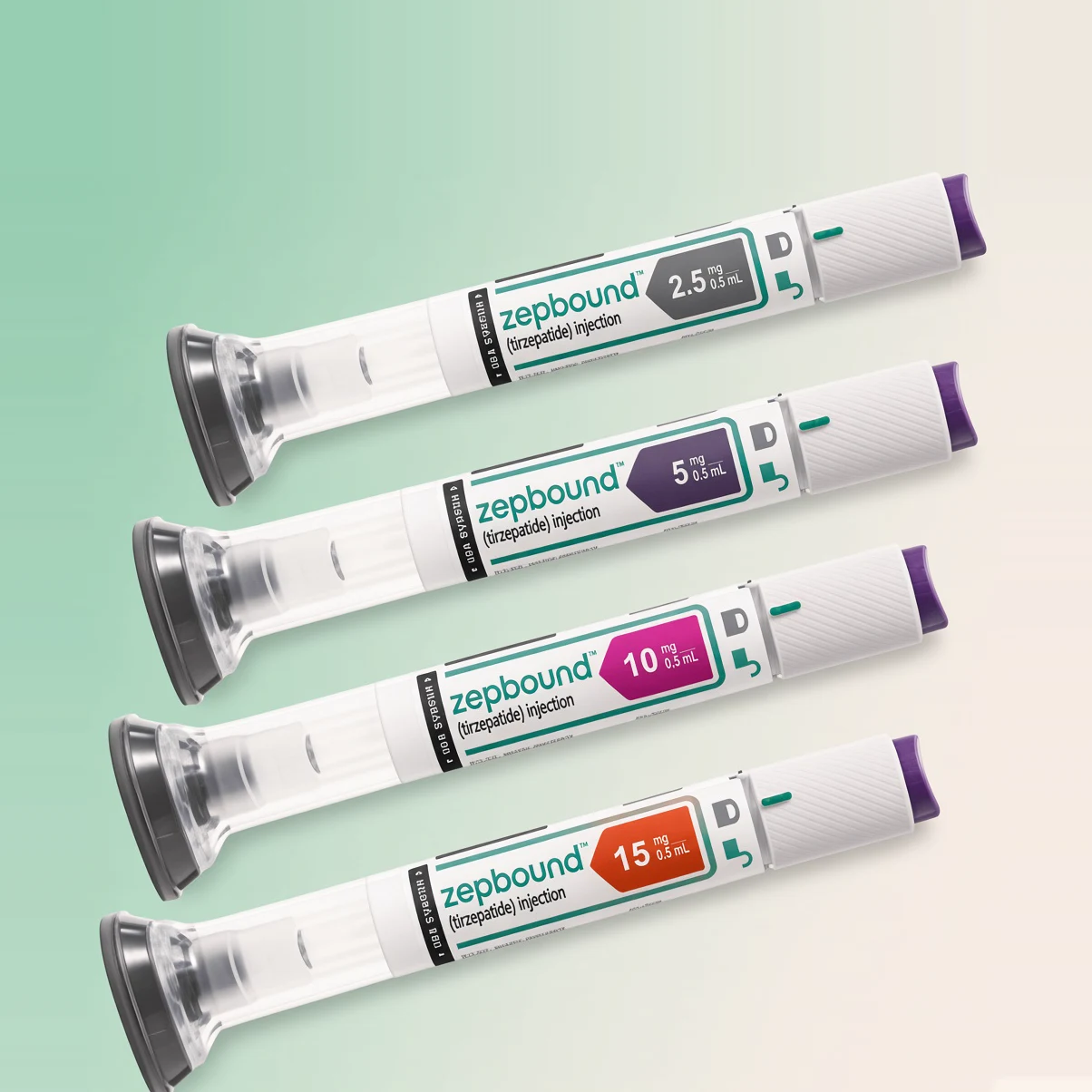
As low as $25/mo if your insurance covers it*

Tirzepatide is prescribed in milligrams, but vials are drawn up with an insulin syringe marked in units. How many units you need depends on the concentration of your vial. At 10 mg/mL, the 2.5 mg starting dose is 25 units. This page gives you the chart, the formula, and a calculator.
2.5 mg of tirzepatide at 10 mg/mL
25 unitson a U-100 insulin syringe
Roen’s compounded tirzepatide vial is 10 mg/mL. Other pharmacies use other concentrations. Use the dose on your prescription label.
Roen providers prescribe tirzepatide when it’s appropriate, with clear dosing instructions and a care team you can message.
This page explains the math behind tirzepatide doses. It is not medical advice and does not replace your prescription label. Always inject the amount your provider and pharmacy instructed. If the numbers on this page and your label don’t match, follow your label and ask your pharmacy. Compounded tirzepatide is not FDA-approved.
To convert a tirzepatide dose to units, divide the dose in milligrams by your vial’s concentration in mg/mL, then multiply by 100. The chart below does that for the six standard weekly doses at four common compounded concentrations.
| Weekly dose | 5 mg/mL vial | 10 mg/mL vial | 15 mg/mL vial | 20 mg/mL vial |
|---|---|---|---|---|
| 2.5 mg | 50 | 25 | 16.7 | 12.5 |
| 5 mg | 100 | 50 | 33.3 | 25 |
| 7.5 mg | Over 100* | 75 | 50 | 37.5 |
| 10 mg | Over 100* | 100 | 66.7 | 50 |
| 12.5 mg | Over 100* | Over 100* | 83.3 | 62.5 |
| 15 mg | Over 100* | Over 100* | 100 | 75 |
Units on a U-100 insulin syringe, rounded to one decimal place. *More than 100 units is more than 1 mL, which won’t fit in a single standard insulin syringe. Ask your pharmacy how to take that dose. Compounding pharmacies use many concentrations, so yours may not be listed.
Find your concentration before you use this chart. It is printed on the vial and the pharmacy label, as mg/mL or as a total such as “20 mg/2 mL.” If you read from the wrong column, you could inject half or double your dose.
Compounded tirzepatide prescribed through Roen ships from a partner pharmacy in a 2 mL vial at 10 mg/mL. That is 20 mg of tirzepatide in the vial. The vial also contains vitamin B12 at 500 mcg/mL. At 10 mg/mL, every 10 units on the syringe is 1 mg of tirzepatide.
| Weekly dose | Units to draw | Volume |
|---|---|---|
| 2.5 mg | 25 units | 0.25 mL |
| 5 mg | 50 units | 0.5 mL |
| 7.5 mg | 75 units | 0.75 mL |
| 10 mg | 100 units | 1 mL |
| 12.5 mg | 125 units† | 1.25 mL |
| 15 mg | 150 units† | 1.5 mL |
Units on a U-100 insulin syringe. †More than 100 units is more than one 1 mL syringe holds. Follow the instructions that come with your prescription for these doses, and message your care team if they are unclear. If the label on the vial you receive shows a different concentration, follow the label.
| Weekly dose | 5 mg/mL vial | 10 mg/mL vial | 15 mg/mL vial | 20 mg/mL vial |
|---|---|---|---|---|
| 2.5 mg | 0.5 mL | 0.25 mL | 0.167 mL | 0.125 mL |
| 5 mg | 1 mL | 0.5 mL | 0.333 mL | 0.25 mL |
| 7.5 mg | 1.5 mL | 0.75 mL | 0.5 mL | 0.375 mL |
| 10 mg | 2 mL | 1 mL | 0.667 mL | 0.5 mL |
| 12.5 mg | 2.5 mL | 1.25 mL | 0.833 mL | 0.625 mL |
| 15 mg | 3 mL | 1.5 mL | 1 mL | 0.75 mL |
To go from milliliters to units, multiply by 100. For example, 0.25 mL is 25 units.
Choose your prescribed dose and type in the concentration from your vial label. The calculator shows the matching amount in units and milliliters. It starts at 10 mg/mL, the concentration of Roen’s compounded tirzepatide vial.
25 units
That is 0.25 mL on a U-100 insulin syringe.
This calculator does arithmetic only. It can’t check that your vial, your syringe, or your prescription are right. Always use the amount written on your prescription label, and ask your pharmacy or provider if anything doesn’t match.
Units = dose (mg) ÷ concentration (mg/mL) × 100
Example: your dose is 7.5 mg and your vial is 10 mg/mL.
To check your work, run it backwards: units ÷ 100 × concentration = dose in mg. So 75 units ÷ 100 × 10 mg/mL = 7.5 mg.
These three measurements get mixed up constantly, and that mix-up is behind most dosing mistakes with vial medications.1
| Measurement | What it measures | Where you see it |
|---|---|---|
| Milligrams (mg) | The amount of tirzepatide. This is your dose | Your prescription: “2.5 mg once weekly” |
| Milliliters (mL) | The volume of liquid | The vial: “2 mL” |
| mg/mL | Concentration, or how much tirzepatide is in each mL | The vial: “10 mg/mL” |
| Units | Volume markings on an insulin syringe. 100 units = 1 mL | The syringe barrel |
“Units” were designed for insulin. On a U-100 insulin syringe, each unit is simply 0.01 mL of liquid. For tirzepatide, a unit has no fixed strength. Ten units from a 10 mg/mL vial contain 1 mg of tirzepatide. Ten units from a 20 mg/mL vial contain 2 mg.
Some labels state the concentration directly, such as 10 mg/mL. Others show the total amount and total volume. To get the concentration, divide the first number by the second:
Some compounded tirzepatide also contains an added ingredient such as vitamin B12. Roen’s vial, for example, lists tirzepatide at 10 mg/mL and vitamin B12 at 500 mcg/mL. That doesn’t change the math. Use the tirzepatide concentration.
The standard schedule is the one in Zepbound’s prescribing information: start at 2.5 mg once a week for four weeks, then increase by 2.5 mg at a time, with at least four weeks at each dose. The maintenance doses are 5 mg, 10 mg, or 15 mg once a week.2
| Weeks | Weekly dose | Units at 10 mg/mL | Units at 20 mg/mL |
|---|---|---|---|
| 1–4 | 2.5 mg (starting dose) | 25 | 12.5 |
| 5–8 | 5 mg | 50 | 25 |
| 9–12 | 7.5 mg | 75 | 37.5 |
| 13–16 | 10 mg | 100 | 50 |
| 17–20 | 12.5 mg | Over 100* | 62.5 |
| 21 and on | 15 mg | Over 100* | 75 |
*More than one 1 mL syringe. Pharmacies usually supply a more concentrated vial for higher doses. This is the fastest schedule the label allows, and many people stay at a dose for longer than four weeks.
You don’t have to reach 15 mg. In the main Zepbound trial, average weight loss over 72 weeks was 15.0% at 5 mg, 19.5% at 10 mg, and 20.9% at 15 mg, compared with 3.1% on placebo.3 The right dose is the lowest one that works for you with side effects you can live with.
When your dose goes up, your pharmacy may send a vial with a different concentration. That means the number of units can go down even though your dose went up. Read the new label every time a vial arrives, and don’t assume last month’s number still applies.
For more on the schedule itself, see tirzepatide dosage, our tirzepatide dosing schedule guide, and tirzepatide dosage for weight loss.
Every number on this page assumes a U-100 syringe, where 100 units equals 1 mL. That is the standard insulin syringe in the U.S. A U-40 syringe has different markings and will give the wrong dose. Use the syringes your pharmacy supplied.
Insulin syringes come in 0.3 mL (30 units), 0.5 mL (50 units), and 1 mL (100 units). Smaller syringes have wider spacing between lines, so small doses are easier to measure accurately. The FDA encourages pharmacies to supply a syringe size that fits the prescribed dose.1
On 0.3 mL and 0.5 mL syringes, each line is usually 1 unit. On many 1 mL syringes, each line is 2 units. Check the numbers printed on the barrel before you draw.
Confirm three things before every injection: the medication name, the concentration, and your dose in units. Then draw the liquid so the top edge of the plunger, the edge closest to the needle, lines up with your unit mark.
Hold the syringe needle-up, tap it so bubbles rise, and push them back into the vial. Large bubbles take up space that should be medication. Then recheck the plunger line.
Inject under the skin of your stomach, thigh, or upper arm, and rotate sites each week. Use a new syringe every time, and put used syringes in a sharps container. See tirzepatide injection sites for more.
The FDA has received reports of adverse events, some requiring hospitalization, linked to dosing errors with compounded GLP-1 injections. In one group of reports involving compounded semaglutide, patients gave themselves five to 20 times the intended dose.1 The agency has raised the same dosing concerns about compounded tirzepatide.4
These are the mistakes behind most of those errors:
If you think you took too much, contact your provider or Poison Control at 1-800-222-1222 right away. Severe nausea, repeated vomiting, or severe stomach pain after an injection needs prompt medical attention.
No. Brand-name tirzepatide is dosed by fixed volume, not by units, so there is no conversion to do.2
The label tells people using vials to use a 1 mL syringe that can measure a 0.5 mL or 0.6 mL dose.2 With brand vials, the strength changes from vial to vial while the volume stays the same. With compounded vials it is usually the reverse: the concentration stays the same and the volume you draw changes.
Compounded tirzepatide is prepared by a compounding pharmacy for an individual prescription. It is not FDA-approved, which means the FDA hasn’t reviewed it for safety, effectiveness, or quality.5 Concentrations and vial sizes aren’t standardized across pharmacies, which is why a units chart always has to start with your own label.
Through Roen, compounded tirzepatide is $329 a month, or $216 a month billed quarterly, when a provider decides it is appropriate. It ships from a partner pharmacy in a 2 mL vial at 10 mg/mL, with vitamin B12 at 500 mcg/mL, so the 10 mg/mL chart above applies. Dosing instructions come with it, and you can message your care team before your first injection if anything is unclear. See our tirzepatide page for details, or Zepbound for the brand-name option.
It depends on the vial’s concentration. At 10 mg/mL, 2.5 mg is 25 units. At 5 mg/mL it is 50 units, at 15 mg/mL it is about 16.7 units, and at 20 mg/mL it is 12.5 units. Check your label for your concentration.
Roen’s compounded tirzepatide vial is 10 mg/mL, so 2.5 mg is 25 units, 5 mg is 50 units, 7.5 mg is 75 units, and 10 mg is 100 units on a U-100 insulin syringe. Always confirm the concentration and dose on your own label first.
At 10 mg/mL, 5 mg is 50 units. At 5 mg/mL it is 100 units, at 15 mg/mL it is about 33.3 units, and at 20 mg/mL it is 25 units.
At 10 mg/mL, 10 mg is 100 units, which is a full 1 mL syringe. At 20 mg/mL it is 50 units, and at 15 mg/mL it is about 66.7 units.
At 20 mg/mL, 15 mg is 75 units. At 15 mg/mL it is 100 units. At 10 mg/mL it would be 150 units, which is more than one standard insulin syringe holds, so pharmacies usually supply a more concentrated vial for this dose.
Multiply the volume by the concentration. Fifty units is 0.5 mL. From a 10 mg/mL vial that is 5 mg, and from a 20 mg/mL vial that is 10 mg. Without the concentration, units can’t be converted to milligrams.
No. A unit is a volume, equal to 0.01 mL on a U-100 syringe. The number of milligrams in a unit depends on how concentrated your vial is.
The starting dose is 2.5 mg once a week for four weeks. In units, that is 25 units from a 10 mg/mL vial, 12.5 units from a 20 mg/mL vial, or 50 units from a 5 mg/mL vial.
A U-100 insulin syringe, in a size that fits your dose: 0.3 mL for up to 30 units, 0.5 mL for up to 50 units, or 1 mL for up to 100 units. Use the syringes your pharmacy provided.
They don’t need to. Zepbound pens deliver a fixed dose, and each single-dose Zepbound vial contains one dose in 0.5 mL, which you draw up completely.
Page last updated November 17, 2026.




 Roen members

Every Roen prescription starts with a licensed provider reviewing your health history. Your medication arrives with dosing instructions, and your care team is available by message to confirm how much to draw, when to move up a dose, and what to do about side effects.
Individual experiences vary.

“I had a lot of questions about starting Zepbound, and I appreciated having someone take the time to walk me through them. My provider explained the plan and helped me understand what to expect.”

“What stood out to me was how thorough the conversation was. My provider reviewed my health history and talked through Mounjaro, including potential side effects and follow-up care.”

“My biggest concern was knowing who to turn to if I had questions after starting Wegovy. Having the follow-up process explained from the beginning helped me feel more prepared.”

“Before considering Ozempic, I wanted a clear picture of what treatment would involve. Being able to ask questions in everyday language made the whole process feel much more comfortable.”

“I wanted to understand whether tirzepatide made sense for me, so I came to my provider with plenty of questions. I appreciated feeling involved in the decision instead of feeling rushed.”

“My biggest question about semaglutide was what ongoing care would look like. We discussed follow-up check-ins, potential side effects, and when to contact the care team.”
Roen providers prescribe both brand-name and compounded GLP-1s. Your provider helps you choose based on your health history, coverage, and budget.
tirzepatide · weekly injection
As low as $25/mo if your insurance covers it*
semaglutide · weekly injection
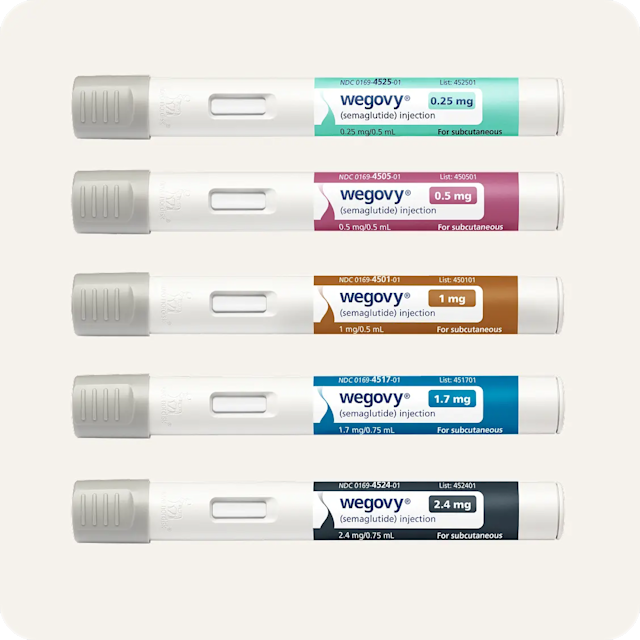
As low as $25/mo if your insurance covers it*
tirzepatide · weekly injection
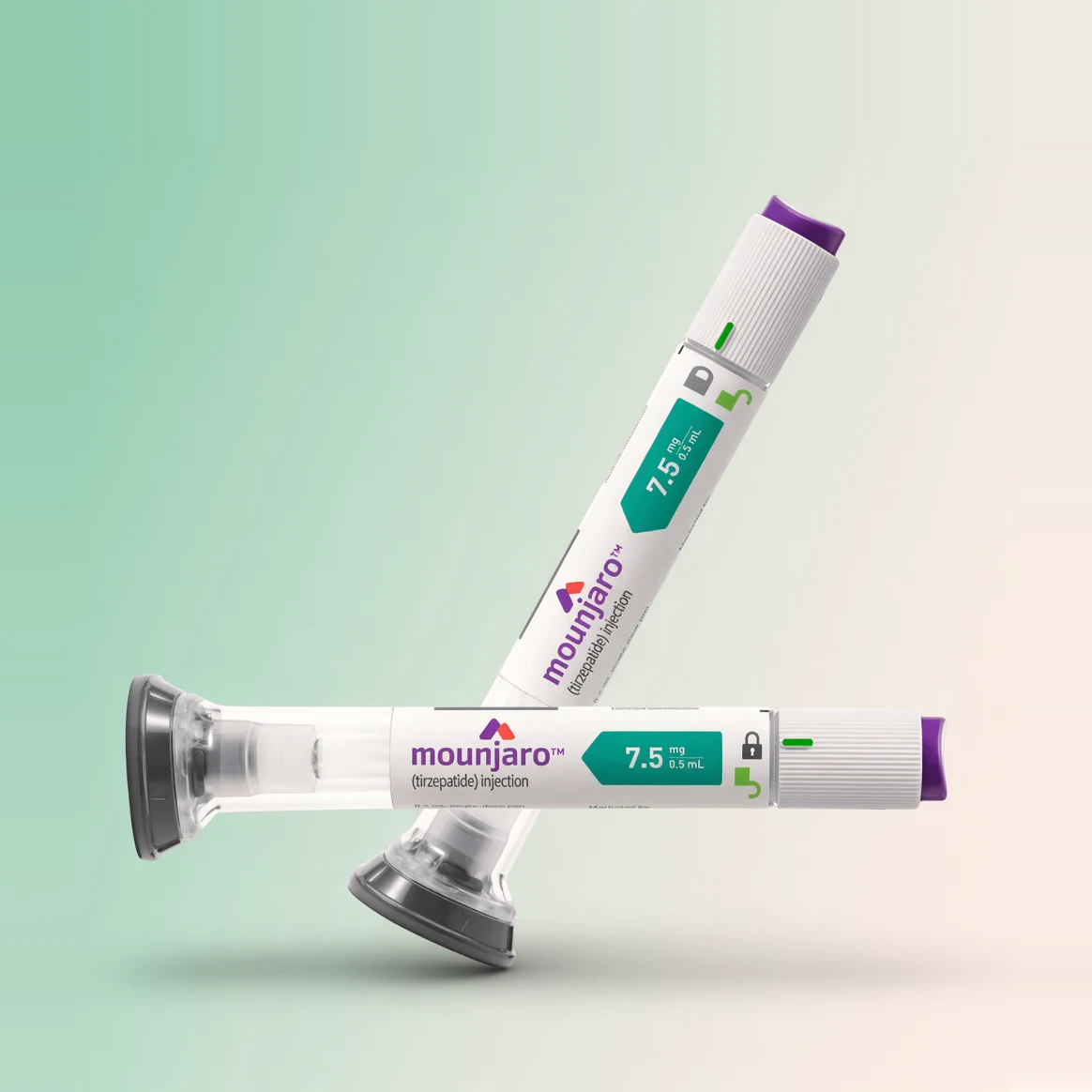
As low as $25/mo if your insurance covers it*†
semaglutide · weekly injection
As low as $25/mo if your insurance covers it*†
weekly injection · partner pharmacy
$199/mo, or $106/mo on a 3-month supply‡
weekly injection · partner pharmacy
$329/mo, or $216/mo on a quarterly plan‡
*Brand-name pricing as low as $25 a month applies when your commercial insurance covers the medication; actual cost depends on your plan and on manufacturer savings terms, which can change. †Mounjaro and Ozempic are FDA-approved for type 2 diabetes, not for weight loss; a provider may prescribe them off-label when appropriate. ‡Compounded medications are not FDA-approved and have not been evaluated by the FDA for safety, effectiveness, or quality. Compounded pricing shown is for medication only. §Roen membership is $39 for the first month, then $135 a month. Medication is billed separately.
GLP-1 medications carry a boxed warning about the risk of thyroid C-cell tumors and can cause serious side effects. See the important safety information for Zepbound, Wegovy, Mounjaro, Ozempic, semaglutide, and tirzepatide.
Zepbound® and Mounjaro® are registered trademarks of Eli Lilly and Company. Ozempic® and Wegovy® are registered trademarks of Novo Nordisk A/S. Roen is not affiliated with or endorsed by these companies. Prescriptions are issued only after a licensed provider determines that treatment is appropriate. This page is for general information and is not medical advice.