Telemedicine works well for the most common form of hair loss, androgenetic alopecia, and published cohort data backs that up with real improvement rates in patients treated remotely. It has limits: a scalp lesion, sudden patchy loss, or scarring alopecia still needs a hands-on exam or biopsy. If you go the remote route for garden-variety thinning, plan on follow-up visits to check for side effects, not just a one-time prescription, and done.
TL;DR:
- Remote treatment for androgenetic alopecia shows high patient satisfaction, with 81% reporting hair regrowth or stabilization after six months.
- Follow-up visits are essential to monitor side effects, especially for finasteride users, with structured screening and prompt reporting channels in place.
- Quality photos taken in natural daylight from multiple angles are critical for accurate remote diagnosis and effective treatment planning.
- Telehealth platforms reach many new patients who have never sought in-person care, resulting in higher adherence and treatment initiation.
- Serious scalp issues or rapid patchy loss still require in-person evaluation, as remote assessments cannot reliably identify scarring or atypical conditions.
A remote hair-loss visit isn’t a video call where a doctor eyeballs your scalp for thirty seconds and calls it a diagnosis. The clinician is working from a structured intake: photos, a symptom timeline, family history, and a rundown of medications you’re already taking. Good lighting and multiple angles matter more than most patients expect, since photo quality directly affects diagnostic accuracy in remote scalp evaluations.
From there, treatment options for a remote hair loss virtual clinic visit typically include:
Prescribing gets more careful for women of childbearing potential, since oral finasteride carries pregnancy risks and most telehealth dermatology protocols steer toward minoxidil or refer out for hormonal workups instead. Anything suggesting scarring, infection, or a rapidly spreading bald patch usually triggers a referral to in-person care before any prescription gets written.
The strongest argument for treating hair loss through telemedicine isn’t convenience. It’s outcomes. A systematic review of teledermatology in alopecia found that a meaningful share of patients monitored remotely showed measurable hair growth or visible improvement over the course of treatment.
By the numbers: one direct-to-consumer platform cohort reported that 81% of patients said their hair had regrown or stopped thinning after six months of remote treatment. A separate narrative review found that 55% of users had never seen a physician for their hair loss before trying a telehealth platform, and a majority had never used oral finasteride at all.
That second stat matters more than it looks. It tells you these platforms aren’t just serving people who bounced off a dermatologist’s office and needed the same thing at a cheaper price. They’re reaching people who otherwise weren’t getting treated:
Expect a real response to take two to four months of consistent use before you notice a difference, whether you’re treated remotely or in an exam room.
Finasteride’s sexual side effects get the most attention, and for good reason. Cohort data shows sexual adverse events occurred in a low single-digit percentage of patients on some platforms, with overall mild adverse events (headache, dizziness, breast tenderness) reported variably across studies, per the same systematic review covering teledermatology alopecia outcomes.
Reputable telehealth dermatology providers manage this risk with structured screening rather than a rubber-stamp prescription:
Pro Tip: Write down any new symptom the day it starts, even something minor like decreased libido or unusual fatigue. Vague recall at your follow-up call (“sometime last month, maybe?”) makes it much harder for a clinician to connect the dots.
Red flags that call for immediate in-person care instead of another telehealth message: sudden patchy bald spots, scalp pain or oozing, or hair loss paired with unexplained weight change or fever.
A remote visit is only as good as what you bring to it. A clinician making an online hair loss diagnosis is working entirely from what you show and tell them, so a rushed five-minute prep session shows up in a weaker treatment plan.
After the visit, expect a written treatment plan, an e-prescription sent to your pharmacy or a mail-order fulfillment service, and a follow-up date already on the calendar. If you have questions about switching formulations or renewing a script, that follow-up window is the time to raise them, not three months of silence later.
Telehealth pricing for hair loss usually runs one of two ways: a flat per-visit consultation fee, or a monthly subscription that bundles the visit, ongoing messaging, and medication into one recurring charge. Convenience has a price tag, though. Comparative pricing analyses have found that some direct-to-consumer platforms charge roughly 1.5 times what you’d pay for the same three-month finasteride supply at a standard retail pharmacy.
That markup buys something real for a lot of patients:
Where remote care hits its ceiling: a suspected biopsy, PRP injections, or a diagnosis that isn’t cleanly androgenetic alopecia. Those situations still belong in an exam room, not a video call.
RoenRx runs its hair loss virtual clinic on the same principle the research supports: fast access paired with real follow-up, not a one-and-done script. That means same-day appointments, a licensed clinician reviewing your intake and photos, and prescription delivery handled without a separate pharmacy trip.
Before starting treatment anywhere, check that your provider requires a follow-up visit specifically to screen for side effects, tracks adverse events rather than just filling refills, and can verify the prescribing clinician’s license on request. Those three checks separate a real telehealth dermatology practice from a script mill.
The data here tells a clear story: teledermatology gets people treated who otherwise weren’t going to be treated at all. Three out of four DTC finasteride users had never touched the drug before, and more than half had never even seen a physician about their hair loss. That’s not a story about replacing dermatologists. It’s a story about a treatment gap that in-person care, for whatever reason, wasn’t closing on its own.
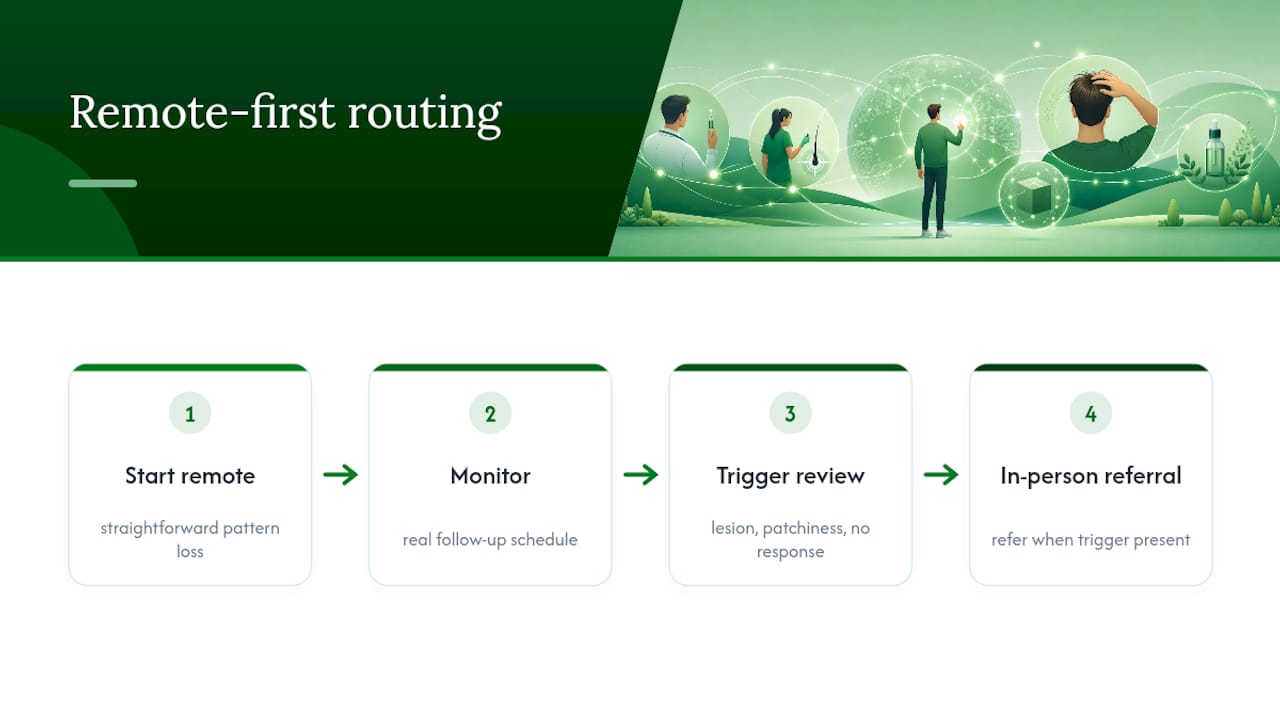
Where conventional advice gets it wrong is treating the “telemedicine versus in-person” question as an either/or decision made once, at the start. It isn’t. The better frame is a routing decision that gets revisited: start remote for straightforward pattern loss, and let specific findings, like a lesion, unexplained patchiness, or no response after four months, trigger an in-person referral rather than more months of the same prescription.
If you’re evaluating a hair loss virtual clinic, prioritize the follow-up schedule over the intake questionnaire. A thorough intake gets you a correct starting prescription. A real follow-up schedule is what catches a side effect before it becomes a bigger problem, or catches a non-responder before you’ve spent six months on a drug that isn’t working for you.
— Bryan
If you’ve read this far, you already know the appeal: no waiting room, no half-day off work, just a real clinician reviewing your case and writing a plan built around your actual scalp, not a generic protocol. A hair loss virtual clinic should offer fast access paired with real follow-up, backed by a robust follow-up structure.

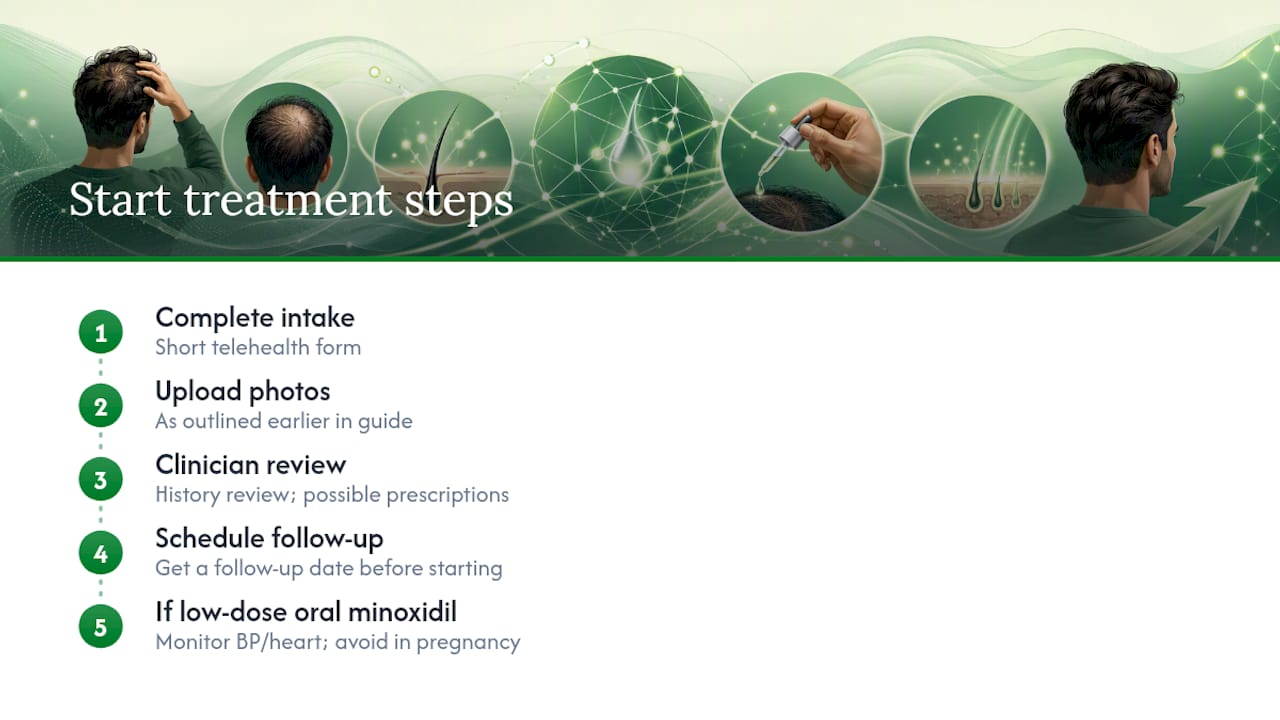
Getting started typically means completing a short intake, uploading photos as outlined earlier in this guide, and reviewing your history with a clinician who can prescribe topical minoxidil, oral or topical finasteride, or adjunct treatments. You can also browse what the treatment process actually involves before you commit, or check how finasteride prescribing works online if that’s the medication you’re considering. Whichever route fits your situation, the next step is the same: complete your telehealth intake and get a follow-up date on the calendar before you start.
Low-dose oral minoxidil requires medical supervision: it can cause fluid retention, a faster heart rate, and lowered blood pressure, so clinicians typically monitor blood pressure and ask about heart conditions before prescribing. It is not recommended during pregnancy or breastfeeding. Discuss these risks with a physician before starting.
This article is general information, not a substitute for advice from a qualified doctor. Consult a qualified healthcare professional about your own circumstances before acting on anything here.
Yes. Licensed telehealth clinicians can prescribe topical minoxidil, oral finasteride, and topical finasteride formulations after reviewing your photos, history, and medication list during a virtual visit.
Finasteride works by blocking the conversion of testosterone into DHT, the hormone most linked to pattern baldness, and it’s the most commonly prescribed oral option through telehealth dermatology for that reason.
Public reporting hasn’t confirmed a specific medical treatment regimen for Matthew McConaughey, and RoenRx can’t speak to any individual celebrity’s private treatment history.
There’s no verified, publicly confirmed account of a specific hair loss treatment used by Jennifer Lopez, so any claim naming one should be treated as unconfirmed.
For straightforward androgenetic alopecia, remote evaluation with quality photos performs well, but cases involving scarring, sudden patchy loss, or unclear diagnosis still require an in-person exam or biopsy.