If your medication didn’t arrive, check every delivery spot, pull up the tracking history, and call your pharmacy and the carrier right away. Do not take anything that arrives warm, wet, or visibly damaged. Screenshot the last tracking scan before it disappears, and if you suspect theft rather than a delay, file a report with the U.S. Postal Inspection Service or your local police.
TL;DR:
- Acting within the first 24 hours, including physical search and reviewing tracking data, significantly increases the chances of recovering lost medication packages.
- Pharmacies and PBMs usually require specific documentation, such as a carrier claim or theft report, before approving a replacement for lost or damaged shipments.
- Filing a USPS Missing Mail search after seven days, or a police report in case of suspected theft, is essential to speed up insurance claims and replacements.
- Temperature-sensitive medications should not be used if they arrive warm or show signs of compromise; a formal “delivery exception” process may be necessary for certain high-risk drugs.
- Using telehealth platforms for same-day prescriptions and replacements can reduce delays, especially for urgent or high-cost medications, by bypassing multi-system back-and-forth.
The first day matters most. Carriers, pharmacies, and insurers all move faster when you act before the trail goes cold. A lot of “lost” packages turn up within a few feet of where they should have landed.
Start with the physical search. Pharmacists routinely point patients to spots people forget to check: the back porch, a side door, a building mailroom, the leasing office, a parcel locker, or a neighbor’s stoop if a driver misjudged the address. Harvard Health Publishing reports these overlooked drop spots account for a surprising share of “missing” packages.
Next, work the tracking data. Open the carrier app and look at the last scan, not just the delivery status. A “delivered” tag with no location photo is a different problem than a tracking number stuck on “in transit” for four days.
Have your prescription number, your name as it appears on the label, and the tracking number ready before you dial. That single call starts the pharmacy’s lost-shipment process and often triggers the carrier trace at the same time.
Pro Tip: Call the pharmacy before the carrier. Pharmacies can freeze the refill count and start a replacement request immediately, while carrier traces can take longer to open.
Getting a replacement almost never means a pharmacist just hands you a new bottle. Insurers and pharmacy benefit managers (PBMs) build in specific rules for lost, stolen, or damaged shipments, and pharmacists have to work within them.
Express Scripts tells members to call the number on their prescription ID card to request an early-refill override, and notes that PBMs frequently replace lost or damaged home-delivery orders depending on the plan. That override isn’t automatic. Most PBMs allow at least one lost/destroyed override per plan year, and approval usually depends on documentation the pharmacy submits on your behalf.
What pharmacies and PBMs commonly ask for:
If the override goes through, many plans waive the copay and shipping fee on the replacement. If it’s denied or still pending, you may need to pay out of pocket for a local fill and seek reimbursement later, so keep every receipt.
Once you’ve called the pharmacy, run the carrier side in parallel.
Keep the confirmation number from every filing. You’ll reference it more than once.
Not every late package is a simple wait-and-see situation. Biologics, insulin, and other refrigerated medications degrade when they sit in a hot mailbox or delivery truck. Temperatures above 30°C can measurably reduce clinical effectiveness, and most manufacturers and specialty pharmacies default to replacement rather than risk you using compromised product.
Claims and overrides take time, and skipping doses isn’t a real option for most conditions. Ask your prescriber for a short bridge prescription you can fill at a local pharmacy the same day. That single call often solves the immediate problem while the paperwork catches up.
For specialty or high-cost medications, ask whether the manufacturer offers an emergency replacement or assistance program. Whatever temporary fill you get, ask the pharmacist for a note documenting it. That record supports the insurance override later and shows you weren’t double-dipping on the medication.
Pro Tip: A quick telehealth visit can often get a bridge prescription sent to a local pharmacy within hours, which beats waiting on a callback from a mail-order line.
Most future losses are preventable with small changes to how you receive deliveries.
Emergency pharmacy actions, like a bridge fill or an early-refill override, usually happen within 24 to 72 hours. Carrier traces and formal insurance claims move slower, often taking anywhere from several days to a few weeks depending on the carrier and your plan.
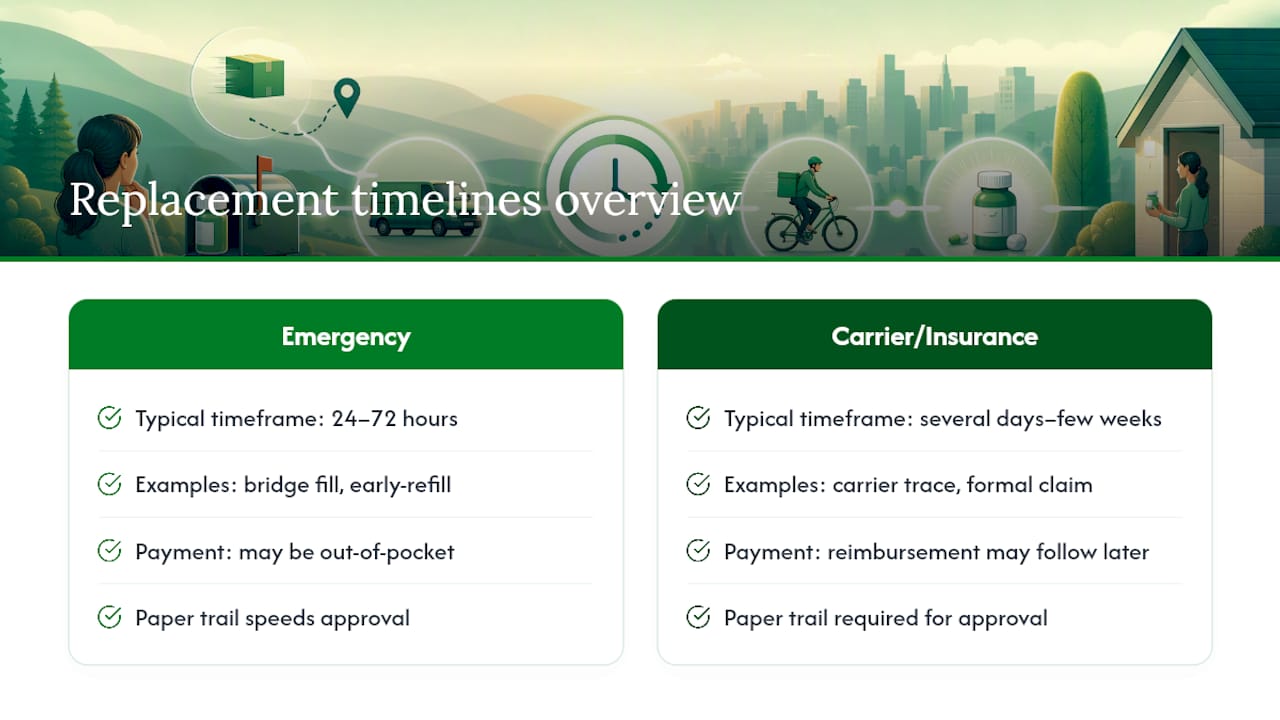
You may need to pay out of pocket for a temporary fill before any reimbursement comes through, so hold onto every receipt, claim number, and report. Recent local news coverage of a FedEx hub package pileup that delayed medication shipments is a reminder that these delays aren’t rare edge cases. A clean paper trail, tracking screenshots, the shipping receipt, prescription details, and any police or USPIS report, is what turns a frustrating wait into a fast approval.
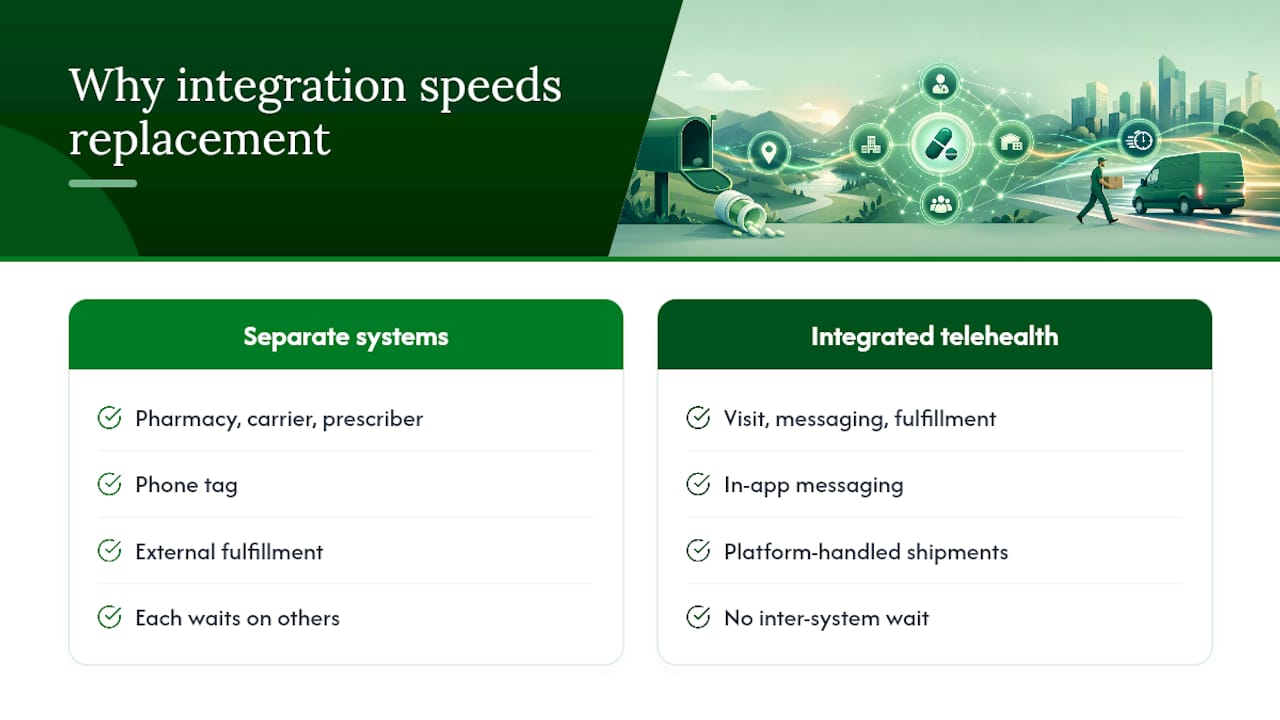
Most of the delay in a lost-medication situation comes from bouncing between three separate systems: the mail-order pharmacy, the carrier, and your prescriber’s office. Each one waits on the other before acting.
Telehealth platforms that combine same-day clinician visits with in-app messaging and their own fulfillment cut that chain down. When the same platform runs the visit and the shipment, there’s no game of phone tag between a prescriber’s office and a call center. That structure matters most for urgent medications, specialty drugs with narrow supply windows, and anyone whose schedule doesn’t allow for three separate business-hours phone calls in one day.
— Bryan
RoenRx gets you a new prescription and a shipment moving again without the multi-day back-and-forth a traditional mail-order pharmacy often requires. A same-day virtual visit with a clinician, paired with in-app messaging to your care team, means you’re not stuck waiting on a callback while a claim sits in queue.

RoenRx works well for eligible conditions like anxiety, primary care needs, birth control, and weight management, where a clinician can review your case and send a new prescription for delivery the same day. It isn’t a substitute for controlled-substance rules or specialty biologics that require manufacturer-level replacement, and eligibility depends on your specific medication and history. For most other situations where a shipment went missing and you need a fast, documented replacement path, starting a telehealth visit is the quickest way to get back on track.
Save these before you need them. The USPS Missing Mail Search handles delayed-in-network packages, the U.S. Postal Inspection Service handles suspected theft, Harvard Health Publishing offers pharmacist-backed guidance on next steps, and Express Scripts explains PBM override policy. Keep every confirmation number in one place.
This article is general information, not a substitute for advice from a qualified doctor. Consult a qualified healthcare professional about your own circumstances before acting on anything here.
Your pharmacy can request a lost-shipment override from your PBM, but most plans require documentation like a carrier claim number or a theft report before approving a free replacement.
Check every delivery spot, screenshot your tracking history, then call your pharmacy first and the shipping carrier second to start both the replacement and trace process at once.
Mailing someone else’s prescription medication to you is generally against federal and state pharmacy law, even between family members; ask your own prescriber for a bridge fill or use a telehealth visit for a same-day replacement instead.
The search itself is eligible about seven days after mailing and typically takes 10 to 20 minutes to submit, though locating the package can take longer depending on where it’s stuck in the network.
File a theft report when tracking shows the package as delivered but it never arrived; that documentation is often what insurers and PBMs need before they’ll approve a replacement without extra pushback.