Yes, telehealth clinicians in the U.S. can order lab tests. According to federal telehealth guidance, ordering diagnostics is a standard part of virtual care workflows. After your clinician places the order, you have three ways to complete it:
Every clinical result must come from a CLIA-certified laboratory. Your clinician is responsible for reviewing results and following up, so confirm that plan before your visit ends.
Telehealth clinicians in the U.S. can order lab tests as part of standard virtual care, and patients have three collection options: in-person draw sites, at-home kits, and mobile phlebotomy.
| Point | Details |
|---|---|
| Clinician order is standard | Most telehealth providers can place lab requisitions; confirm your clinician is licensed in your state. |
| Three collection options | In-person draw sites, at-home kits, and mobile phlebotomy each have different test menus and insurance coverage. |
| Prep varies by test | Fasting is required for lipid panels and BMP; A1C and CBC need no fasting. Confirm with your clinician. |
| Ask billing questions upfront | Confirm in-network lab, prior authorization needs, and out-of-pocket cost before the visit ends. |
| RoenRx integrates lab ordering | RoenRx clinicians place orders during virtual visits and follow up through secure messaging. |
The process is more straightforward than most patients expect. Here’s the typical sequence:
A peer-reviewed telemedicine workflow review found that clear written orders and a named follow-up contact reduce sample errors and speed resolution when results are abnormal.
Pro Tip: Before you leave the virtual visit, ask the clinician to confirm the collection site, the sample type required, and who will contact you when results are ready. Get it in writing through the portal.
Once the order is placed, you pick the collection method that fits your situation. Each option has real trade-offs.
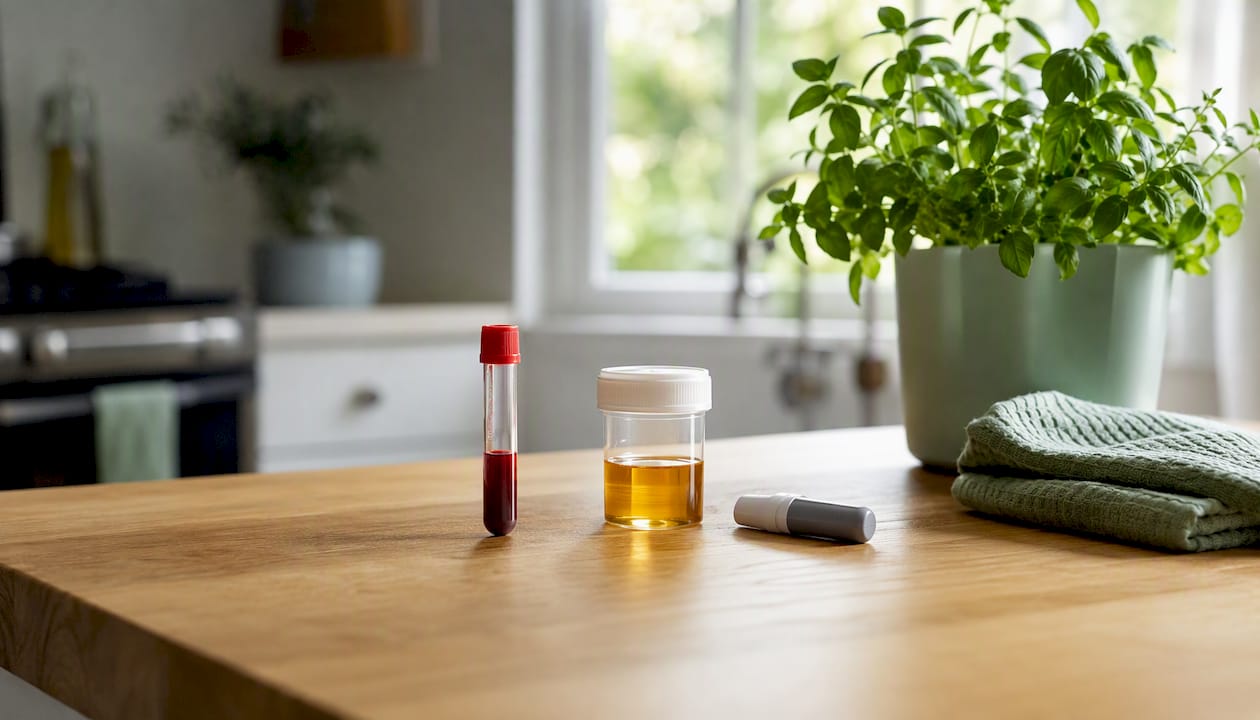
Walk into any LabCorp or Quest Diagnostics location with your requisition. Venous blood draws done here support the widest range of tests, including panels that require larger sample volumes or temperature-controlled handling. Insurance billing is usually straightforward at in-network sites.
Services like Everlywell and LetsGetChecked ship kits directly to patients for fingerstick blood, urine, or swab samples. These work well for lipid panels, A1C, thyroid screening, and STI tests. However, fingerstick samples are not clinically acceptable for every test, and some insurers won’t reimburse at-home lab tests the same way they cover in-person draws.
A licensed phlebotomist travels to your home or office for a standard venous draw. Coverage is growing in metro areas but remains patchy in rural zip codes. Costs vary and are not always covered by insurance.
Pro Tip: Check your insurer’s coverage policy before choosing at-home or mobile options. A clinician-ordered test at an in-network lab almost always has clearer billing than a DTC kit.
Whether you need a clinician’s order depends on the test and your state.
Pro Tip: Before booking a telehealth visit specifically for lab orders, confirm the platform’s clinicians are licensed in your state. Most reputable services list this on their consent or intake pages, including RoenRx’s telehealth consent page.
Cost depends on three variables: the test itself, how the sample is collected, and whether your insurance covers it.
Factors that affect your bill:
How insurance usually works:
Billing questions to ask during your telehealth visit:
Preparation depends heavily on the specific test. Getting it wrong can mean a rejected sample or inaccurate results.
| Test | Sample type | Fasting required? | Key prep notes |
|---|---|---|---|
| CBC (complete blood count) | Venous blood | No | No special prep; measures red cells, white cells, platelets |
| BMP / chemistry panel | Venous blood | Typically 8 hours or more | Confirms fasting window with clinician |
| Lipid panel | Venous blood | Typically 9 hours or more | Avoid high-fat meals the night before |
| A1C | Venous or fingerstick | No | No fasting needed; reflects 3-month glucose average |
| Thyroid (TSH) | Venous blood | No | Take thyroid meds after the draw if applicable |
| STI screens | Urine, swab, or blood | No | Follow kit-specific collection timing |

Venous draws support the broadest test menu. Fingerstick samples work for A1C and lipid panels but are not suitable for tests requiring larger volumes. MedlinePlus lab test guides are a reliable reference for test-specific prep instructions.
Pro Tip: For at-home fingerstick kits, warm your hands under warm water for 60 seconds before pricking. Cold fingers produce slow blood flow and are the leading cause of sample rejection.
Routine bloodwork from a national patient-service center typically returns within 1–3 business days. Specialized panels, cultures, or genetic tests can take 5–10 business days or longer.
How results reach you:
If results are abnormal:
A telemedicine workflow analysis emphasizes that naming a specific follow-up contact during the visit significantly reduces the chance of results going unreviewed.
Most clinicians respond well to direct, specific requests. Here’s language that works:
Scripts to use:
Checklist before ending the visit:
Red flags to watch for:
Pro Tip: Use the preventive care checklist before your visit to organize which tests you want to discuss. Arriving with a list cuts visit time and reduces the chance of missing a needed panel.
RoenRx integrates lab ordering into its standard telehealth workflow. Clinicians on the platform can initiate orders for routine monitoring, primary care follow-up, and condition-specific panels as part of your membership.
What the platform handles:
How to access it:
Start with an intake visit through RoenRx’s primary care service. Your clinician reviews your history, places any needed orders, and coordinates follow-up through the platform’s messaging system.

What RoenRx does not replace: emergency lab work, in-person diagnostic imaging, or tests requiring immediate clinical supervision. For urgent symptoms, go to an in-person provider or emergency department.
Pro Tip: Review RoenRx’s telehealth consent documentation before your first visit. It outlines exactly what the platform’s clinicians can and cannot order, so there are no surprises.
Telehealth lab ordering works best for situations where the clinical question is already clear and the main task is collecting data, not making a first-time diagnosis under uncertainty.
Routine monitoring is the strongest use case: checking A1C every three months for a patient managing diabetes, tracking thyroid levels on a stable medication dose, or running an annual lipid panel for a patient with known cardiovascular risk. These are situations where the clinician knows what to order, the patient knows how to prepare, and the logistics are the only variable.
Screening labs for conditions like STIs, prediabetes, or thyroid dysfunction also fit well. The tests are standardized, prep is minimal, and results rarely require an immediate in-person response.
Where telehealth lab ordering falls short: acute symptoms that need physical examination before ordering (chest pain, severe abdominal pain, neurological changes), tests requiring immediate processing or point-of-care results, and situations where the diagnosis itself is uncertain and a physical exam would change the order. In those cases, an in-person visit is the right first step, not a virtual one.
Patient safety depends on clinician continuity. The clinician who orders the test should be the one reviewing results, or there should be an explicit handoff documented in the chart.
Most telehealth platforms treat lab orders as an add-on. RoenRx builds them into the visit from the start. When you see a clinician through RoenRx, lab ordering is part of the conversation, not something you have to ask for separately. Your care team sends written instructions, tracks your results, and follows up through the same messaging thread where you asked your original question.
For patients managing weight, primary care needs, or ongoing conditions, that continuity matters. You’re not starting from scratch every time. Start your first visit at RoenRx and ask your clinician about lab orders during intake.
This article is general information, not a substitute for advice from a qualified doctor. Consult a qualified healthcare professional about your own circumstances before acting on anything here.
Yes. Most U.S. telehealth clinicians can order lab tests as part of a virtual visit, provided they are licensed in the state where the patient is located. The order goes to a CLIA-certified lab, and results are reviewed by the ordering clinician.
In states that allow direct-to-consumer testing, yes. Services like Everlywell and LetsGetChecked let patients order certain tests without a physician, though results are not reviewed by a clinician unless you arrange that separately.
Ask directly: “Can you send a lab order for [test name] to a location near me?” Confirm the collection method, fasting requirements, and who will follow up with results before the visit ends.
Routine bloodwork from a national patient-service center typically returns within 1–3 business days. Specialized panels can take 5–10 business days. Critical values are flagged to your clinician immediately.