Most common generic anxiety medications cost roughly $10 to $100 per month in cash at U.S. pharmacies, while brand-name versions can run several hundred dollars to over $1,000 monthly. The single best move you can make right now is asking your prescriber for a generic and running the price through a discount coupon before you pay retail. Factor in follow-up visits, too. They add to the real annual cost of treatment.
TL;DR:
- Generic anxiety medications typically cost between $10 and $100 monthly, with brands sometimes exceeding $1,000; asking for generics and using discount coupons can significantly reduce costs.
- Costs vary greatly depending on the drug class, with SSRIs and buspirone usually staying under $20 to $30 monthly, while some benzodiazepines or non-generic drugs can cost much more.
- Pharmacy price differences are common, so calling multiple locations and requesting discounts or 90-day supplies can lower monthly expenses substantially.
- Initial prescriber visits often cost from under $100 to several hundred dollars, with follow-ups needed during tapering or dose adjustments increasing total treatment costs.
- Tapering off medications involves additional visits, but proper management prevents costly health emergencies from abrupt discontinuation.
Price depends heavily on which drug class you’re prescribed, and the gap between the cheapest and most expensive options in the same category is bigger than most people expect.
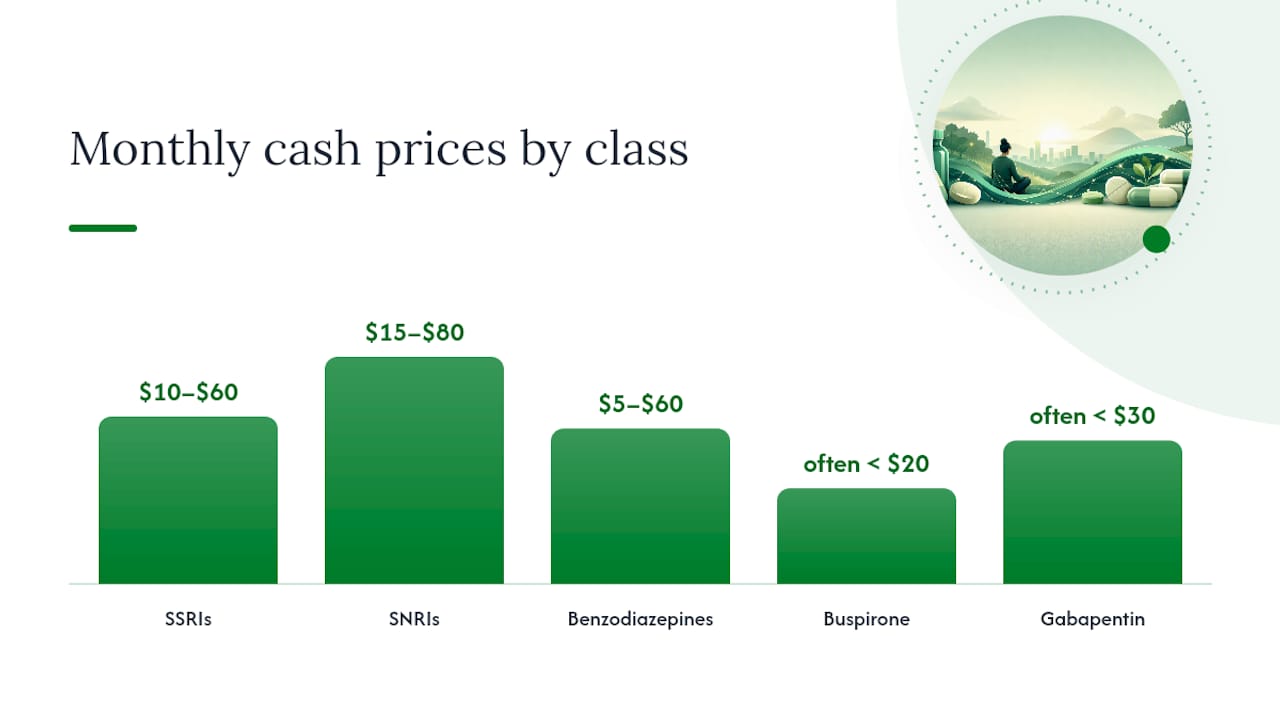
SSRIs like sertraline, escitalopram, and fluoxetine are the cheapest tier once they’re generic, typically running $10 to $100 for a 30-day supply at cash price. SNRIs such as generic venlafaxine or duloxetine sit in a similar range but can run higher depending on dose and pharmacy. Buspirone, a non-controlled anxiolytic often prescribed alongside or instead of an SSRI, is usually among the cheapest options on this list. Hydroxyzine, an antihistamine sometimes used for situational anxiety, tends to be inexpensive as well.
Benzodiazepines and gabapentinoids vary more widely:
These are cash-price approximations, and they shift based on where you fill the prescription. The National Institute of Mental Health notes these classes are the standard first-line and adjunct options clinicians reach for, which is part of why generic versions are so widely stocked and competitively priced.
Named drugs at common starting doses make the price ranges above feel more concrete.
Generic sertraline 50mg often lands around $10 to $25 for a 30-day supply. Escitalopram 10mg runs similarly. Buspirone 10mg twice daily is frequently one of the cheapest anxiety prescriptions available, sometimes under $15. Propranolol, a beta blocker used for situational or performance anxiety, is typically among the least expensive drugs on any pharmacy shelf. Gabapentin, prescribed off-label for anxiety at lower doses, also tends to stay cheap.
Cost jumps sharply when a drug has no generic yet, when a pharmacy doesn’t stock the drug on a discount tier, or when the prescription is for an extended-release brand formulation with no generic equivalent. That’s when a monthly fill can swing from $15 to $400 or more. Benzodiazepines also carry controlled-substance restrictions, meaning tighter refill limits and, in some states, mandatory in-person or more frequent evaluations, which adds indirect cost even when the pill itself is cheap.
The listed retail price on a pharmacy’s shelf and what you actually pay are often two different numbers entirely.
Large chains frequently run $4 to $10 generic drug lists that cover many SSRIs, buspirone, and propranolol, but you have to ask specifically, since these prices aren’t always posted. Coupon platforms can knock a retail price down substantially, and discount programs regularly cut costs by significant margins compared to walking in and paying whatever’s on the sticker.
Cutting your cost usually comes down to five moves, roughly in this order of effort versus payoff.
Eligibility for patient assistance programs and FQHC sliding scales usually depends on income relative to the federal poverty level, and most applications ask for proof of income and lack of insurance. The Anxiety and Depression Association of America also keeps a running list of low-cost treatment options worth checking before you commit to a full-price visit.
Pro Tip: When you call a clinic about sliding-scale pricing, say plainly that you’re uninsured and ask what documentation they need for a reduced rate. Clinics that offer sliding scales almost always have a set process, but front desk staff won’t always volunteer it unless you ask directly.
Medication is only part of the bill. The visit itself, and any follow-ups, add up fast if you don’t plan for them.
An initial evaluation with a primary care provider or psychiatric prescriber commonly runs from under $100 to several hundred dollars in cash, depending on the provider and region. Budgeting realistically means accounting for an initial visit plus two to three follow-ups in the first three months as your dose gets adjusted, on top of the monthly medication cost itself.
A health savings account or flexible spending account can offset some of this even without traditional insurance, since both let you pay for prescriptions and visits with pretax dollars if you have access to one through past or current employment.
Stopping an anxiety medication isn’t usually a one-time event, and that has real cost implications people rarely plan for.
Tapering off an SSRI, SNRIs, or a benzodiazepine typically happens gradually over weeks to months to reduce withdrawal or rebound symptoms, and that process usually requires at least one or two additional prescriber visits to adjust the dose downward safely. Each of those visits carries the same cash-pay cost as a regular follow-up, whether that’s a primary care check-in or a psychiatric appointment. Benzodiazepine tapers, in particular, often need closer monitoring because withdrawal can be more physically uncomfortable and, in some cases, medically risky if stopped too fast.
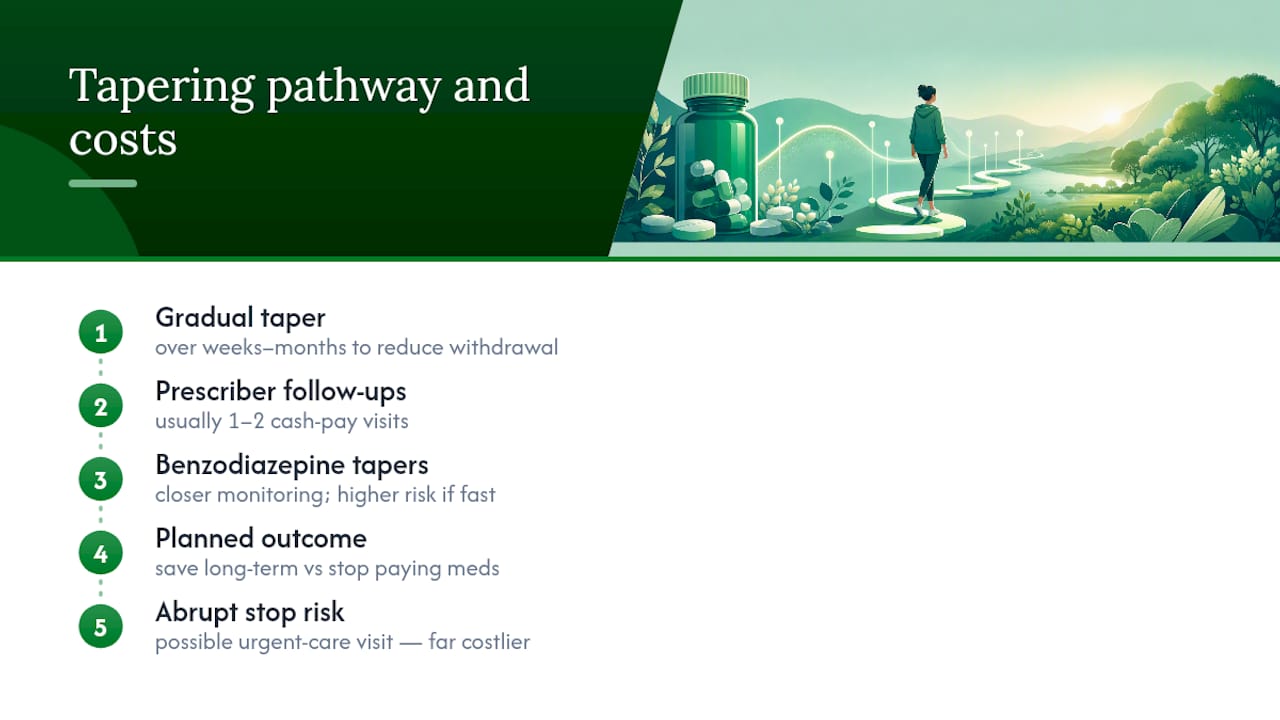
There’s a cost upside worth noting: a properly managed taper can actually save money over time if it means you’re no longer paying for a medication you don’t need long-term, or if it lets you step down from a pricier drug to a cheaper maintenance option. The mistake to avoid is stopping abruptly to save money on a refill. That often backfires into withdrawal symptoms severe enough to require an urgent care visit, which costs far more than the extra month of medication would have.
Prescribers lean toward SSRIs and buspirone for long-term anxiety management partly because they’re affordable, but mainly because clinical guidance flags long-term benzodiazepine use as carrying real dependence risk. The cheapest pill isn’t always the cheapest treatment plan once you factor in tapering, monitoring, and the cost of managing a problem you created by chasing a lower price today.
The smarter frame is: solve for total annual cost, not monthly pill price. A $15 generic that requires no extra monitoring often beats a $10 controlled substance that demands quarterly visits and a slow taper down the road.
— Bryan
Virtual healthcare services can offer evaluations and prescriptions without the multi-week wait or the need to call multiple pharmacies to compare prices. For non-controlled medications such as SSRIs, SNRIs, buspirone, and hydroxyzine, this can include a same-day virtual visit, access to a care team via messaging, and prescription delivery that avoids an extra trip to a physical pharmacy.
RoenRx’s anxiety prescription service is built for exactly the situation this article covers: no insurance, a real need for treatment, and zero patience for hidden costs or delayed appointments. The platform also details how virtual care removes common insurance-related friction for patients managing costs on their own. If you’re ready to get evaluated and understand your medication options clearly, start an intake with RoenRx and see what a same-day virtual visit looks like for your situation.
This article is general information, not a substitute for advice from a qualified doctor. Consult a qualified healthcare professional about your own circumstances before acting on anything here.
Generic anxiety medications typically cost $10 to $100 per month in cash, while brand-name versions can run several hundred dollars to over $1,000 monthly depending on the drug.
Yes. Options include asking for a generic, using discount coupons like GoodRx or SingleCare, checking NeedyMeds for patient assistance programs, visiting an HRSA-listed sliding-scale clinic, or using telehealth services like RoenRx for non-controlled medications.
SSRIs like sertraline and escitalopram, along with SNRIs like venlafaxine, are typically taken daily as long-term maintenance treatments rather than as fast-acting relief, and they’re generally the first-line choice for ongoing anxiety management.
No. Ibuprofen is a pain reliever and anti-inflammatory with no established role in treating anxiety disorders; effective options include SSRIs, SNRIs, buspirone, hydroxyzine, and beta blockers like propranolol for situational symptoms.