Without insurance, brand GLP-1 medications typically run $900–$1,400 per month at retail, according to Forbes Health. That’s the sticker price. Most patients who do their homework pay far less. Manufacturer cash-pay programs, telehealth bundles, and prescription discount cards like GoodRx can bring monthly out-of-pocket costs down substantially depending on the drug, dose, and program you qualify for.
The three most reliable ways to lower your bill right now:
Price anchor: Forbes Health reports that manufacturer cash-pay programs can reduce monthly costs to roughly $149–$499 depending on dose and product, compared to brand list prices that can exceed $1,400 per month without any program.
Prices below reflect cash-pay channels as of mid-2026. They vary by dose, pharmacy, and whether a manufacturer program or coupon applies. Always confirm current pricing directly with the pharmacy or program before filling.
| Drug | Typical Cash Monthly Range | Formulation | Example Cash-Pay Channel |
|---|---|---|---|
| Ozempic (semaglutide) | $900–$1,400 | Injectable pen | GoodRx coupon at Walmart, Costco |
| Wegovy (semaglutide) | $900–$1,400 | Injectable pen | NovoCare self-pay program |
| Mounjaro (tirzepatide) | $900–$1,400 | Injectable pen | LillyDirect cash-pay |
| Zepbound (tirzepatide) | $900–$1,400 | Injectable pen | LillyDirect single-dose vials |
| Compounded semaglutide | $129–$497 | Injectable vial | Telehealth/compounding pharmacy |
| Rybelsus (semaglutide) | $900–$1,400 | Oral tablet | GoodRx, retail pharmacy |
A few things stand out in that table. Zepbound’s single-dose vials, sold through LillyDirect, represent one of the sharper price drops in the brand GLP-1 space. Compounded semaglutide looks cheapest on paper, but SingleCare notes that advertised prices often exclude extra fees and that these products are not FDA-approved. More on that in the safety section below.

For a deeper look at Ozempic-specific pricing, the Ozempic cost without insurance guide breaks down program options and pharmacy comparisons in detail.
The gap between a $150 monthly bill and a $1,400 one comes down to four variables: dose, formulation, packaging, and which channel you use to fill the prescription.

Dose is the biggest lever. GLP-1 therapy typically starts at a low titration dose and escalates over weeks or months. A starter dose of semaglutide 0.25 mg costs less per fill than a maintenance dose of 1 mg or 2.4 mg. That means your first few months may be cheaper than month six, and your budget should account for that escalation.
Oral vs. injectable pricing follows a different logic. Rybelsus (oral semaglutide) avoids the pen and needle cost but doesn’t automatically come out cheaper. Injectable pens are priced per pen, and a single pen may cover four weeks at a low dose or just two weeks at a higher one.
Packaging matters more than most patients realize. Single-dose vials, like those Eli Lilly sells through LillyDirect for Zepbound, cost less per unit than multi-dose pre-filled pens. The trade-off is that vials require self-injection with a separate syringe, which adds a small supply cost and a learning curve.
Here’s a quick worked example of how dose and unit price combine:
The pharmacy you choose also shifts the number. Costco and Walmart pharmacies consistently price GLP-1 fills lower than many independent or hospital-affiliated pharmacies, and stacking a GoodRx coupon on top can shave additional dollars off the retail price.
Ranked by likely impact for most uninsured patients:
1. Check manufacturer cash-pay programs first. Novo Nordisk’s NovoCare program and Eli Lilly’s LillyDirect both offer self-pay pricing tiers for uninsured patients. These are the single most reliable way to get a predictable, lower monthly cost on brand medications. Eligibility is typically income-independent for self-pay tiers, though patient assistance programs have separate income criteria.
2. Use a telehealth medication bundle. Platforms that combine a clinician evaluation, prescription, and monthly medication delivery into one fee often produce the lowest all-in monthly cost. The bundled price covers what you’d otherwise pay separately for a doctor visit, a prescription, and a pharmacy fill. Telehealth bundles can be significantly cheaper than retail list prices when all fees are factored in.

3. Apply a GoodRx or similar discount card. GoodRx is free to use and works at most major pharmacies. For certain GLP-1 fills, it can cut retail cash prices by hundreds of dollars. Check GoodRx prices at Walmart, Costco, and Kroger specifically, since those pharmacies tend to have the most competitive base prices before the coupon.
4. Ask about patient assistance programs (PAPs). Both Novo Nordisk and Eli Lilly run PAPs for patients who meet income thresholds. These programs can provide medication at low or no cost, but the application process takes time and requires documentation of income and lack of insurance.
5. Pay with FSA or HSA funds. If you have a Flexible Spending Account or Health Savings Account from a previous employer or a high-deductible plan, GLP-1 medications prescribed for a qualifying condition are generally eligible expenses. This doesn’t lower the price, but it reduces your effective cost by using pre-tax dollars.
6. Shop pharmacies deliberately. Walmart and Costco pharmacies are worth calling before you fill. Prices at the same chain can vary by location, and a five-minute phone call comparing two nearby pharmacies sometimes saves $100 or more per fill.
Pro Tip: Introductory program pricing from manufacturers often applies only to your first one or three fills. After that, the rate shifts to an ongoing program tier that may be higher. Always ask the program representative what the post-intro rate is before you commit, and verify promo terms and expiration dates before your first fill.
To compare programs efficiently:
Compounded semaglutide is widely advertised at prices ranging from roughly $129–$497 per month, according to SingleCare. That price gap is real. So is the regulatory difference.
The FDA is direct on this point: compounded versions of brand drugs are not FDA-approved finished products. They are not manufactured under the same oversight standards, and patients should be aware of meaningful safety and quality differences compared to brand formulations. The FDA has issued specific communications warning that compounded semaglutide is not equivalent to FDA-approved Ozempic or Wegovy.
What does that mean practically? Compounded products may have dosing variability, inconsistent potency, or contamination risks that brand products don’t carry. An adverse event from a compounded product can also mean out-of-pocket costs for treatment that wipe out months of savings. The FDA’s guidance on compounded drugs is publicly available and worth reading before making a decision.
This doesn’t mean compounded GLP-1s are universally dangerous. It means the risk profile is different, and that difference should be part of your cost calculation, not an afterthought. If you’re considering a compounded option, discuss it with a licensed prescriber who can evaluate your specific situation. For more on accessing semaglutide safely, including what to look for in a provider, that’s a useful starting point.
A lawful GLP-1 prescription requires a clinician evaluation. There’s no legal shortcut around that, and any platform claiming otherwise is a red flag. The good news is that telehealth visits fully satisfy this requirement, and they’re often faster and cheaper than an in-person appointment.
The standard telehealth workflow looks like this:
What to have ready before your telehealth intake:
Pro Tip: To verify a telehealth provider’s legitimacy, confirm that the prescribing clinician holds an active state license in your state. Legitimate platforms also require you to sign a telehealth consent form before any clinical interaction begins. If a platform skips consent documentation, that’s a compliance gap worth noting.
RoenRx handles this entire pathway virtually. Patients complete an intake, connect with a clinician for evaluation, and receive prescription and fulfillment support, including same-day access and ongoing messaging with a care team. For uninsured patients, that bundled model removes the friction of coordinating a separate doctor visit, a separate pharmacy, and a separate follow-up. You can find out if weight loss injections could be right for you directly through RoenRx’s screening process.
Telehealth bundles that include clinician evaluation, prescription, and medication delivery in a single monthly fee are among the most cost-predictable options for uninsured patients, as consumer reporting confirms.
These scenarios combine medication cost with typical ancillary fees. Actual costs vary by dose, pharmacy, and program availability.
| Cost Component | Low-Cost Scenario | Mid-Range Scenario | High-Cost Scenario |
|---|---|---|---|
| Medication (monthly) | Introductory program or telehealth bundle rates start lower | Ongoing program or GoodRx coupon rates are moderate | Brand list prices without a program are considerably higher |
| Clinician/telehealth fee | Often included in bundled pricing | Separate telehealth visits may add moderate fees | In-person or specialist visits may add higher fees |
| Labs (amortized monthly) | Basic labs may incur minimal costs initially | Periodic monitoring can add moderate costs | Extensive testing and follow-ups may increase costs further |
| Estimated monthly total | $149–$499 | — | — |
The low-cost scenario is achievable, but it depends on qualifying for an introductory manufacturer program or a telehealth bundle at the lower end of the market. The mid-range scenario is the most common sustained experience for patients who use a cash-pay program or coupon after the intro period ends. The high-cost scenario is what happens when patients fill at list price with no program, no coupon, and pay separately for all clinical services.
Use the GLP-1 cost calculator to model your specific dose and scenario over multiple months, since costs often shift as your dose escalates.
Brand GLP-1 medications cost several hundred to over a thousand dollars per month at retail without insurance, but manufacturer cash-pay programs and telehealth bundles routinely bring costs down substantially for patients who qualify.
| Point | Details |
|---|---|
| Brand list prices are high but avoidable | Retail cash prices run high; most patients pay less through programs or coupons. |
| Manufacturer programs are the top lever | NovoCare and LillyDirect offer structured self-pay tiers at reduced monthly rates for qualifying patients. |
| Compounded options carry regulatory risk | Compounded semaglutide is not FDA-approved and lacks the same manufacturing oversight as brand products. |
| Budget for ancillary fees | Clinician visits, labs, and shipping can add additional monthly costs on top of medication cost. |
| RoenRx bundles the full pathway | RoenRx offers telehealth evaluation, clinician oversight, and medication fulfillment support in one virtual service for uninsured patients. |
The conventional framing around GLP-1 costs focuses almost entirely on the medication price. That’s understandable, but it misses something patients consistently discover too late: the ancillary costs add up fast, and they’re not optional.
A clinician evaluation isn’t a bureaucratic hurdle. It’s the mechanism that catches contraindications, sets the right starting dose, and prevents the kind of adverse events that send people to urgent care. Skipping that step to save $100 on a telehealth visit is a false economy, especially when compounded products are in the mix.
The patients who manage GLP-1 costs most effectively aren’t the ones who find the cheapest headline price. They’re the ones who calculate the all-in monthly number, including medication, clinician oversight, and labs, and then find the program or platform that delivers the lowest verified total for that complete package. A telehealth bundle that looks $50 more expensive than a coupon-only pharmacy fill often turns out cheaper once you add the separate clinician fee you’d otherwise pay.
There’s also a timing dimension most guides ignore. Introductory pricing from manufacturers is real, but it’s time-limited. Patients who plan only for the intro rate and don’t model the post-intro ongoing cost sometimes find themselves facing a $200–$300 monthly jump they didn’t budget for. The smarter move is to treat the ongoing rate as your baseline and consider the intro period a bonus.
Paying cash for GLP-1 therapy without insurance is manageable when you have the right structure behind you. RoenRx offers exactly that: a virtual healthcare pathway that takes you from intake to prescription to ongoing clinician support without requiring an in-person visit or a separate pharmacy run.
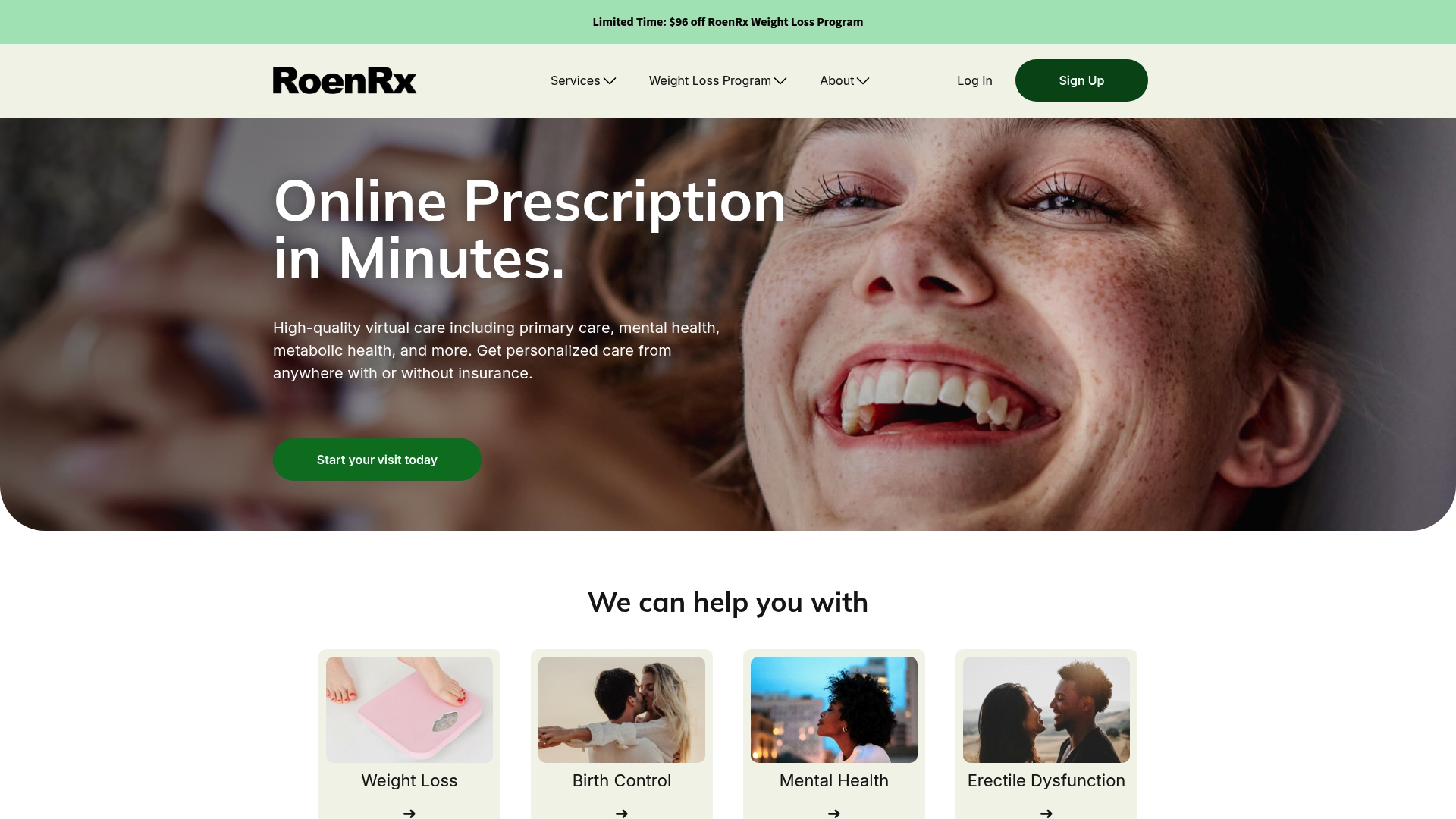
The process is straightforward. Complete an online intake, connect with a licensed clinician who reviews your history and determines medical necessity, and receive prescription support with medication fulfillment options. Same-day access and direct messaging with your care team mean you’re not waiting weeks for a follow-up. All prescriptions are issued based on clinical evaluation, as required by law.
For uninsured patients comparing a telehealth bundle against a coupon-only pharmacy fill, RoenRx’s model bundles the clinical layer into the service, so the comparison is genuinely apples-to-apples. Start your weight-loss intake at RoenRx to see which GLP-1 options fit your clinical profile and budget.
All prescriptions require a clinician evaluation and are issued based on medical necessity.
Prices in this article were checked in mid-2026. GLP-1 pricing changes frequently by dose, pharmacy, and program window. Always verify current pricing directly with the program or pharmacy before filling.
Limitations: Prices vary by dose, pharmacy location, program eligibility, and promo availability. The ranges above represent typical reported cash-pay figures, not guarantees. Compounded product pricing excludes fees that may apply. Consult a licensed clinician before starting any GLP-1 therapy.
This article provides general information, not medical or financial advice. Confirm current program terms, eligibility, and clinical suitability with a qualified healthcare provider before making any treatment decision.